Engine performance rarely declines all at once. In many cases, the vehicle still starts and runs, but subtle changes begin to appear over time. Cold starts take longer, idle becomes less stable, throttle response feels weaker, and fuel consumption increases without any obvious explanation. These symptoms often point to a loss of internal engine efficiency rather than a single failed component.
Low engine compression is one of the underlying conditions that can cause this gradual decline. Compression is what allows the air–fuel mixture to ignite properly and produce power. When compression drops, the engine has to work harder to achieve the same result, leading to reduced power, rough operation, and increased wear.
The information that follows explains what low engine compression actually means, how it affects engine behavior, the common signs that indicate a problem, and why those signs appear. The focus is on clear cause-and-effect explanations, helping drivers recognize the issue early and understand its impact before more serious damage develops.
What engine compression really means
Every engine works on one basic idea: air and fuel get squeezed inside the cylinder, then ignited. That squeezing is compression. When compression is strong and even, the engine runs smoothly and efficiently.
Low compression means that squeeze isn’t happening the way it should. Air is leaking out somewhere instead of being trapped and used for power. When that happens, the engine loses strength, balance, and efficiency.
Think of it like pumping air into a bicycle tire with a hole in it. You can keep pumping, but you never get the pressure you need.
Why compression is so important to engine health
Compression affects almost everything your engine does:
- How easily it starts
- How much power it makes
- How smoothly it runs
- How efficiently it burns fuel
When compression drops, the engine doesn’t fail instantly. It struggles quietly at first, then progressively gets worse.
The most common low engine compression symptoms
Hard starting or long cranking
One of the first signs you should notice how long it took to start. The starter motor would spin, but the engine felt reluctant to fire.
Low compression causes this because:
- The air-fuel mixture isn’t compressed enough to ignite easily
- Cold starts become especially difficult
If your battery and starter are fine but starts keep getting harder, compression may be part of the problem.
Rough idle that never fully smooths out
At idle, a healthy engine should feel calm and steady. With low compression, the engine often feels uneven.
You may notice:
- Shaking while stopped
- Slight surging or uneven engine rhythm
- The steering wheel or seat vibrating
This happens because one or more cylinders aren’t producing the same power as the others.
Weak acceleration and loss of power
This is the symptom that finally pushed us to investigate further. Pressing the accelerator didn’t give the response we expected.
Low compression leads to:
- Sluggish takeoff
- Difficulty climbing hills
- Slower response when passing
No matter how much fuel you add, an engine with poor compression can’t turn it into proper power.
Misfires that come and go
Misfires don’t always mean ignition problems. Compression plays a huge role in proper combustion.
Signs include:
- Engine stumbling under load
- Jerking during acceleration
- Flashing or steady check engine light
When compression is inconsistent, combustion becomes unpredictable.
Increased fuel consumption
One of the most frustrating symptoms is worse fuel economy. You’re using more fuel but getting less performance.
This happens because:
- The engine compensates by adding more fuel
- Inefficient combustion wastes energy
It feels like paying more for less—and that’s exactly what’s happening.
Engine sounds that feel “off”
Low compression doesn’t always create loud noises, but it changes how the engine sounds.
You might hear:
- A dull or uneven exhaust note
- Popping sounds from the intake or exhaust
- A lack of crisp engine response
It’s subtle, but once you notice it, it’s hard to ignore.
Oil consumption or smoke in some cases
In certain situations, low compression is linked to oil entering the combustion chamber.
Possible signs:
- Blue or gray exhaust smoke
- Oil level dropping faster than normal
- Fouled spark plugs
This often points to internal wear rather than a simple external issue.
What actually causes low engine compression
Understanding the cause helps you understand the seriousness of the problem.
Worn piston rings
Piston rings seal the gap between the piston and the cylinder wall. When they wear out:
- Air leaks past the piston
- Compression drops
- Oil may enter the combustion chamber
This usually happens gradually over high mileage.
Leaking or burnt valves
Valves must seal tightly. If they don’t:
- Compression escapes through the intake or exhaust
- Power drops significantly in affected cylinders
Valve issues often show up as rough idle and misfires.
Blown head gasket
This is one of the more serious causes.
A failing head gasket can:
- Allow compression to leak between cylinders
- Let coolant enter the combustion chamber
- Cause overheating along with power loss
Symptoms often escalate quickly.
Cylinder wall damage
Scratches or wear inside the cylinder prevent proper sealing.
This damage may come from:
- Overheating
- Poor lubrication
- Long-term neglect
Once this happens, compression loss is hard to reverse.
Timing issues
If the timing system is off:
- Valves open and close at the wrong time
- Compression doesn’t build properly
This can mimic other compression-related symptoms.
Single-cylinder vs multiple-cylinder compression loss
Not all compression problems feel the same.
- Single-cylinder loss: Rough idle, noticeable misfire
- Multiple-cylinder loss: Overall weakness, poor starting, general sluggishness
The more cylinders affected, the more dramatic the symptoms.
How mechanics confirm low compression
Symptoms suggest a problem, but testing confirms it.
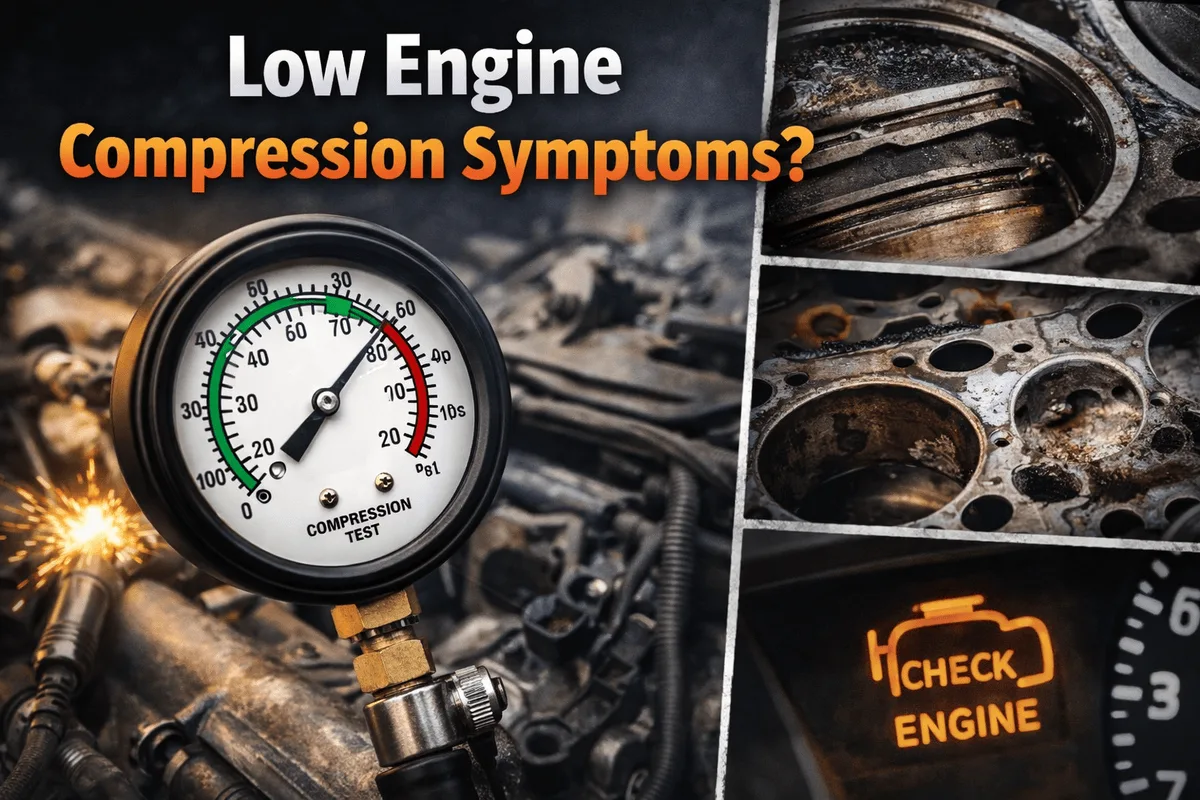
Compression test
This measures how much pressure each cylinder produces. Large differences between cylinders usually indicate trouble.
Leak-down test
This test shows where compression is escaping—from valves, rings, or gaskets.
These tests turn guesswork into facts.
Can You keep driving with low engine compression?
This depends on severity.
In mild cases:
- The car may run for a long time
- Performance and efficiency suffer
In severe cases:
- Damage worsens quickly
- Breakdowns become more likely
Driving doesn’t fix the issue—it slowly makes it more expensive.
Why low compression problems rarely fix themselves
Unlike sensors or electrical issues, compression problems are mechanical.
That means:
- Worn parts don’t heal
- Leaks don’t seal themselves
- Damage accumulates over time
Ignoring symptoms only delays the inevitable.
How low compression affects long-term engine life
An engine with healthy compression can last for years. Once compression drops:
- Internal stress increases
- Other components wear faster
- Reliability declines
It’s not just about power—it’s about longevity.
Repair options and what they usually involve
Repair depends entirely on the cause.
- Valve repairs may require head work
- Ring wear often means major engine disassembly
- Head gasket replacement is labor-intensive
Some fixes are manageable. Others require big decisions.
When repair makes sense—and when it doesn’t
I’ve learned this part is as emotional as it is mechanical.
Repair often makes sense when:
- The car is otherwise reliable
- Damage is limited
- Repair cost is reasonable
Replacement or moving on may make sense when:
- Multiple cylinders are affected
- Repair costs approach vehicle value
- Other major issues exist
There’s no shame in choosing practicality.
How to prevent compression problems now
Focus on:
- Regular oil changes
- Proper warm-up before hard driving
- Avoiding overheating
- Addressing small issues early
Compression problems often start small.
Common myths about low engine compression
“If it still runs, it’s fine.”
Not true. Engines can run poorly for a long time before failing.
“Additives can fix compression.”
They may mask symptoms briefly but don’t repair worn metal.
“Only old cars have compression issues.”
Modern engines can suffer too, especially if maintenance is skipped.
The emotional side no one talks about
Low compression doesn’t just affect the car—it affects confidence. You start wondering if it’ll start today. You hesitate on long trips. That uncertainty adds stress.
Understanding the problem helps you take control instead of guessing.
If you suspect low compression
If your car feels weak, rough, or unreliable:
- Don’t jump to conclusions
- Get proper testing
- Ask for clear explanations
Knowledge saves money and frustration.
Final thoughts: straight talk, no panic
Low engine compression sounds scary—and it can be serious—but it doesn’t mean immediate disaster. The key is awareness. The earlier you recognize the symptoms, the more options you have. Engines speak quietly before they fail. If you listen closely, you can often make smarter choices before the situation gets out of hand.
If you want, you can tell me your car’s mileage, symptoms, and driving habits. I’ll help you understand whether what you’re feeling points toward compression issues or something less serious—just like I’d do for a friend.