Spark plugs rarely fail in obvious or dramatic ways. In many cases, an engine may begin to run rough, consume more fuel, or struggle during cold starts even though the plugs appear mostly intact at first glance. This is because spark plug wear often shows up through subtle visual changes rather than clear physical damage.
Coloration, deposits, electrode wear, and heat marks can all reveal important information about combustion quality, fuel mixture, and overall engine health. Without knowing what a healthy spark plug should look like, these warning signs are easy to overlook or misinterpret.
Understanding how to read a spark plug correctly helps identify early problems before they lead to misfires, poor performance, or more serious engine issues. The explanation ahead focuses on what normal spark plug condition looks like, the visual signs of common problems, and how those clues relate to what is happening inside the engine—clearly and without unnecessary technical complexity.
Why Spark Plugs Matter More Than People Think
Spark plugs may be small, but they play a critical role every time the engine runs. Their job is simple in theory: create a spark that ignites the air and fuel mixture inside the engine. That tiny spark sets off a chain reaction that powers the entire vehicle.
When a spark plug isn’t doing its job correctly, the engine feels it immediately. Power becomes uneven. Starts take longer. Fuel doesn’t burn cleanly. Over time, that imbalance puts stress on other components that were never meant to compensate.
What surprised me most was how much information a spark plug carries on its surface. Once you know how to read it, it’s almost like the engine leaves you a note explaining what’s wrong.
What a Healthy Spark Plug Looks Like
Before identifying problems, it helps to know what “good” looks like.
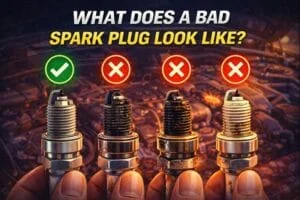
A normal spark plug usually has:
- a light tan or grayish color on the tip
- clean, dry surfaces
- minimal wear on the electrode
- no heavy buildup or strong odor
This appearance tells you the engine is burning fuel properly and the plug is firing as it should. No drama. No warning signs.
The Most Common Signs of a Bad Spark Plug
Heavy black buildup
One of the first red flags is a thick, dark coating on the tip. This usually points to fuel not burning completely. Instead of clean ignition, residue builds up over time.
This kind of buildup can come from:
- overly rich fuel mixture
- extended idling
- frequent short trips
Once the plug gets coated, the spark weakens, and the cycle gets worse.
Oily residue that feels slick
This one caught my attention immediately. The plug wasn’t just dark—it felt oily to the touch.
Oil on a spark plug usually means it’s entering the combustion chamber. That oil doesn’t belong there, and its presence often hints at deeper wear elsewhere in the engine.
Even if the engine still runs, oily plugs rarely improve on their own.
White or blistered surfaces
At the other end of the spectrum, I’ve seen spark plugs that looked almost burned clean—chalky, pale, or blistered.
This appearance often suggests excessive heat. When a plug runs too hot, it can:
- damage internal surfaces
- create pre-ignition
- shorten the life of surrounding components
Heat damage doesn’t always happen overnight. It builds gradually, which is why visual inspection matters.
Cracked porcelain insulator
The white ceramic portion of the spark plug is designed to withstand intense conditions, but it isn’t indestructible.
Fine cracks or chips in this area may not seem serious, but they disrupt the electrical path. Once that happens, the spark becomes unpredictable.
I’ve learned to rotate plugs slowly under light—hairline fractures are easier to see that way.
Rounded or eroded electrode
Spark plugs wear down naturally, but excessive erosion changes how the spark behaves.
When the electrode becomes rounded or uneven:
- the spark weakens
- ignition timing becomes inconsistent
- the engine may hesitate or misfire
This kind of wear is gradual, which makes it easy to overlook unless you compare old and new plugs side by side.
What the Color of a Spark Plug Can Tell You
Color matters more than most people realize.
- Light brown or gray usually indicates normal operation
- Dry black often points to unburned fuel
- Wet black suggests oil contamination
- Bright white can indicate excessive heat
Each shade tells part of the story. It’s not about memorizing charts—it’s about noticing patterns and changes.
How Spark Plug Damage Affects the Way the Engine Feels
The engine:
- idled unevenly
- hesitated during acceleration
- felt less responsive overall
Why Spark Plugs Don’t Fail All at Once
One of the biggest misconceptions is that spark plugs suddenly stop working.
In reality, they slowly lose effectiveness. The engine compensates at first, masking the issue. By the time symptoms become obvious, the plugs have often been struggling for a while.
That gradual decline is why visual inspection is so valuable.
How to Inspect a Spark Plug Properly
Look for:
- consistent color
- surface texture
- unusual smells
- visible cracks or damage
Also compare plugs from different cylinders. Differences between them can reveal uneven conditions inside the engine.
Why Cleaning a Bad Spark Plug Isn’t Always a Solution
It’s tempting to clean and reinstall a spark plug, especially if it doesn’t look severely damaged.
While cleaning can help temporarily, it doesn’t fix:
- internal wear
- heat damage
- weakened electrodes
In many cases, replacement is the smarter long-term choice.
The Relationship Between Spark Plugs and Fuel Efficiency
Poor ignition leads to incomplete combustion, which wastes fuel. Once the plugs were replaced, the improvement was immediate and noticeable.
It reinforced how small parts can have large effects.
How Often Spark Plugs Should Be Checked
Even long-life plugs benefit from occasional inspection.
Now check them:
- when performance changes
- during major maintenance
- if starting becomes inconsistent
You don’t need to be obsessive—just attentive.
Why Different Engines Show Different Spark Plug Wear
Not all engines treat spark plugs the same way.
Factors include:
- engine design
- fuel quality
- driving patterns
- maintenance history
That’s why comparing your plug to a generic photo online isn’t always helpful. Context matters.
What a Bad Spark Plug Sounds Like from the Driver’s Seat
You might hear:
- uneven idle
- light popping
- hesitation under load
Those sounds aren’t random. They’re the audible result of inconsistent ignition.
When One Bad Spark Plug Causes Bigger Problems
An engine relies on balance. One failing plug can cause:
- vibration
- increased strain on other cylinders
- premature wear elsewhere
Fixing a single weak link early prevents wider issues.
Replacing Spark Plugs: Why It’s Often Worth It
Spark plugs are relatively inexpensive compared to the problems they can cause if ignored.
When I finally replaced mine, the engine felt smoother almost immediately. That instant feedback made the decision feel obvious in hindsight.
Final Thoughts
A bad spark plug doesn’t always look dramatic. Sometimes it looks almost normal, which is what makes it tricky.
The key is learning what to look for and trusting what you see. Spark plugs tell a story about what’s happening inside your engine. Once you know how to read that story, you gain a level of understanding that makes car ownership far less stressful.
If something feels off, don’t ignore it. Take a look. Sometimes the answer is sitting quietly at the end of a small metal thread, waiting to be noticed.