The term make of a car appears constantly—on insurance forms, registration documents, repair estimates, vehicle listings, and dealership paperwork. It sounds simple, yet many drivers quietly confuse it with model, brand, trim level, or body style. Because the words are often used casually in conversation, the difference isn’t always explained clearly.
Understanding what a car’s make actually refers to is more important than it seems. It affects how vehicles are identified in legal documents, how parts are sourced, how insurance policies are written, and how cars are categorized in listings and databases. Mixing it up with model or trim may not matter in casual talk, but it can create mistakes in paperwork or transactions.
This guide clarifies exactly what the make of a car means, how it differs from related terms like model and trim, and why the distinction matters in real-world situations. The explanation is straightforward, practical, and easy to apply—so there’s no confusion the next time the question comes up.
What the Make of a Car Means
The make of a car refers to the company or manufacturer that built the vehicle. That’s it. Nothing more complicated than that.
When you say the make of your car, you name the brand behind it — the company responsible for designing, building, and selling it.
Examples of car makes include:
- Toyota
- Ford
- Honda
- BMW
- Chevrolet
If someone asks for the make, they’re asking who made the car, not which specific car it is.
Why People Often Confuse Make and Model
This confusion is incredibly common, and understand why.
The make and model are almost always said together:
- Toyota Camry
- Ford Mustang
- Honda Civic
When we hear them as a pair, they start to feel like one thing. But they’re not.
- Make = the manufacturer
- Model = the specific vehicle produced by that manufacturer
Once you separate those two ideas in my head, everything else made sense.
How to Remember the Difference
Here’s the simple way you remember it:
- The make is the name on the building.
- The model is the product that comes out of that building.
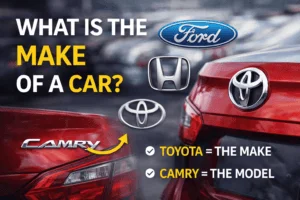
Toyota builds many cars. Camry is one of them. That makes Toyota the make and Camry the model.
If you remember who built it versus what it’s called, you’ll never mix them up again.
Why the Make of a Car Matters More Than You Think
At first, knowing the make seems like a small detail. But it actually plays a role in a lot of important situations.
The make matters when:
- Registering a vehicle
- Buying or renewing insurance
- Ordering parts
- Getting repairs
- Selling or trading in a car
- Checking recalls
We’ve seen paperwork delayed simply because someone listed the wrong make.
Make vs Brand: Are They the Same Thing?
Most of the time, yes — but not always.
In everyday conversation, people use make and brand interchangeably. That usually works fine. However, some manufacturers own multiple brands.
For example:
- A large automotive group may own several makes
- Each make operates under its own name and identity
When filling out official documents, the make is the specific brand printed on the vehicle, not the parent company behind it.
How the Make Appears on Paperwork
Whenever you look at official vehicle documents, the make is always clearly listed.
You’ll usually find it on:
- Registration papers
- Insurance cards
- Title documents
- Vehicle history reports
It’s typically written in plain text and matched to the vehicle identification number.
Where to Find the Make on the Car Itself
If you’re ever unsure, the car itself usually tells you.
Look for the make:
- On the front grille
- On the rear badge
- On the steering wheel
- In the owner’s manual
The manufacturer’s logo is almost always visible somewhere obvious.
Make vs Model vs Trim: Clearing Up All Three
This is where people really start to get confused, so let me break it down clearly.
- Make: The manufacturer
- Model: The specific vehicle
- Trim: The version or package of that model
For example:
- Make: Honda
- Model: Accord
- Trim: EX, Sport, or Touring
When someone asks for the make, they only want the first part.
Why Forms Ask for Make Separately
Used to wonder why forms don’t just ask for the full vehicle name.
The reason is organization.
Systems group vehicles by:
- Manufacturer first
- Model second
- Year and trim after
This helps databases stay consistent and accurate.
How Mechanics and Shops Use the Make
From my experience, the make tells mechanics a lot before they even see the car.
It helps them know:
- Typical design standards
- Common problem areas
- Part compatibility
- Repair procedures
Different manufacturers build cars differently, even when they look similar on the outside.
Why Insurance Companies Care About the Make
Insurance pricing is often influenced by the make.
Some manufacturers:
- Cost more to repair
- Use specialized parts
- Have higher theft rates
- Require specific repair methods
The make helps insurers assess risk and cost.
Does the Make Affect Resale Value?
Absolutely.
Some manufacturers are known for:
- Long-term reliability
- Lower ownership costs
- Strong resale demand
Others may depreciate faster. When buyers scan listings, the make is often the first thing they notice.
Electric and Hybrid Vehicles: Does the Meaning Change?
No — the definition stays the same.
Even with newer vehicle types:
- The make is still the manufacturer
- The model is still the specific vehicle
The technology may change, but the terminology doesn’t.
Why Knowing the Make Helps When Buying a Car
When you shop for a car, the make helps narrow my expectations.
It tells us:
- What kind of engineering philosophy to expect
- How parts availability might look
- What ownership experience is common
Knowing the make helps set realistic expectations before test-driving anything.
Common Mistakes
Mistakes We’ve seen:
- Listing the model as the make
- Using the dealership name instead of the manufacturer
- Guessing instead of checking paperwork
- Mixing trim level into the make
These mistakes are easy to avoid once you understand the basics.
Why This Term Shows Up So Often
The make is one of the most basic identifiers of a vehicle. It’s used everywhere because it provides instant context.
It tells people:
- Who built the car
- What standards apply
- Where to look for information
That’s why it never goes away, no matter how advanced cars become.
Why Understanding This Saves Time
- Second-guessing forms
- Correcting paperwork later
- Feeling unsure during conversations
It’s a small piece of knowledge that makes everything smoother.
Final Thoughts
Understanding what the make of a car means sounds simple — and it is — but only once it’s explained clearly. Confusion usually comes from hearing terms used together without explanation. Once you separate them, everything falls into place.
The make tells you who built the car. That single detail connects to paperwork, repairs, insurance, value, and ownership in ways most people don’t realize at first.
If you ever feel unsure again, just ask yourself one question: Who made the car?
The answer to that question is always the make.