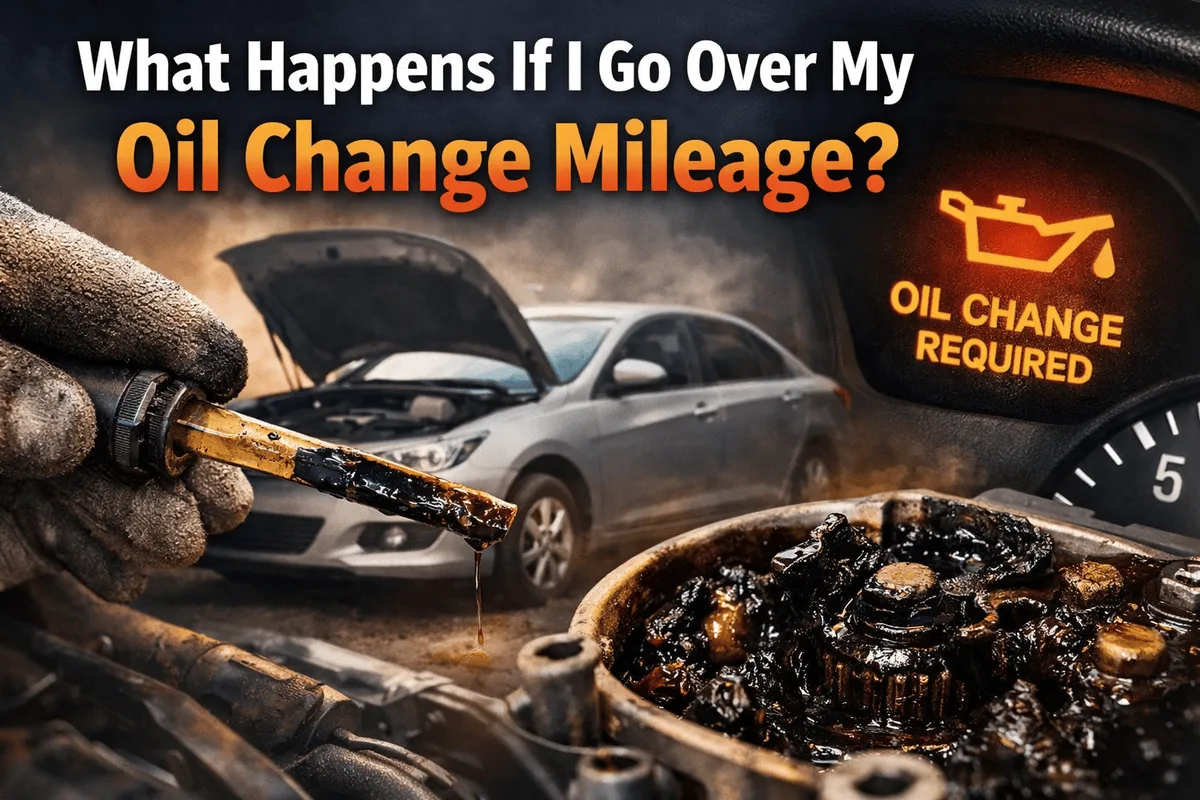
Modern engines are designed to operate quietly and smoothly, even when maintenance is overdue. That refinement often hides early warning signs, which is why vehicles can continue to feel “normal” long after an oil change interval has passed. The absence of noise or dashboard alerts does not mean the engine is unaffected.
Engine oil plays a critical role in lubrication, cooling, contamination control, and wear protection. As oil ages, its ability to perform these functions declines gradually rather than failing all at once. Friction increases, heat management becomes less effective, and microscopic wear begins to accumulate inside the engine.
The explanation that follows outlines what actually happens when oil change intervals are exceeded, how those changes affect engine components over time, and why damage often develops quietly before symptoms become obvious. The focus is on realistic outcomes and practical maintenance decisions, not scare tactics or assumptions.
Why engine oil matters more than most people think
Engine oil isn’t just there to “keep things slippery.” That’s only part of the story. Inside your engine, metal parts move thousands of times per minute. Oil creates a thin protective layer between them so they don’t grind each other down.
Here’s what oil does every second your engine is running:
- Reduces friction between moving parts
- Carries heat away from critical areas
- Cleans microscopic debris and soot
- Prevents corrosion inside the engine
- Helps seals stay flexible
When oil is fresh, it handles all of this easily. When it’s overdue, each of these jobs becomes harder—and that’s where problems begin.
What “going over mileage” actually means
When your car recommends an oil change at a certain mileage, it’s not an exact cliff where the engine suddenly fails. Think of it more like a buffer zone.
If your oil change interval is:
- 5,000 miles – going 5,500 usually isn’t catastrophic
- 7,500 miles – pushing to 8,000 adds wear
- 10,000 miles – exceeding it regularly compounds damage
The issue isn’t going over at once. It’s how far and how often you do it.
The first thing that changes: oil breaks down
Over time, oil loses its ability to protect. Heat, pressure, and contaminants slowly alter its structure.
When oil degrades:
- It becomes thinner in some places, thicker in others
- It can’t hold contaminants as well
- Its ability to cushion metal parts weakens
You won’t feel this from the driver’s seat. But inside the engine, friction quietly increases.
Sludge: the slow killer most people never see
One of the biggest risks of overdue oil changes is sludge buildup. Sludge is thick, sticky residue formed when oil breaks down and mixes with dirt, moisture, and combustion byproducts.
Sludge can:
- Block oil passages
- Restrict oil flow to critical parts
- Trap heat inside the engine
Once sludge forms, it doesn’t just “go away” with fresh oil. In severe cases, it requires expensive cleaning or internal repairs.
How engine wear increases without warning
When oil can’t do its job properly, metal parts start making direct contact more often.
Common areas affected:
- Camshafts
- Crankshaft bearings
- Piston rings
- Valve train components
This wear is microscopic at first. But engines are built with extremely tight tolerances. Even small increases in wear reduce efficiency and shorten engine life.
Fuel economy quietly drops
One thing we noticed after delaying oil changes is worse fuel mileage. It wasn’t dramatic, but it was consistent.
Why it happens:
- Increased friction makes the engine work harder
- The engine needs more fuel to produce the same power
You might not connect poor mileage to old oil, but they’re closely related.
Engine temperature creeps up
Oil also helps manage heat. As it degrades:
- Heat transfer becomes less efficient
- Hot spots develop inside the engine
While the temperature gauge may still look normal, internal components experience higher stress. Over time, this contributes to gasket wear and seal failure.
Oil consumption often increases
Old oil can thin out or burn more easily, especially in higher-mileage engines.
Signs include:
- Needing to top off oil between changes
- Oil level dropping faster than usual
Low oil levels combined with degraded oil accelerate damage even further.
The oil warning light misconception
Many people believe the oil warning light means “time for an oil change.” In reality, that light usually indicates low oil pressure, not oil condition.
By the time it comes on:
- Damage may already be happening
- Oil may not be reaching critical components
Relying on the warning light instead of mileage or time intervals is a risky habit.
What happens if keep doing this long-term
Going over mileage once or twice usually won’t destroy an engine. Making it a habit can.
Long-term consequences include:
- Accelerated engine wear
- Reduced engine lifespan
- Costly internal repairs
- Lower resale value
Engines that receive regular oil changes often last hundreds of thousands of miles. Neglected engines rarely do.
Turbocharged engines suffer faster
If your car has a turbocharger, overdue oil changes are even riskier.
Turbos:
- Spin at extremely high speeds
- Rely heavily on clean, high-quality oil
- Are sensitive to sludge and heat
Old oil can cause turbo bearing failure, which is expensive and sometimes catastrophic.
Short trips make overdue oil worse
If most of your driving is short trips:
- Oil doesn’t fully warm up
- Moisture builds up inside the engine
- Contaminants accumulate faster
In this case, even small delays matter more.
Synthetic oil vs conventional: does it change things?
Synthetic oil generally:
- Resists breakdown longer
- Handles heat better
- Flows more consistently
That said, synthetic oil isn’t magic. Going far beyond recommended intervals still leads to degradation and wear.
How far over is “too far”?
There’s no universal number, but here’s a realistic way to think about it:
- 500–1,000 miles over once: Usually minimal risk
- 2,000–3,000 miles over repeatedly: Noticeable wear over time
- 5,000+ miles over: High risk of sludge and internal damage
Consistency matters more than a single delay.
What to do if realize I’m overdue
Approach to follow:
- Schedule an oil change as soon as possible
- Avoid hard driving until it’s done
- Check oil level immediately
- Listen for unusual noises
Quick action limits damage.
Should You get an engine flush?
Engine flushes can help in certain situations, but they’re not always necessary.
They may help if:
- Oil changes were skipped repeatedly
- Sludge is suspected
They can be risky if:
- The engine is very old
- Seals are already weakened
The cost difference that surprised me
Here’s the part that really changed my mindset.
- Regular oil change: relatively inexpensive
- Sludge cleaning or engine repair: extremely costly
Delaying oil changes doesn’t save money—it postpones spending and multiplies it later.
How overdue oil affects resale value
Service records matter. Buyers and dealers look for consistent maintenance.
Poor oil change history can:
- Lower trade-in offers
- Raise concerns about engine health
- Reduce buyer confidence
Even if the engine seems fine now, perception matters.
Time-based oil changes matter too
Mileage isn’t the only factor. Oil also degrades with time.
If you don’t drive much:
- Oil still absorbs moisture
- Additives still break down
Most manufacturers recommend changing oil at least once a year, even with low mileage.
Signs my engine oil has gone too far
Here’s what you watch for:
- Dark, thick oil on the dipstick
- Burning oil smell
- Louder engine operation
- Reduced smoothness
These are signs to act immediately, not wait.
Modern cars vs older cars
Modern engines:
- Have tighter tolerances
- Rely on precise oil flow
- Are less forgiving of neglect
Older engines were simpler, but even they benefit hugely from clean oil.
Why engines don’t fail immediately
People often say, “I skipped oil changes and my car was fine.” That’s true—until it isn’t.
Engines fail gradually:
- Wear accumulates invisibly
- Damage compounds
- Failure appears sudden but isn’t
By the time symptoms show, the damage is already done.
Final thoughts
If you’ve gone over your oil change mileage, don’t beat yourself up. Most of us have done it. The key is what you do next. Take care of it sooner rather than later. Your engine doesn’t ask for much—just clean oil at reasonable intervals.
That small habit is one of the biggest reasons some cars run smoothly for decades while others don’t make it half as far. If you want, tell me your car’s age, mileage, and driving style, and I’ll help you figure out a realistic oil change routine that actually fits your life.