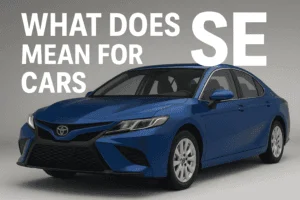
SE is one of the most commonly used trim designations in the automotive world, yet it is also one of the least clearly understood. The letters appear across a wide range of vehicles, from compact sedans to midsize SUVs, but their meaning is not universal.
Depending on the manufacturer, SE can indicate a balance between base and premium features, a specific equipment package, or a styling-focused trim level.
This guide explains what SE typically stands for, how different automakers use the designation, and what buyers should realistically expect from an SE trim when comparing models.
What SE Means in the Automotive World
The letters SE typically stand for Special Edition, Sport Edition, or Standard Edition, depending on the manufacturer. It’s not a universal label that always means the same thing. Instead, it’s a trim level—a way for carmakers to organize different versions of the same model.
When you walk through a dealership, you’ll see badges like LX, LE, SE, SEL, S, EX, XLE, or Sport—each one representing a different combination of features. SE is usually positioned somewhere in the middle: higher than a base model but not the most premium option.
However, the exact meaning changes based on the brand. Some manufacturers use SE to denote a sportier variant, while others use it to describe a value-packed trim with extra features.
Why Car Manufacturers Use Trim Levels Like SE
Before diving deeper into what SE includes, it helps to understand why carmakers use trim levels in the first place.
1. To Offer Different Price Points
Not everyone wants a fully loaded model. Some people want a simple car; others want every convenience available. Trim levels make this possible.
2. To Group Features Logically
Instead of choosing 30 different individual features, customers can pick a trim with a bundled set of upgrades.
3. To Distinguish Between Versions
A base model often has fewer comfort and tech features, while higher trims include advanced safety systems, upgraded interiors, or performance improvements.
4. To Make Marketing Easier
A badge like “SE” instantly conveys something to a shopper—whether it’s sportiness, value, or a certain equipment level.
The Most Common Meanings of SE
Different brands interpret SE differently, but there are three definitions you’ll encounter most often:
1. Special Edition
This version includes added or exclusive features compared to the base trim. It may include upgraded wheels, interior accents, infotainment features, or unique design details.
2. Sport Edition
This variant adds a bit of performance flavor—firmer suspension, sportier styling, paddle shifters, or unique wheels. It isn’t a full performance package but offers a lively feel at an affordable price.
3. Standard Edition
Some automakers use SE as a simple step up from the base model, offering a balanced mix of comfort and affordability.
How Different Brands Define SE
Let’s break down how popular manufacturers use the SE label. This helps you understand what to expect before you even sit in the car.
Toyota SE
For Toyota, SE usually stands for Sport Edition. You’ll typically find:
- A firmer, more responsive suspension
- Sport-styled wheels
- A rear spoiler
- Slightly more aggressive front and rear bumpers
- Paddle shifters in some models
- Upgraded seats with better lateral support
Toyota tends to position the SE trim just above the base level. If you like a sharper feel without committing to a full sport trim like the XSE, the SE is usually the sweet spot.
Honda SE
Honda occasionally uses Special Edition for SE trims. The features vary by model year, but SE versions tend to include:
- Added convenience features
- Extra safety technology
- Upgraded upholstery
- Better audio systems
- Small styling touches
For Honda, SE often fills a gap between the base model and mid-level trims.
Ford SE
Ford has used SE to mean Special Edition or Standard Edition, depending on the model. In many Ford vehicles, SE trims include:
- Larger infotainment screens
- More comfortable seating
- Alloy wheels
- Added connectivity options
- Upgraded interior materials
Ford SE models usually focus on value—more features without jumping into premium territory.
Hyundai SE
Hyundai often uses SE as a step above the entry-level trim. Typical features include:
- Upgraded infotainment
- Additional safety systems
- Alloy wheels
- Cloth interiors with better stitching
- Improved driver-assist features
It’s more comfort-focused than sport-focused.
Kia SE
Kia’s use of SE varies by model, but it frequently means Special Edition. Expect:
- Better infotainment
- Convenience upgrades
- Smart key entry
- Additional USB ports
- Better seat materials
Kia focuses on offering strong value for the price.
Volkswagen SE
Volkswagen uses SE to represent a mid-range trim offering a practical but premium experience. Typical features include:
- Larger touchscreens
- More advanced safety tech
- Heated seats
- Premium materials
- Convenience upgrades like remote start
Volkswagen SE trims tend to feel more polished than entry-level models.
Nissan SE
Nissan has previously used SE to mean Sport Edition. Expect:
- Sport suspension
- Unique wheels
- More responsive steering
- Subtle design enhancements
In older Nissan models, the SE trim was popular among drivers who wanted a little more energy on the road.
What You Can Expect from an SE Trim (General Overview)
Because different brands define SE differently, the exact features change—but there is a consistent pattern across the industry.
Here’s what you’ll usually get:
1. A Better Interior Than the Base Model
This may include:
- Nicer seat fabrics
- A leather-wrapped steering wheel
- Improved interior trims
- Better center console layout
It’s not luxury, but it feels noticeably more refined.
2. Additional Technology
Most SE trims include:
- A larger touchscreen
- Smartphone integration
- Better sound systems
- Extra USB ports
The goal is to offer a well-rounded tech experience without going premium.
3. Appearance Upgrades
Small but noticeable styling changes make SE cars look sharper than the entry-level model.
4. Optional Sport Enhancements
If the brand uses SE as a sport trim, you might get a firmer suspension, different wheels, or a sport-tuned feel.
5. Reasonable Price Jump
SE trims are usually priced where most buyers feel comfortable—not too high, not too basic.
Why Many Buyers Prefer the SE Trim
Over time, we’ve noticed that SE trims consistently hit a sweet spot. They offer enough upgrades to make the car feel modern and enjoyable but without pushing the price into luxury territory.
Here’s why shoppers often gravitate toward SE models:
1. Better Resale Value
Cars with mid-level trims generally sell faster on the used market because they offer more features without scaring away budget-conscious buyers.
2. Balanced Pricing
SE models usually cost just a bit more than the base trim but offer enough extra features to justify the difference.
3. Practical Feature Set
Many people don’t need leather seats or a panoramic sunroof—they just want a comfortable, well-equipped car. SE trims fit that need perfectly.
4. Availability
Dealerships often stock SE models more frequently than base trims.
5. More Enjoyable Daily Use
Small upgrades—like better audio, heated seats, or a larger screen—can improve everyday comfort.
Is an SE Trim Worth Buying? A Practical Breakdown
Let’s take a realistic look at whether the SE model is the right fit for you.
Choose SE if you want:
- A smart balance of features and pricing
- Better tech and interior comfort
- A slight upgrade in handling (if it’s a sport-style SE)
- A clean, modern feel without premium pricing
Skip SE if you prefer:
- The lowest possible purchase price
- Full luxury (go for XLE, Limited, Touring, or similar)
- Maximum performance (look for sport trims beyond SE)
For most everyday buyers, the SE hits the perfect middle ground.
How SE Fits into a Typical Trim Lineup
Here’s an example of how SE sits in a standard trim hierarchy:
- Base / L / S / LE – simplest features
- SE – noticeable upgrades
- SEL / XLE / EX / Limited – premium comfort features
- Sport-specific versions or luxury trims – highest price, most features
SE typically lands in the “value and comfort” zone.
Common Misconceptions About the SE Trim
1. “SE means luxury.”
Not exactly. SE adds convenience and comfort, but it doesn’t transform the car into a high-end model.
2. “All SE cars are sporty.”
Only some brands use SE to mean sport—others use it purely as a convenience trim.
3. “SE is always mid-level.”
In most brands, yes, but a few use SE for special editions with uncommon features.
Examples of Popular SE Cars on the Market
Here are some well-known models where the SE trim is commonly chosen:
- Toyota Camry SE
- Toyota Corolla SE
- Hyundai Elantra SE
- Ford Escape SE
- Ford Fusion SE (discontinued but popular used)
- Volkswagen Jetta SE
- Kia Forte SE (varies by year)
- Honda Accord SE (special edition variants)
These models show how widely the SE label is used—and how differently each brand defines it.
Final Thoughts
If you’ve ever stood in front of a car with an SE badge and wondered what those two letters stand for, you now know that the meaning depends on the brand—but the intention is consistent. SE trims offer a practical step up from the base model with better features, more comfort, a little extra confidence behind the wheel, and a more enjoyable daily experience.
When shopping for a car, think of SE as the trim that tries to balance everything: price, comfort, technology, style, and sometimes sportiness. Whether you’re buying new or used, the SE trim is often the version that feels “just right” for most drivers.