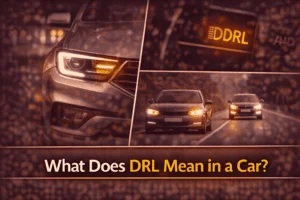
The term DRL appears on dashboards, vehicle settings, and owner’s manuals, yet it’s often misunderstood or overlooked. Unlike warning lights that signal a fault, DRL refers to a normal lighting feature designed to operate automatically under specific conditions. Because it doesn’t require driver input and rarely causes problems, many drivers notice it without fully knowing its purpose.
Daytime Running Lights are intended to improve vehicle visibility during daylight hours rather than illuminate the road ahead. Their function, behavior, and limitations are different from headlights, parking lights, or fog lights, which is where confusion usually begins. Some drivers assume DRL replaces headlights, while others are unsure when it turns on, off, or whether it can be disabled.
The explanation ahead clarifies what DRL means in a car, how the system works, why manufacturers include it, when it operates, and what it is not designed to do. The focus is on practical clarity so drivers know exactly what to expect from the feature in everyday driving situations.
The Simple Meaning of DRL
Let’s start with the basics.
DRL stands for Daytime Running Lights.
These are lights on the front of your car that:
- Turn on automatically
- Are designed to be used during the day
- Help make your car more visible to others
They are not headlights, and they are not meant to light the road.
Why DRL Exists in the First Place
Cars didn’t always have DRL.
They were introduced because studies showed something important:
- Cars that are easier to see are less likely to be involved in accidents
- Visibility matters even in daylight
- Other drivers notice cars with lights sooner
DRL isn’t about helping you see—it’s about helping others see you.
What DRL Is Designed to Do
DRL has one main purpose:
Make your car stand out during the day.
That’s it.
They help:
- Reduce head-on collisions
- Improve visibility in cloudy or hazy conditions
- Make cars noticeable in traffic
They work quietly in the background without needing driver input.
What DRL Does NOT Do
This is just as important.
DRL does not:
- Replace headlights at night
- Light up the road ahead
- Automatically turn on tail lights (in many cars)
This misunderstanding causes a lot of confusion and even accidents.
How DRL Is Different From Headlights
This is where people get mixed up.
Headlights:
- Are designed for night driving
- Illuminate the road
- Include low beams and high beams
DRL:
- Are dimmer
- Point forward only
- Are meant to be seen, not to see
They serve very different purposes.
Why DRL Looks Different From Car to Car
Not all DRL looks the same.
Depending on the car, DRL may be:
- A separate LED strip
- A dimmed version of the headlight
- A dedicated bulb in the headlamp housing
Design varies, but the function stays the same.
When DRL Turns On Automatically
In most cars, DRL turns on when:
- The engine is running
- The car is in gear
- The parking brake is released
You usually don’t need to press any button.
When DRL Turns Off
DRL typically turns off when:
- You turn on the headlights
- The car is turned off
- The parking brake is engaged
Once headlights are on, DRL usually steps aside.
Why DRL Turns Off When Headlights Are On
This is intentional.
When headlights activate:
- Full lighting system takes over
- DRL is no longer needed
- The car switches to proper night visibility mode
The systems are designed not to overlap unnecessarily.
DRL vs Automatic Headlights
These two are often confused.
Automatic headlights:
- Turn headlights on in low light
- Respond to darkness
DRL:
- Stay on in daylight
- Do not respond to darkness
You can have DRL without automatic headlights—and vice versa.
Can You Turn DRL Off?
This depends on the car.
In some vehicles:
- DRL can be turned off in settings
In others:
- DRL is always on by design
This often depends on local regulations and manufacturer choices.
Why Some Cars Don’t Let You Disable DRL
In many regions:
- DRL is legally required
- Manufacturers must keep it active
This is especially common in newer vehicles.
Why DRL Is Mandatory in Some Countries
Certain countries require DRL by law because:
- Accident rates dropped after adoption
- Daytime visibility improved
- Safety benefits were consistent
In these places, DRL is not optional.
Why DRL Is Not Mandatory Everywhere
In other regions:
- Headlight use laws differ
- Driver habits vary
- Climate conditions influence policy
So DRL requirements aren’t universal—but they’re becoming more common.
DRL and Dashboard Indicators
Some cars show a DRL symbol on the dashboard.
This usually means:
- DRL is active
- The system is functioning normally
It is not a warning light.
What a DRL Warning Light Means
In some cars, a DRL warning appears if:
- A DRL bulb or LED fails
- The system detects a problem
This doesn’t mean the car is unsafe—it means visibility may be reduced.
DRL vs Parking Lights
Parking lights are different again.
Parking lights:
- Are very dim
- Include front and rear lights
- Are meant for stationary vehicles
DRL is brighter and intended for movement.
Why Tail Lights Often Stay Off With DRL
This is one of the most dangerous misunderstandings.
In many cars:
- DRL turns on front lights only
- Rear lights stay off
That means at dusk, fog, or rain:
- The car may look “lit” from the front
- But invisible from behind
This is why drivers must still manually turn on headlights.
Common Mistakes
- Rely on DRL
- Assume their headlights are on
- Drive at night with no tail lights
This happens because DRL makes the dashboard look illuminated.
How to Avoid That Mistake
Follow one simple habit:
If visibility is reduced at all, turn on the headlights manually.
That ensures:
- Front lights are correct
- Rear lights are on
- The car is fully visible
DRL alone is not enough in poor conditions.
DRL in Rain, Fog, and Snow
This is where things get tricky.
In bad weather:
- DRL improves front visibility
- But rear visibility may still be poor
That’s why full headlights are always the better choice.
DRL and Fuel Efficiency
Some people worry DRL affects fuel use.
In reality:
- Power draw is minimal
- Fuel impact is almost zero
Especially with LED DRL, efficiency isn’t a concern.
DRL and Battery Life
DRL doesn’t drain the battery because:
- It only runs when the engine is on
- Charging system supports it
You don’t need to worry about battery issues from DRL.
DRL and LED Technology
Most modern DRL uses LEDs.
LED DRL:
- Last longer
- Use less power
- Produce bright, crisp light
That’s why newer cars have distinctive DRL designs.
Why DRL Became a Styling Feature
Car designers realized:
- DRL shapes can define brand identity
- Lighting became part of design language
That’s why some cars are instantly recognizable by their DRL pattern.
DRL and Safety Statistics
While do not throw numbers at you, the trend is clear:
- DRL improves daytime visibility
- Visibility reduces reaction time
- Reduced reaction time lowers accident risk
It’s a passive safety feature that works quietly.
Does DRL Replace Turning on Headlights?
Absolutely not.
Treat DRL as:
- A background safety layer
- Not a decision-maker
The driver is still responsible for proper lighting.
Why DRL Is Helpful for Older Drivers
For drivers with:
- Slower reaction times
- Reduced contrast vision
DRL helps other drivers notice them sooner.
DRL and Motorcycles: A Comparison
Motorcycles have used daytime lights for decades.
The same logic applies:
- Smaller vehicles benefit from being more visible
- DRL brings that benefit to cars
It’s a proven concept.
DRL in City Driving vs Highway Driving
In city traffic:
- DRL helps stand out among parked cars
On highways:
- DRL helps identify moving vehicles at distance
Both situations benefit from increased visibility.
Can DRL Fail?
Yes, but rarely.
Possible issues include:
- Burned-out bulb (older designs)
- Faulty LED module
- Electrical issue
Most failures show a dashboard notice.
What to Do If DRL Stops Working
If DRL fails:
- Still have headlights
- Fix it when convenient
- Don’t ignore it long-term
Visibility features should always work correctly.
DRL and Vehicle Inspections
In some regions:
- DRL is checked during inspection
- Non-functioning DRL may cause failure
This depends on local laws.
DRL vs Fog Lights
Fog lights:
- Are low-mounted
- Used in specific conditions
- Not automatic
DRL:
- Is automatic
- Used daily
- Not condition-specific
They serve different purposes.
Can DRL Be Too Bright?
DRL is regulated to:
- Be noticeable
- Not cause glare
If it feels blinding, there may be an issue.
Why DRL Is Sometimes Confusing at Night
At night:
- Dashboard lights are on
- DRL illuminates front
- Tail lights may be off
This creates a false sense of security.
That’s why awareness matters.
DRL in Older Cars
Older cars may:
- Not have DRL at all
- Use headlights at reduced power
Both are normal depending on design.
Why Some Drivers Don’t Like DRL
Common complaints include:
- Reduced control
- Confusion at night
- Styling preferences
But safety benefits outweigh these concerns for most people.
The One Rule to Follow With DRL
Here’s my personal rule:
“DRL is for daylight. Headlights are for visibility.”
Never mix the two roles.
Common Myths About DRL
“DRL means my lights are on.”
Not fully.
“DRL works at night.”
It’s not designed for that.
“DRL is optional.”
Not always.
When to Ignore DRL Completely
At night or in bad weather:
- Don’t think about DRL at all
- Manually control headlights
That keeps things simple and safe.
Final Thoughts
So, what does DRL mean in a car? It stands for Daytime Running Lights, and it exists for one simple reason: visibility. DRL helps other drivers notice your car during the day, reducing the chance of accidents before they ever happen.
It’s not a replacement for headlights, not a warning, and not something you need to stress over—but it is something you should understand.