When a Toyota Camry shows full electrical power but refuses to start, it creates a very specific kind of confusion. The dashboard lights up normally, accessories work, and everything appears ready—yet the engine does nothing. No cranking, no clicking, no response. From the driver’s seat, it feels like the car should start, but something invisible is stopping it.
This situation is more common than many Camry owners realize, and it doesn’t automatically point to a major failure. Electrical power and engine starting are controlled by different systems, and it’s entirely possible for one to work while the other doesn’t. When that happens, the problem is usually tied to a small group of components rather than the entire vehicle.
The explanation ahead breaks down what it actually means when a Camry has power but won’t start, which systems are involved, and which symptoms matter most. The goal is to help you think through the problem logically, rule out common causes, and avoid unnecessary panic or guesswork when the car stays silent.
What “Has Power but Won’t Start” Really Means
When people say their Camry has power, they usually mean:
- Dashboard lights turn on
- Interior lights work
- Radio and screen function
- Locks and windows operate
But starting the engine requires much more than basic electrical power.
Why Starting the Engine Is a Different Process
Starting the engine involves:
- Battery voltage
- Starter motor engagement
- Fuel delivery
- Ignition timing
- Engine management approval
If even one step fails, the engine won’t turn over.
Why This Situation Feels So Misleading
This problem is frustrating because:
- The car looks alive
- There are no obvious warning signs
- It happens suddenly
Power accessories require very little energy compared to starting the engine.
The Battery Can Still Be the Problem (Yes, Really)
This surprised me the most.
A battery can:
- Power lights and electronics
- Fail to supply enough current to start the engine
Starting requires a surge of power, not just voltage.
Why Weak Batteries Fool People
A weak battery often:
- Looks normal
- Doesn’t trigger warning lights
- Works intermittently
That’s why many Camry owners overlook it at first.
Why Cold Weather Makes This Worse
Cold temperatures:
- Reduce battery efficiency
- Increase engine resistance
A borderline battery often fails during cold starts.
Why Jump-Starting Sometimes Works (and Sometimes Doesn’t)
Jump-starting helps if:
- The battery is weak
- Connections are intact
It won’t help if the issue lies elsewhere.
Why Battery Connections Matter More Than You Think
Loose or corroded terminals can:
- Allow small electrical loads
- Prevent high-current flow
That’s why everything works except the starter.
Why the Starter Is a Common Culprit
If your Camry has power but won’t crank, the starter is a prime suspect.
A failing starter may:
- Click once
- Click repeatedly
- Do nothing at all
Silence doesn’t mean the starter is fine.
Why Starters Fail Without Warning
Starters often:
- Wear internally
- Fail suddenly
- Give no gradual symptoms
One day it works. The next day it doesn’t.
Why Tapping the Starter Sometimes Works
This old trick works because:
- Internal contacts stick
- Light impact frees them temporarily
If tapping helps, the starter is near the end.
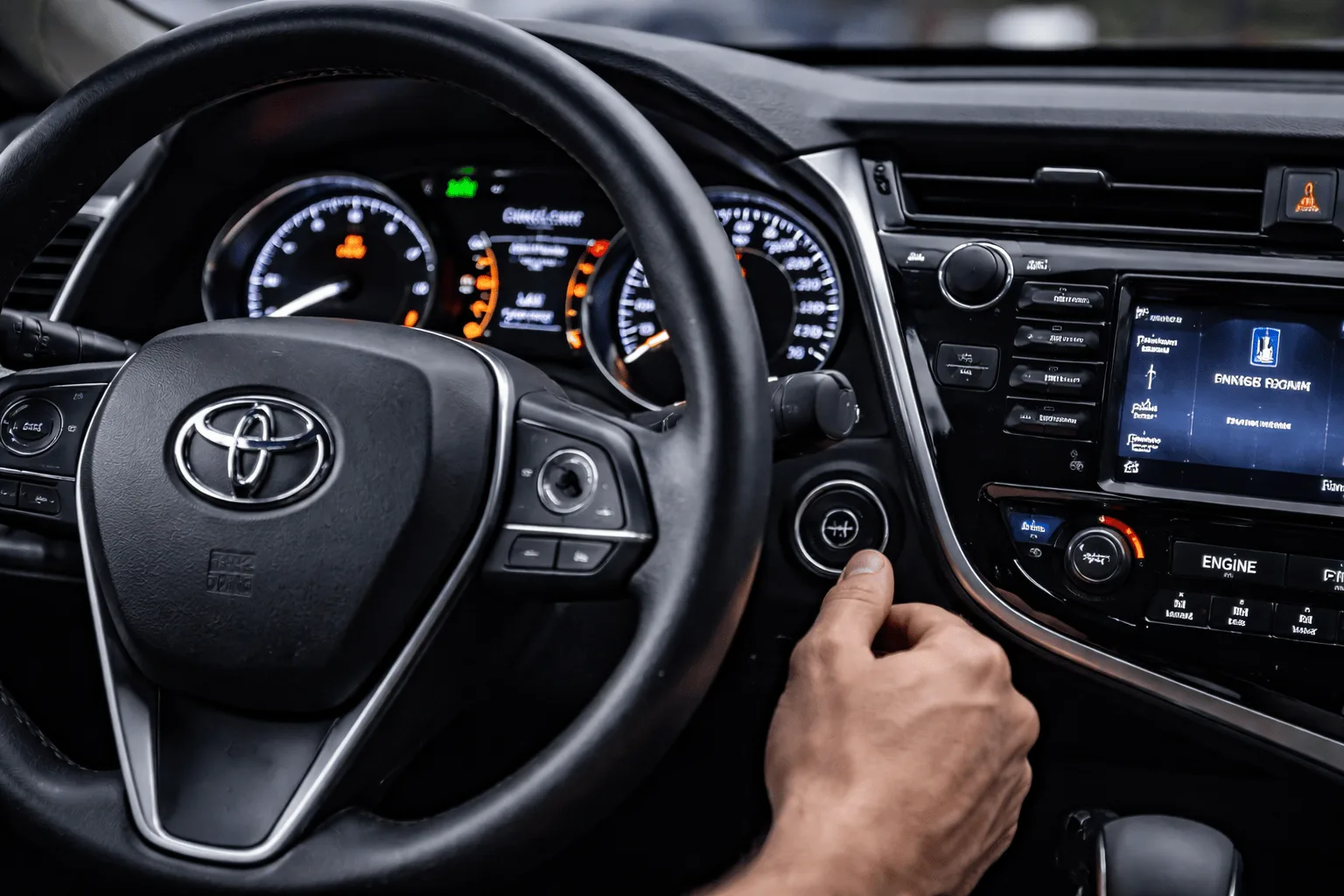
The Role of the Ignition Switch or Start Button
The ignition system sends the signal to start.
If it fails:
- The starter never receives a command
- The engine stays silent
This can happen even when everything else works.
Why Push-Button Models Have Unique Issues
Push-button Camrys rely on:
- Sensors
- Security verification
- Brake pedal signals
If any step fails, starting is blocked.
Why the Brake Pedal Matters
Most Camrys won’t start unless:
- The brake pedal is fully pressed
A faulty brake switch can prevent starting even with power.
Why You Should Check for Brake Lights
If brake lights don’t turn on:
- The system may not detect pedal input
- Starting is disabled
It’s a simple but often missed clue.
The Security System Can Prevent Starting
Toyota’s security system can:
- Disable the starter
- Block fuel delivery
This may happen without alarms or messages.
Why Key Recognition Problems Are Common
Smart keys can:
- Lose signal
- Have weak internal batteries
- Fail to be recognized
The car may power on but refuse to start.
Why Holding the Key Near the Button Can Help
Some Camrys have backup detection.
Holding the key close:
- Improves signal
- Bypasses weak batteries
If this works, the key battery is likely weak.
Why the Neutral Safety System Matters
Camrys won’t start unless:
- The transmission is in Park or Neutral
If the system doesn’t detect this, starting is blocked.
Why Shifting Gears Can Help
Moving the shifter:
- Re-engages sensors
- Corrects detection errors
Trying Neutral is always worth it.
Why the Engine Control System Has the Final Say
Modern Camrys won’t start unless:
- Sensors report safe conditions
- No critical faults are detected
The system prioritizes protection over convenience.
Why You Might Hear a Click but No Crank
A click often means:
- The starter relay is working
- The starter motor is not
This narrows the problem significantly.
Why No Sound at All Narrows It Further
Total silence suggests:
- No start signal
- Failed starter
- Electrical interruption
Silence is a clue, not a mystery.
Fuel Delivery Issues Can Also Prevent Starting
Even if the engine cranks, it won’t start without fuel.
Fuel-related issues can cause:
- Long cranking
- No ignition
- Intermittent starting
Though less common with no crank, they still matter.
Why Fuses and Relays Matter
A blown fuse or faulty relay can:
- Cut power to starting systems
- Leave accessories unaffected
They’re small but critical components.
Why Checking Fuses Is Always Worth Doing
It takes minutes and can:
- Save hours of diagnosis
- Prevent unnecessary repairs
Simple checks matter.
Why This Problem Often Happens Without Warning
Many starting components:
- Don’t degrade gradually
- Fail suddenly
That’s why the problem feels random.
Why It Often Happens at the Worst Time
Cars have a way of failing:
- When you’re in a hurry
- When you least expect it
That doesn’t mean you caused it.
Why Restart Attempts Can Make Things Worse
Repeated attempts can:
- Drain the battery
- Overheat the starter
Giving it a break can help diagnosis.
Why Panic Leads to Wrong Assumptions
When everything lights up, people assume:
- The battery is fine
- The problem must be complex
Often, it’s not.
Think Through the Problem Calmly
Ask yourself:
- Does it crank?
- Is there a click?
- Do brake lights work?
- Does Neutral change anything?
Answers guide the next step.
Why Patterns Matter
Does it happen:
- Only sometimes?
- Only when hot or cold?
- After short trips?
Patterns point to causes.
Why Ignoring Intermittent No-Start Issues Is Risky
Intermittent issues:
- Become permanent
- Leave you stranded eventually
Early attention prevents surprises.
Why This Issue Is So Common in Camrys
Camrys are reliable, but:
- Age affects components
- Electrical parts wear
- Starting systems take abuse
Reliability doesn’t mean immunity.
Why This Doesn’t Mean the Car Is “Bad”
A no-start issue doesn’t define the car.
It’s often:
- One component
- One connection
- One fix away
Perspective matters.
How to Decide When It’s Time for Help
Seek help when:
- The problem repeats
- Simple checks fail
- Want confirmation
Smart decisions save money.
Why Documentation Helps Technicians Help You
Clear descriptions like:
- “No crank, full power”
- “Single click”
- “Works in Neutral”
speed up diagnosis.
Why Guessing Costs More Than Testing
Replacing random parts:
- Gets expensive
- Doesn’t guarantee success
Testing beats guessing every time.
What This Experience Taught Me
This situation taught me:
- Power doesn’t equal readiness
- Starting systems are layered
- Calm thinking solves problems
Understanding removes fear.
Final Thoughts
If your Toyota Camry won’t start but has power, don’t assume the worst. From my experience, this situation usually points to a starting system interruption — not a dead car. Batteries, starters, switches, sensors, and security systems all play a role, and most failures happen silently.
The key is to observe, not panic. Pay attention to sounds, lights, and patterns. Each detail narrows the problem. With the right approach, this frustrating situation becomes manageable — and often fixable without major expense.
When everything turns on but the engine won’t, your Camry isn’t betraying you. It’s just waiting for one missing piece to fall back into place.