
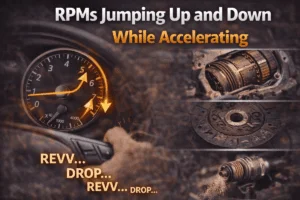
RPM fluctuations during acceleration are a clear sign that engine power delivery is not remaining stable under load. When the throttle is applied steadily but engine speed rises and falls on its own, the issue is rarely random. It usually points to a problem in how air, fuel, ignition timing, or transmission control is being managed while the vehicle is trying to gain speed.
Because the car may still accelerate and show no warning lights, this behavior is often dismissed early on. However, unstable RPMs during acceleration indicate that one or more systems are struggling to maintain consistent output. The problem tends to become more noticeable over time, especially during moderate throttle input, hill climbs, or gear changes.
The explanation ahead focuses on why RPMs can surge or drop while accelerating, which systems are most commonly involved, and how the pattern of the fluctuation helps narrow the cause. The emphasis is on identifying the root issue logically so corrections are based on evidence rather than assumptions or unnecessary part replacement.
What RPM jumping actually means
RPM stands for engine speed. When you press the accelerator, RPMs should rise smoothly and predictably.
When they jump up and down, it means:
- The engine is changing speed without matching your pedal input
- Or the engine speed is stable, but power delivery is inconsistent
- Or the transmission is slipping or disengaging momentarily
In short, something is interrupting the normal relationship between your foot, the engine, and the wheels.
Why this happens mostly during acceleration
Acceleration is when the car is under the most stress.
At that moment:
- The engine needs more air
- The engine needs more fuel
- The transmission needs to transfer power efficiently
If any part of that chain hesitates, slips, or miscommunicates, RPMs will fluctuate.
Cruising at a steady speed often hides these problems. Acceleration exposes them.
First to Know: egine issue or transmission issue?
This is the most important distinction.
Know this
- Do the RPMs jump without a matching increase in speed?
- Or do RPMs jump with a noticeable surge or hesitation?
If RPMs jump but speed doesn’t:
That usually points toward a transmission-related issue.
If RPMs jump and the car hesitates or stumbles:
That usually points toward an engine-related issue.
This single observation narrows things down dramatically.
Common transmission-related causes (very common)
1. Transmission slipping
This is one of the most frequent causes I’ve seen.
What slipping feels like
- RPMs rise suddenly
- Vehicle speed doesn’t increase right away
- Then things settle back down
It feels like the engine revs freely for a moment before reconnecting.
Why it happens
- Worn internal clutch packs
- Low or degraded transmission fluid
- Overheating
This is especially common in automatic transmissions with higher mileage.
2. Low or dirty transmission fluid
Transmission fluid does more than lubricate—it creates hydraulic pressure.
When fluid is:
- Low
- Old
- Contaminated
Pressure becomes inconsistent, causing RPM fluctuations during gear changes or acceleration.
Signs to notice
- Delayed gear engagement
- RPMs jump between shifts
- Behavior worsens when hot
3. Torque converter problems
The torque converter connects the engine to the transmission.
When it starts to fail:
- Power transfer becomes inconsistent
- RPMs may surge or dip unpredictably
This often shows up as:
- Shuddering
- RPM bouncing at steady throttle
- Poor response at low speeds
4. Transmission control issues
Modern transmissions rely on electronic control.
If signals are inconsistent:
- Gear selection becomes erratic
- RPMs fluctuate unexpectedly
This doesn’t always trigger warning lights right away.
Common engine-related causes (just as important)
1. Ignition misfires under load
Misfires don’t always feel dramatic.
Sometimes they show up as:
- Slight RPM drops
- Surging
- Inconsistent acceleration
Under load, weak spark becomes more obvious.
Common ignition-related culprits
- Worn spark plugs
- Weak ignition coils
- Failing plug wires
I’ve seen mild misfires cause RPM needles to dance without obvious shaking.
2. Fuel delivery inconsistencies
Fuel supply has to increase smoothly when you accelerate.
If it doesn’t:
- RPMs may surge
- Power delivery becomes uneven
Causes include
- Weak fuel pump
- Partially clogged fuel filter
- Dirty fuel injectors
Fuel starvation doesn’t always stall the engine—it often causes RPM instability first.
3. Throttle system issues
The throttle controls how much air enters the engine.
If airflow doesn’t match pedal input:
- RPMs rise and fall unpredictably
This can happen due to:
- Dirty throttle body
- Throttle plate sticking
- Throttle position sensor errors
This is especially noticeable at low to moderate acceleration.
4. Vacuum leaks
Engines are designed to measure incoming air precisely.
A vacuum leak allows extra air in:
- The engine computer overcorrects
- RPMs fluctuate as it tries to stabilize
Vacuum-related RPM jumping often comes with:
- Rough idle
- Hesitation
- Inconsistent response
Why RPMs sometimes jump only between gears
This is a key clue.
If RPMs:
- Jump during gear changes
- Settle once the gear engages
That usually points to:
- Transmission slipping
- Delayed shifting
- Hydraulic pressure issues
If RPMs jump even when staying in one gear, engine issues become more likely.
Cold engine vs warm engine behavior
Always pay attention to temperature.
RPM jumping when cold
Often related to:
- Cold fuel mixture adjustments
- Sensors warming up
- Idle and throttle control systems
RPM jumping when hot
More often related to:
- Transmission fluid thinning
- Heat-related electrical issues
- Failing components under stress
Temperature patterns matter more than people think.
Why the problem can come and go
RPM jumping can be:
- Intermittent
- Load-dependent
- Temperature-sensitive
Components don’t always fail instantly. They degrade gradually, causing inconsistent behavior before full failure.
Intermittent issues are early warnings.
How to diagnose RPM jumping step by step
Step 1: Watch the speedometer
If RPMs jump but speed stays steady, suspect the transmission.
If both fluctuate, look toward the engine.
Step 2: Note when it happens
- Light throttle or heavy throttle?
- Low speed or highway speed?
- Only during shifts or all the time?
Patterns narrow the cause quickly.
Step 3: Check fluid conditions
- Transmission fluid level and color
- Engine oil condition
Fluids tell stories.
Step 4: Listen and feel
- Engine sound
- Shuddering
- Delayed response
Your senses often catch what dashboards don’t show.
Why RPM jumping should not be ignored
Ignoring RPM fluctuations can lead to:
- Transmission damage
- Catalytic converter stress
- Engine wear
- Sudden drivability loss
What starts as a mild annoyance can become a major repair.
Can bad software or adaptation cause this?
Yes, especially in newer vehicles.
Transmission and throttle systems:
- Learn driving behavior
- Adjust shift points over time
Sometimes these adaptations become unstable due to:
- Battery issues
- Software glitches
- Sensor errors
A reset or relearn sometimes helps—but only after mechanical issues are ruled out.
Why warning lights don’t always appear
This surprises many drivers.
Some issues:
- Stay within acceptable thresholds
- Don’t trigger alerts immediately
- Take time to worsen
RPM jumping can exist long before a dashboard warning appears.
Is it safe to keep driving?
This depends on severity.
Usually okay short-term
- Mild RPM fluctuation
- No slipping sensation
- No warning lights
Not safe to ignore
- RPMs flare dramatically
- Car struggles to accelerate
- Burning smells or shuddering
If RPMs jump and power delivery feels unreliable, Don’t push it.
Maintenance habits that reduce RPM issues
Focus on this:
- Regular transmission fluid checks
- Timely ignition service
- Throttle system cleaning
- Addressing small symptoms early
Small maintenance steps prevent big problems.
When to Concern & Ignore
When to concern:
- Repairs were manageable
- Costs stayed reasonable
When to ignored it:
- Problems escalated
- Confidence dropped
- Repairs got expensive
The tachometer isn’t just a gauge—it’s a conversation.
Common myths about RPM jumping
“It’s normal for automatics.”
No. Smooth acceleration should be predictable.
“It’s just the engine revving.”
Uncommanded RPM changes always have a reason.
“Additives will fix it.”
Additives may help fluid condition but won’t repair worn parts.
Follow This Now
If RPMs jump up and down while accelerating:
- Don’t ignore it
- Observe patterns
- Check fluids early
- Diagnose before damage spreads
Final thoughts
RPM fluctuations are your car’s way of saying something isn’t syncing properly. Whether it’s the engine struggling to deliver power or the transmission struggling to apply it, the issue deserves attention.
The good news is that many causes start small and are fixable when caught early. Understanding what’s happening puts you back in control instead of guessing.