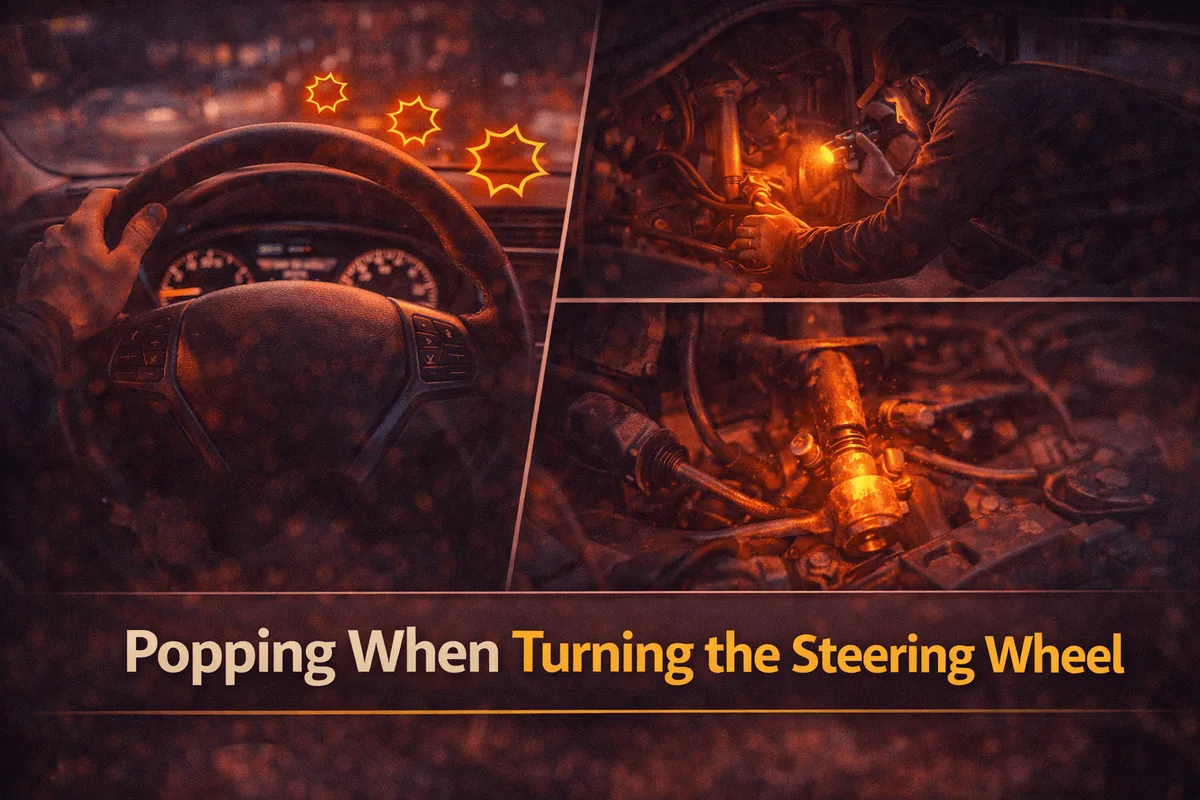
A popping noise that occurs when turning the steering wheel is a common sign that a component in the steering or suspension system is reacting to load or movement. Because steering input shifts weight, changes angles, and applies stress to multiple joints at once, noises that appear only during turns often point to parts that are worn, loose, or binding under motion.
This type of sound is most noticeable at low speeds, such as during parking maneuvers or tight turns, when components move through their full range. In some cases, the noise is harmless and related to normal wear. In others, it signals a problem that can worsen quickly if left unaddressed, affecting steering precision or safety.
The explanation ahead covers the most common causes of popping noises when turning the steering wheel, explains how sound patterns help narrow the source, and outlines which situations require prompt attention versus simple monitoring. The emphasis is on identifying the issue logically based on how and when the noise occurs, rather than guessing or replacing parts unnecessarily.
What a “Popping” Sound Usually Tells Me
Cars don’t make noise without a reason. A popping sound during steering almost always means something is moving when it shouldn’t—or not moving smoothly when it should.
That sound is usually caused by:
- A part binding and then releasing
- A joint shifting under load
- Tension building and snapping free
Steering puts sideways force on many components, so turning the wheel is when weak or worn parts reveal themselves.
Why the Noise Happens Mostly While Turning
When you turn the steering wheel:
- The front suspension changes angles
- Steering components rotate and flex
- Weight shifts across the front of the car
Parts that feel fine going straight suddenly come under stress. That’s why popping noises often don’t show up until you turn.
Does It Matter If the Car Is Moving or Parked?
Yes—it matters a lot.
- Popping while parked:
Usually steering or suspension components under static load. - Popping while moving slowly:
Often suspension joints or mounts reacting to weight transfer. - Popping only while driving:
Can involve rotating parts that need motion to show the issue.
Knowing when it happens narrows things down quickly.
One of the Most Common Causes: Worn Suspension Joints
Suspension joints allow controlled movement. When they wear out, that movement becomes sloppy.
Common signs include:
- Popping during turns
- Noise over bumps
- Slight looseness in steering feel
As the wheel turns, the joint shifts, sticks, then releases—creating that popping sound.
Why Ball Joints Often Get Blamed
Ball joints connect the wheel assembly to the suspension.
They:
- Support vehicle weight
- Allow the wheels to turn and move up and down
When a ball joint wears:
- It can bind under load
- Then snap free as the angle changes
That snap is often heard as a pop, especially during tight turns.
Steering Components That Can Pop
Steering isn’t just the wheel—it’s a system.
Parts involved include:
- Steering rack components
- Linkages and joints
- Mounting bushings
If any of these shift unexpectedly while turning, noise follows.
Why Popping Can Happen at Low Speed Only
Low-speed turns put maximum steering angle into play.
Think about:
- Parking
- U-turns
- Tight corners
These situations twist components further than normal driving, making wear and binding much more noticeable.
Strut Mounts and Their Hidden Role
This one surprised me when I first learned it.
Strut mounts allow the suspension strut to rotate smoothly as you turn. When they wear or bind:
- The strut twists instead of rotating
- Tension builds
- Then releases with a pop
This often happens while the car is stationary or moving slowly.
Why the Sound Sometimes Comes From One Side Only
If the popping seems to come from:
- The left side
- Or the right side
…it usually means the problem is localized.
Suspension and steering components wear independently, so one side can fail long before the other.
Bushings: Small Parts, Big Noises
Bushings absorb movement and reduce vibration.
When bushings wear or dry out:
- Metal parts move against each other
- Movement becomes sudden instead of smooth
- Noise appears during steering
Popping from bushings often sounds dull rather than sharp.
Why Cold Weather Can Make the Noise Worse
I’ve noticed popping sounds often get worse in cold weather.
That’s because:
- Rubber stiffens
- Lubrication thickens
- Worn parts lose flexibility
So a noise that’s barely noticeable in warm conditions becomes obvious when temperatures drop.
CV Joints and Steering Noise (A Common Mix-Up)
Some people confuse popping while steering with clicking from rotating joints.
If the noise:
- Occurs while turning and moving
- Gets louder with speed
- Sounds rhythmic
…it may involve joints that rotate with the wheels, not just steering parts.
Why the Noise Sometimes Disappears After Driving
This can be misleading.
After driving:
- Components warm up
- Lubrication spreads
- Parts expand slightly
The noise may fade temporarily, but the underlying wear is still there.
Does Power Steering Cause Popping?
Power steering systems can contribute indirectly.
If components:
- Shift under hydraulic pressure
- Mounts are loose
- Bushings are worn
…you may hear noise when turning, especially at low speed.
When the Steering Wheel Feels Fine but Still Pops
This confuses many people.
Even if:
- Steering feels smooth
- No vibration is felt
- The car tracks straight
…noise can still occur. Early wear often announces itself with sound before affecting feel.
Why Ignoring Popping Sounds Is Risky
A popping noise doesn’t always mean immediate danger—but it’s never meaningless.
Ignoring it can lead to:
- Accelerated wear
- Loss of alignment
- Increased stress on nearby parts
What starts as noise can become a handling issue later.
How I Narrow Down the Source
Here’s my calm, step-by-step thought process:
- Does it happen when parked or moving?
- Is it louder on one side?
- Does it happen only at full steering lock?
- Does temperature affect it?
These answers often point me in the right direction without tools.
Simple Checks That Can Help
Before assuming the worst, I look for:
- Loose components underneath
- Torn rubber parts
- Uneven tire wear
Sometimes the issue is visible once you know where to look.
When the Sound Is Loud and Sudden
A loud, sharp pop that appears suddenly deserves attention.
Especially if:
- Steering feel changes
- The wheel doesn’t return smoothly
- The noise is getting worse quickly
Those signs mean the issue may be progressing.
Why Popping Often Happens After Suspension Work
I’ve seen popping appear shortly after:
- Suspension replacement
- Alignment work
- Component removal
Sometimes parts aren’t seated perfectly or settle over time, leading to noise during steering.
Is It Safe to Keep Driving?
This depends on the cause.
If:
- The noise is mild
- Steering feels normal
- The sound hasn’t changed
Short-term driving may be okay. But if:
- The noise worsens
- Steering feels loose
- New symptoms appear
…it’s time to stop guessing.
Why the Sound Can Come and Go
This inconsistency is frustrating, but common.
Noise can change based on:
- Road surface
- Temperature
- Steering angle
That doesn’t mean the problem fixed itself—it means conditions changed.
What I Avoid Doing
When I hear popping while steering, I avoid:
- Cranking the wheel aggressively
- Ignoring it for months
- Assuming it’s “normal for older cars”
Age explains wear, but it doesn’t excuse neglect.
Cost Perspective: Honest Talk
Not all popping noises lead to expensive repairs.
Often:
- Early fixes are manageable
- Small parts cause big sounds
- Catching it early saves money
Waiting usually increases cost, not reduces it.
Why Steering Noises Feel So Concerning
Steering is about control. Any sound tied to it feels serious because it affects confidence.
That reaction is valid—but panic isn’t helpful. Understanding the cause restores confidence quickly.
A Simple Way I Think About It Now
Here’s how I simplify it:
If a car pops when turning the steering wheel, something is:
- Binding
- Shifting
- Or releasing tension
Finding which one applies leads you straight to the cause.
Final Thoughts
A popping sound when turning the steering wheel is your car asking for attention, not trying to scare you. In many cases, it’s an early warning—one that gives you time to act before something more serious develops. The key is listening, observing patterns, and responding calmly instead of ignoring it or jumping to conclusions.
Once you understand why steering puts stress on certain parts, these noises make a lot more sense—and become much easier to deal with.