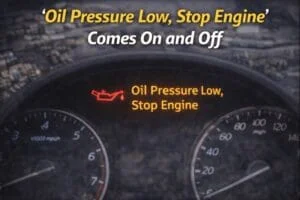
An intermittent “Oil Pressure — Stop Engine” warning is one of the most serious alerts a vehicle can display, even when the engine appears to be running normally. Unlike many dashboard messages, this warning is tied directly to engine lubrication, not comfort or emissions.
The challenge is that it may appear briefly, disappear, and leave no immediate symptoms behind, which makes it easy to underestimate.
Oil pressure warnings can be triggered by true pressure loss, electrical faults, or conditions that only occur under specific temperatures, speeds, or engine loads. Because the engine may sound and feel normal, the risk is often misunderstood until damage has already occurred.
The explanation that follows clarifies what this warning actually indicates, why it can show up intermittently, which causes are most common, and how to respond in a way that protects the engine without unnecessary panic.
The goal is to help distinguish between situations that require immediate shutdown and those that demand prompt inspection but not guesswork.
What Oil Pressure Actually Does for Your Engine
Oil pressure isn’t just about lubrication. It’s about survival.
Your engine depends on pressurized oil to create a thin protective layer between moving metal parts. That oil doesn’t just sit there—it’s pumped through narrow passages at specific pressure levels. When pressure drops too low, metal parts begin to touch. When that happens, damage starts immediately.
What makes this warning so serious is that low oil pressure doesn’t always feel dramatic. The engine can sound normal while internal wear accelerates silently.
That’s why manufacturers choose such strong wording. It’s not meant to scare you—it’s meant to stop you before real damage occurs.
Why the Warning Comes On and Off Instead of Staying On
This is the part that confuses most people.
When the message appears intermittently, it usually means the system is hovering near a critical threshold. The pressure is sometimes acceptable and sometimes not, depending on conditions.
This can happen due to:
- Changes in engine speed
- Oil thinning as it warms
- Momentary pressure drops at idle
- Sensor readings fluctuating near the limit
Aan on-and-off warning doesn’t make the issue smaller—it often means the problem is developing.
Low Oil Level: The Simplest but Most Common Cause
In many cases, the oil level is simply too low.
Even being a quart under can cause pressure drops, especially at idle or during turns. Oil moves around in the pan, and when levels are marginal, the pump may struggle to maintain steady pressure.
What fooled me once was that the oil warning didn’t stay on constantly. It appeared after long drives or at traffic lights, then disappeared when to accelerate.
Checking the dipstick is always the first step—and it should be done on level ground with the engine cooled.
Oil That’s Too Old or Too Thin
Oil breaks down over time. Heat, contamination, and normal wear reduce its ability to maintain pressure.
When oil gets too thin:
- It flows too easily
- Pressure drops at low engine speeds
- The warning may appear at idle and disappear when revving
We’ve seen this happen shortly before an overdue oil change, especially in engines that run hot or see a lot of stop-and-go traffic.
Fresh oil with the correct viscosity can sometimes resolve the issue completely.
Faulty Oil Pressure Sensor or Wiring
Not every warning means mechanical failure.
Oil pressure sensors live in harsh environments. Heat, oil exposure, and vibration can cause them to degrade. Wiring connectors can loosen or corrode.
Signs pointing to a sensor issue include:
- No unusual engine noise
- Normal oil level and condition
- Warning behaving erratically
- No change in engine behavior
That said, you never assume a sensor issue until mechanical causes are ruled out. Guessing wrong can be costly.
Oil Pump Wear or Failure
This is where things get serious.
The oil pump is responsible for building and maintaining pressure throughout the engine. If it’s worn, clogged, or failing, pressure can drop intermittently—especially at idle.
Early signs may include:
- Warning appearing after warm-up
- Delayed oil pressure on startup
- Ticking noises from the engine
Once pump issues begin, they rarely fix themselves. Continued driving can lead to severe internal damage.
Sludge and Blocked Oil Passages
Engines that have gone long intervals without oil changes can develop sludge.
Sludge restricts oil flow, causing pressure fluctuations. Even if the pump works properly, oil can’t reach all parts of the engine effectively.
I’ve seen engines with decent oil levels still show pressure warnings because internal passages were partially blocked.
This is one of the reasons regular oil changes matter far more than many people realize.
Idle Speed and Engine Wear
Low pressure warnings often appear at idle.
As engines age:
- Bearing clearances increase
- Oil escapes more easily
- Pressure drops at low speeds
This doesn’t always mean the engine is about to fail, but it does mean tolerances are no longer tight.
Higher idle speed can mask the issue temporarily, which is why the warning may disappear when driving.
When the Warning Appears While Driving
This is the most dangerous scenario.
If the message appears at cruising speed or under load, pressure may be dropping to unsafe levels across the entire engine.
In that case:
- Continuing to drive risks immediate damage
- Pulling over safely is the right move
- Shutting the engine off protects it
Knowing stopping isn’t always convenient, but engines don’t get second chances when oil pressure fails.
What to Do When the Warning Appears
- Reduce speed immediately
- Pull over when safe
- Shut the engine off
- Check oil level once cooled
- Look for leaks or obvious issues
- Decide whether to drive further or tow
If oil level is critically low or the warning returns quickly, Don’t keep driving.
Why Ignoring Intermittent Warnings Is Risky
The worst engine failures I’ve seen didn’t happen with loud bangs or dramatic smoke.
They happened quietly, over time, while drivers dismissed brief warnings.
Oil pressure issues rarely improve on their own. They either:
- Get diagnosed and fixed
- Or slowly destroy internal components
Intermittent warnings are often the only early sign you’ll get.
How Mechanics Diagnose Oil Pressure Problems
A proper diagnosis usually includes:
- Verifying oil level and condition
- Checking actual pressure with a mechanical gauge
- Inspecting the sensor and wiring
- Listening for internal engine noise
- Checking for sludge or contamination
A real pressure reading tells the truth. Everything else is supporting evidence.
Can You Drive Short Distances?
If the warning appeared once and hasn’t returned, driving cautiously to a nearby shop may be reasonable. If it appears repeatedly, especially when warm, driving further increases risk.
When in doubt, protect the engine first. Towing costs less than rebuilding.
How to Prevent Oil Pressure Issues
From experience, prevention comes down to:
- Checking oil level regularly
- Using the correct oil type
- Avoiding extended oil change intervals
- Fixing leaks early
- Paying attention to new noises or warnings
Engines rarely fail without warning—they just don’t warn loudly.
Final Thoughts
When the “oil pressure low, stop engine” message comes on and off, it’s easy to downplay it. The car still runs, and life keeps moving. We’ve been there. But that message exists for a reason, and ignoring it is one of the fastest ways to turn a small issue into a major one.
The good news is that many causes are manageable if addressed early. The key is taking the warning seriously, even when it doesn’t stay on.
Your engine doesn’t need panic—it needs attention. And now you know exactly where to start.