
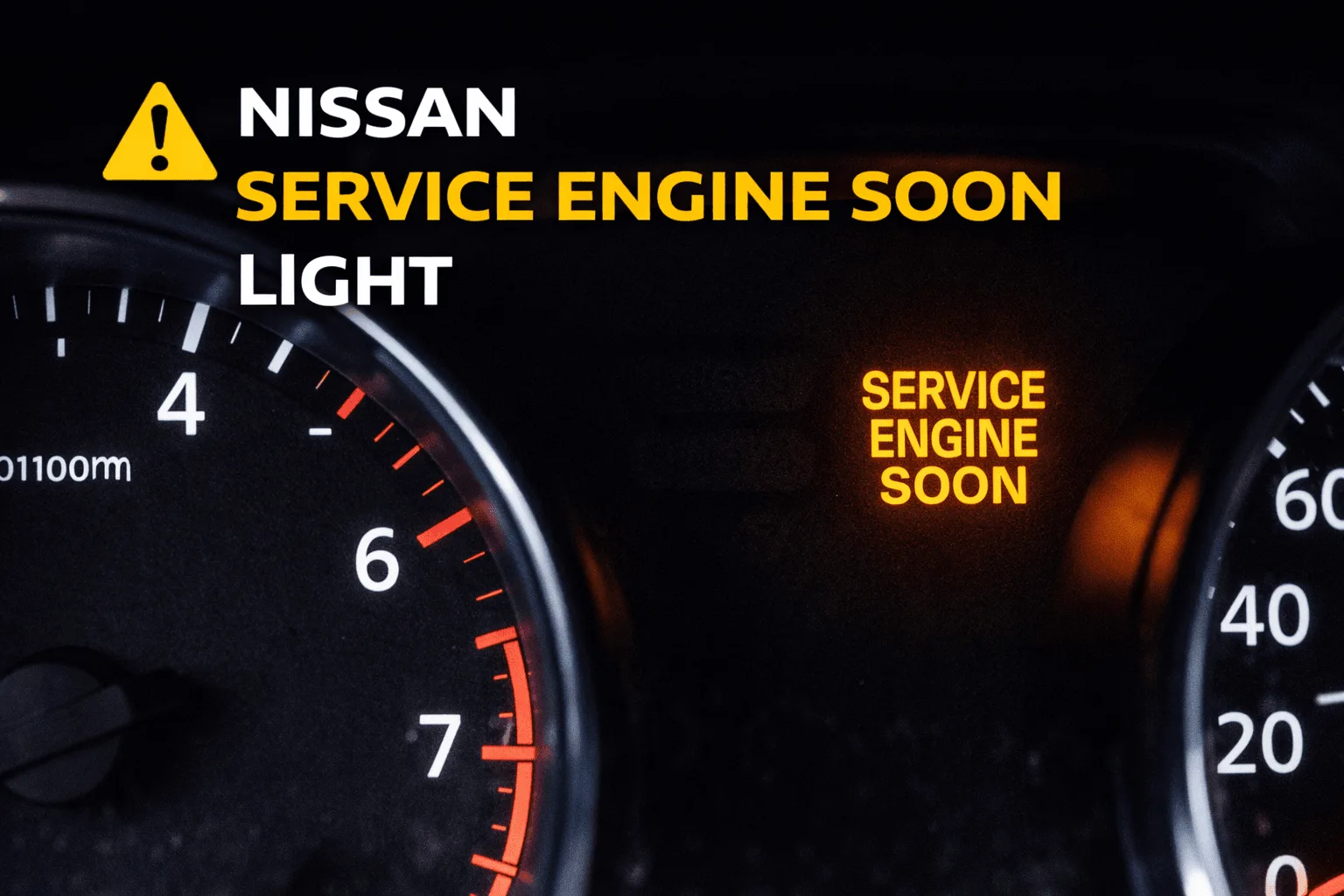
The “Service Engine Soon” light in a Nissan can be confusing because it doesn’t point to a single problem. The vehicle may feel perfectly normal, with no unusual sounds, smells, or changes in performance, yet the light appears and stays on. That uncertainty often leads drivers to wonder whether the issue is urgent or something that can wait.
In Nissan vehicles, this light is closely related to the check engine system, but its purpose is broader than many people realize. It can indicate anything from a minor emissions-related issue to a condition that affects engine performance or efficiency. In some cases, it serves as a reminder rather than a warning of immediate danger.
The explanation that follows clarifies what the Nissan Service Engine Soon light actually represents, the most common reasons it turns on, how to tell when it’s serious versus routine, and how to respond in a way that avoids both panic and neglect. The focus is on practical interpretation so the light can be handled correctly instead of guessed at.
What the Service Engine Soon Light Actually Means
Despite how serious it sounds, this light doesn’t always mean your engine is about to fail.
In simple terms, it means:
- The car’s computer detected something outside normal parameters
- A system related to engine operation or emissions needs attention
It’s a notification, not a diagnosis.
Why Nissan Uses This Specific Wording
Nissan uses “Service Engine Soon” instead of “Check Engine” on many models.
The goal is to:
- Encourage inspection
- Avoid panic
- Signal maintenance or monitoring
The wording is meant to be calm, even if the message feels stressful.
Why the Light Can Come On Even When the Car Feels Fine
This was one of the most confusing parts for me.
The car can:
- Drive normally
- Start easily
- Sound fine
and still trigger the light because modern vehicles monitor far more than just how the engine feels.
How the Car Knows Something Is Wrong
Nissan vehicles use sensors to monitor:
- Airflow
- Fuel delivery
- Emissions behavior
- Engine timing
When data falls outside expected ranges, the system stores that information and turns on the light.
Why the Light Doesn’t Always Mean Immediate Danger
Not all detected issues are urgent.
Some are:
- Efficiency-related
- Emissions-related
- Minor inconsistencies
The car alerts you early so problems don’t become serious later.
Why There Are Different Types of Warning Behavior
The Service Engine Soon light can behave in different ways:
- Solid light
- Intermittent light
- Light that comes on and goes off
Each pattern tells a slightly different story.
What a Solid Light Usually Indicates
A steady light usually means:
- The car detected a fault
- The issue isn’t immediately damaging
- You should schedule inspection soon
This is the most common scenario.
What It Means When the Light Comes On and Off
This was my experience at first.
An intermittent light often means:
- The issue occurs under certain conditions
- Temperature, speed, or load plays a role
- The system corrected itself temporarily
Even if it turns off, the stored information usually remains.
Why You Shouldn’t Ignore an Intermittent Light
Even when the light turns off:
- The issue may return
- Wear may continue
- A small problem can grow
Intermittent warnings are early signs, not false alarms.
Why the Light Sometimes Appears After Starting the Car
The system performs checks during startup.
If a reading is:
- Unexpected
- Delayed
- Outside range
the light may appear immediately after starting.
Why Weather Can Affect the Warning Light
Temperature and humidity influence:
- Sensor readings
- Fuel vapor behavior
- Emissions systems
That’s why some people see the light only during cold or hot weather.
Why Short Trips Can Trigger the Light
Short trips:
- Prevent full engine warm-up
- Interrupt system checks
- Allow condensation buildup
This can confuse monitoring systems temporarily.
Why Fuel-Related Issues Are Common Triggers
Fuel quality or delivery issues can:
- Affect combustion
- Alter emissions readings
- Trigger warnings
Even small inconsistencies can be detected.
Why Emissions Systems Trigger This Light So Often
Modern Nissans closely monitor emissions behavior.
If emissions systems:
- Don’t operate efficiently
- Detect leaks or irregular flow
the system turns on the Service Engine Soon light.
Why the Car Still Runs Normally
Emissions and efficiency problems often:
- Don’t affect drivability immediately
- Don’t cause noticeable performance changes
That’s why the car can feel fine while the light is on.
Why This Light Is So Common
This warning is common because:
- Systems are sensitive
- Monitoring is continuous
- Standards are strict
It’s a sign of advanced monitoring, not poor design.
Why the Light Can Appear After Routine Driving
Sometimes it appears:
- After highway driving
- After refueling
- After stop-and-go traffic
Context matters more than mileage.
Why Tightening Things Isn’t Always the Solution
It’s tempting to look for something loose.
- Aren’t visible
- Are electronic
- Involve internal systems
While simple fixes sometimes help, many issues:
Guessing rarely solves it permanently.
Why Resetting the Light Isn’t a Fix
Clearing the light:
- Removes the warning
- Doesn’t remove the cause
If the issue remains, the light will return.
Why the Light Comes Back After Being Cleared
When the system runs its checks again:
- The fault is detected
- The light reappears
This confirms the issue is still present.
Why Paying Attention to Changes Matters
When the light is on, notice:
- Changes in idle
- Unusual sounds
- Fuel consumption shifts
Small changes can provide valuable clues.
Why Ignoring the Light Long-Term Isn’t Smart
Even if the car feels fine:
- Efficiency may drop
- Components may wear faster
- Repairs may become more expensive
Early attention saves money and stress.
Why This Light Doesn’t Always Mean “Stop Driving”
In most cases:
- You can continue driving
- Just avoid hard driving
- Plan inspection soon
Immediate shutdown is rarely required for a solid light.
When the Light Should Be Taken Very Seriously
The situation changes if:
- The light flashes
- The engine runs rough
- Power drops suddenly
Those signs require immediate attention.
Why Flashing Behavior Is Different
Flashing indicates:
- Active engine misbehavior
- Potential component damage
- Risk to critical systems
That’s not a “wait and see” situation.
Why Nissan Designed It This Way
The system is meant to:
- Protect the engine
- Protect emissions components
- Give early warnings
It’s preventive, not punitive.
How to Stay Calm When It Appears
Instead of panicking, Do now:
- Observe behavior
- Note when it appears
- Check for performance changes
Calm observation leads to better decisions.
Why Writing Down Symptoms Helps
Tracking:
- Driving conditions
- Weather
- Timing
makes diagnosis faster and more accurate.
Why Mileage Alone Doesn’t Explain It
Low mileage cars can trigger the light just like high mileage ones.
Age, usage patterns, and maintenance matter more than miles alone.
Why This Light Isn’t a Sign the Car Is Unreliable
Every modern car has similar warnings.
This light means:
- The system is doing its job
- You’re being informed early
It’s a feature, not a flaw.
Why Knowledge Reduces Stress
Once you understood what the light meant:
- Stopped overreacting
- Made smarter choices
- Stayed in control
Knowledge removes uncertainty.
How To Respose Now When It Comes On
When you see the Service Engine Soon light now, I:
- Stay calm
- Monitor the car
- Plan inspection
- Avoid aggressive driving
That approach has never failed me.
Final Thoughts
If your Nissan’s Service Engine Soon light comes on, don’t panic — but don’t ignore it either. From my experience, this warning usually means the car detected something outside normal operation, not that your engine is about to fail. Most of the time, it’s an early alert designed to protect your vehicle and your wallet.
Pay attention to how the car behaves, note when the light appears, and take action with clarity instead of fear. Understanding what this light means puts you back in control — and control is exactly what you need when a dashboard warning shows up.
Your Nissan isn’t trying to scare you. It’s just asking you to listen.
