
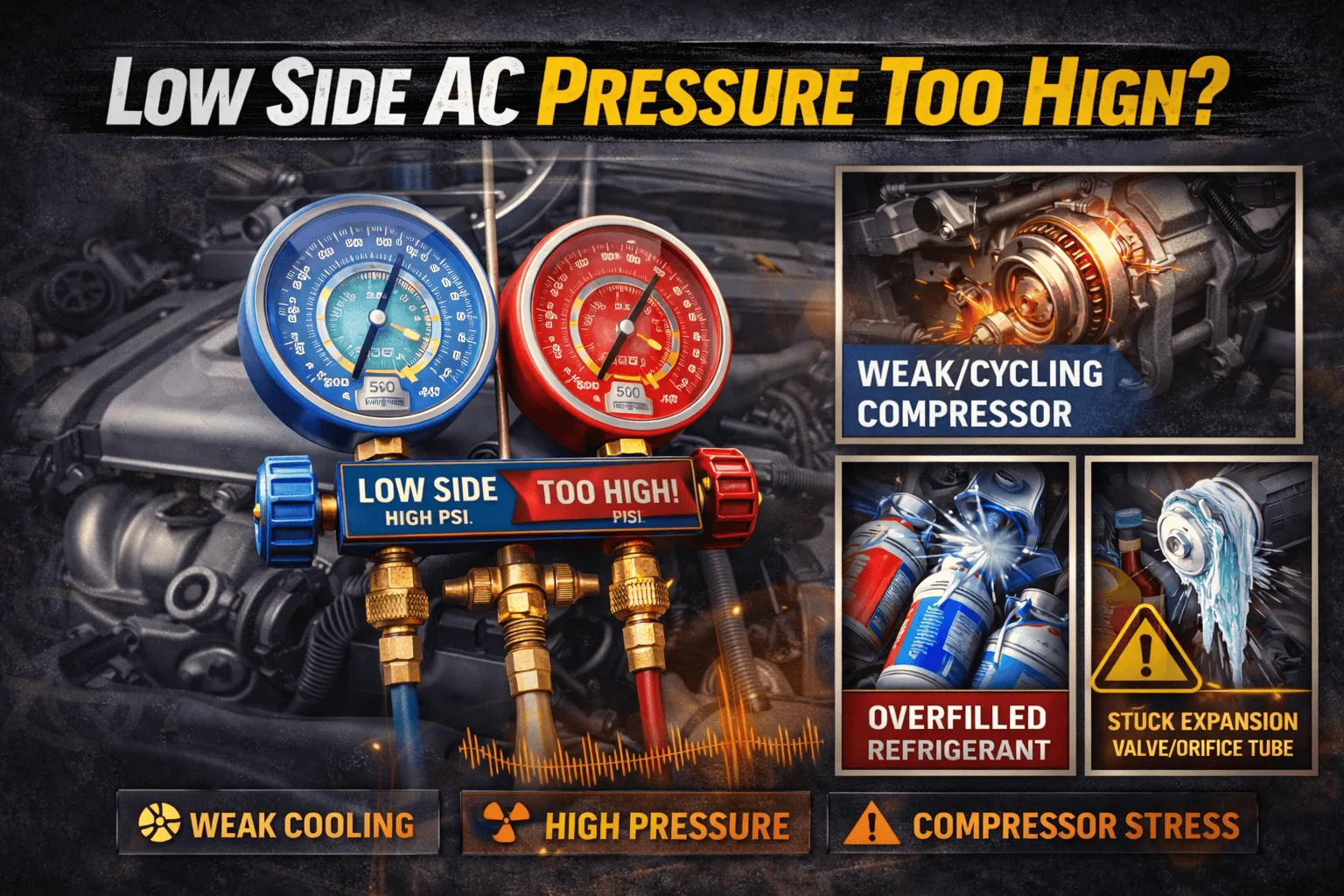
Air conditioning pressure readings are meant to provide clarity, but a high reading on the low-side gauge often does the opposite. When low-side pressure rises above normal, cooling performance usually drops, compressor behavior becomes irregular, and the system no longer operates within its intended balance. Even though the gauges show activity, the results don’t align with proper AC function.
High pressure on the low side isn’t a random number—it’s a signal that the system is struggling to move heat or refrigerant correctly. Restrictions, airflow problems, overcharging, or internal component issues can all cause pressure to back up where it shouldn’t, preventing effective cooling.
The explanation ahead breaks down what elevated low-side pressure indicates, how it interferes with normal AC operation, the most common conditions that cause it, and how to approach diagnosis logically. The focus is on understanding cause-and-effect within the system so the issue can be identified accurately rather than guessed at.
Understanding the Low Side of the AC System (In Plain Language)
Before we talk about problems, we need to understand what the low side does.
The low side of the AC system:
- Pulls warm refrigerant vapor from the cabin
- Feeds it into the compressor
- Operates under low pressure when working correctly
Under normal conditions:
- Low side pressure stays relatively low
- The refrigerant expands and absorbs heat
- Cold air is produced
When that pressure is too high, it means the system isn’t doing its job efficiently.
What “Low Side Pressure Too High” Actually Means
This part confused me at first, so I’ll explain it simply.
High low-side pressure means:
- Refrigerant is not expanding properly
- Heat is not being absorbed efficiently
- The compressor is not pulling pressure down
In other words, the system is stuck in a way—it’s not separating high pressure and low pressure like it should.
What Normal Low Side Pressure Usually Looks Like
While exact numbers vary by vehicle and temperature, most systems operate with:
- Low side pressure significantly lower than the high side
- Pressure that drops when the compressor engages
If the low side pressure stays high:
- Cooling performance drops
- The compressor may short-cycle
- The AC feels weak or warm
Numbers alone don’t diagnose the issue—but they tell a story.
The Most Common Symptoms
When low side pressure is too high, We usually notice one or more of these signs:
- AC not blowing cold
- Air cools slightly, then fades
- Compressor cycles rapidly
- Cabin temperature never gets comfortable
- Pressure readings look almost “even”
When both sides start looking similar, something is very wrong.
The Most Common Causes of High Low Side AC Pressure
Now let’s talk about why this happens.
1. Overcharged AC System
This is the most common cause.
Too much refrigerant:
- Reduces space for expansion
- Prevents pressure drop
- Keeps low side pressure elevated
Adding refrigerant without proper measurement often leads here.
Important note:
More refrigerant does not mean colder air.
2. Weak or Failing Compressor
A compressor’s job is to:
- Pull pressure down on the low side
- Push pressure up on the high side
If it’s worn or damaged:
- It can’t create enough pressure difference
- Low side pressure stays high
- Cooling becomes inconsistent
This usually gets worse over time.
3. Stuck or Malfunctioning Expansion Device
The expansion valve or orifice tube controls refrigerant flow.
If it sticks open:
- Too much refrigerant enters the evaporator
- Pressure doesn’t drop enough
- Cooling efficiency collapses
This is a very common reason for abnormal gauge readings.
4. Moisture or Contamination in the System
Moisture causes:
- Internal icing
- Partial blockages
- Erratic pressure behavior
This can lead to:
- High low-side pressure
- Unstable cooling
- Intermittent AC operation
Contamination usually happens after improper repairs.
5. Poor Heat Removal From the Evaporator
If the evaporator can’t absorb heat properly:
- Pressure won’t drop
- Refrigerant stays warmer than it should
Causes include:
- Blocked cabin airflow
- Dirty cabin filter
- Evaporator airflow restriction
Airflow matters just as much as refrigerant flow.
6. Compressor Control or Cycling Problems
Some systems regulate compressor output electronically.
If control signals fail:
- Compressor may not fully engage
- Pressure doesn’t stabilize
- Cooling becomes weak
This can make the gauges confusing to interpret.
Why High Low Side Pressure Means Poor Cooling
Here’s the key concept.
Cooling happens when refrigerant:
- Expands
- Drops in pressure
- Absorbs heat
If pressure stays high:
- Expansion is limited
- Heat absorption drops
- Cold air disappears
The system is working harder but accomplishing less.
How to Diagnose High Low Side Pressure Step by Step
This is my real-world approach.
Step 1: Observe Gauge Behavior, Not Just Numbers
Watch this:
- Pressure change when AC turns on
- Stability over time
- Response to engine speed
Static numbers don’t tell the whole story.
Step 2: Check Compressor Engagement
Confirm it:
- The compressor clutch engages properly
- It stays engaged under load
- It doesn’t short-cycle excessively
Weak engagement often points to compressor trouble.
Step 3: Inspect Airflow Inside the Cabin
Always check:
- Cabin air filter condition
- Vent airflow strength
- Blend door operation
Bad airflow can mimic refrigerant issues.
Step 4: Look for Signs of Overcharging
Clues include:
- Recently added refrigerant
- No evacuation before recharge
- Pressure that’s high across the system
Overcharging is more common than people realize.
Step 5: Consider Internal Restrictions or Control Issues
If basics check out, suspect this:
- Expansion device problems
- Internal contamination
- Control system faults
These require more advanced diagnosis.
Can You Drive With This Problem?
Yes—but you probably won’t enjoy it.
Driving with high low-side pressure:
- Won’t damage the AC immediately
- Can stress the compressor
- Will give poor cooling
Ignoring it long-term can lead to bigger failures.
Why “Just Adding More Refrigerant” Makes It Worse
Adding refrigerant:
- Raises system pressure
- Reduces cooling efficiency
- Masks the real issue temporarily
AC systems are precise—not forgiving.
Why This Problem Feels Confusing
The confusion comes from:
- Gauges showing “pressure” but not “cause”
- Symptoms overlapping with low refrigerant
- Conflicting advice online
Once you understand pressure balance, it makes sense.
When Professional Help Is Necessary
Stop DIY diagnosis when:
- Pressure readings make no sense
- Compressor behavior is erratic
- System contamination is suspected
AC systems require precision tools and experience.
How to Prevent This Problem From Happening Again
Here’s what you do now:
- Always evacuate before recharging
- Use exact refrigerant amounts
- Replace filters regularly
- Fix leaks properly, not temporarily
Prevention is easier than repair.
Common Myths About High Low Side Pressure
Let’s clear these up.
- “High pressure means strong AC” — False
- “More refrigerant equals colder air” — Wrong
- “Gauges alone tell the full story” — They don’t
Understanding saves money and frustration.
Final Thoughts
When low side AC pressure is too high, your system is telling you it’s out of balance. It’s not failing randomly—it’s reacting to something that’s preventing proper heat transfer and pressure separation.
I’ve learned that AC systems reward patience and logic. Instead of guessing, slowing down and understanding what the gauges are saying leads to real answers. Once you see the system as a flow of pressure and heat—not just numbers on a dial—the diagnosis becomes much clearer.
If your AC isn’t cooling and the low side pressure looks wrong, don’t panic. Listen to the system, follow the clues, and fix the root cause instead of chasing symptoms.