Transmission rebuilding is one of the most expensive and misunderstood repairs a vehicle owner may face. When shifting becomes harsh, delayed, or unpredictable, it often signals internal wear that goes beyond fluid changes or electronic adjustments. At that point, rebuilding is frequently presented as the primary option—but the reasoning and pricing behind it are rarely explained clearly.
Rebuild costs vary widely because no two transmission failures are identical. Vehicle type, transmission design, extent of internal damage, labor time, parts availability, and shop expertise all influence the final price. This is why estimates can differ by thousands of dollars for what sounds like the same repair.
The explanation ahead breaks down what transmission rebuilding actually involves, why the cost is structured the way it is, which factors push prices higher or lower, and how to evaluate whether rebuilding makes financial sense compared to other options. The emphasis is on transparency—so decisions are based on facts rather than pressure, fear, or vague estimates.
What “rebuilding a transmission” really means
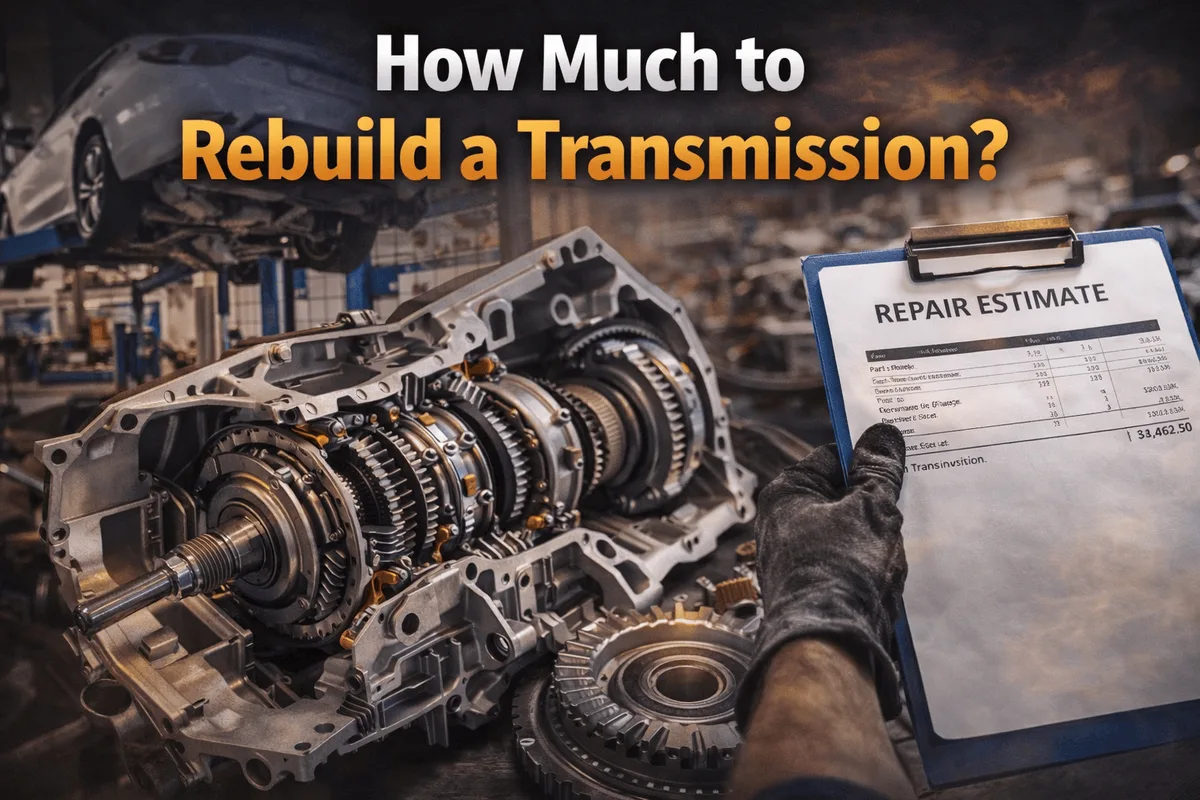
A transmission rebuild isn’t a simple repair. It’s not like replacing brake pads or a belt. When a shop rebuilds a transmission, they remove it completely from the vehicle, take it apart piece by piece, inspect every internal component, replace worn or damaged parts, and then reassemble it to proper specifications.
In simple terms, it’s a full internal refresh—not a patch.
That’s why the cost is higher than many other repairs. You’re paying for:
- Skilled labor
- Time-intensive disassembly and reassembly
- Specialized tools
- Replacement internal components
Average cost to rebuild a transmission (realistic numbers)
Let’s get straight to the numbers most people care about.
In most cases, rebuilding a transmission costs between a few thousand and several thousand units of currency, depending on where you live and what you drive. Some rebuilds land on the lower end, while others can climb much higher.
Here’s the key thing:
There is no single price for a transmission rebuild. The range exists because every situation is different.
Why transmission rebuild costs vary so much
Here are the biggest factors that influence the final cost.
Type of transmission (automatic vs manual)
This is one of the biggest cost drivers.
Automatic transmissions
- More complex internally
- More components to inspect and replace
- Require precise calibration
They almost always cost more to rebuild.
Manual transmissions
- Simpler mechanical design
- Fewer internal parts
- Less labor time
Manual rebuilds are usually more affordable.
Vehicle make and model
Not all transmissions are created equal.
Factors that increase cost:
- Luxury or performance vehicles
- Imported models with rare parts
- Transmissions with known design complexity
A common sedan transmission is far cheaper to rebuild than one from a high-end or specialty vehicle.
Extent of internal damage
This one surprised me the most. Two transmissions with the same symptoms can have very different internal conditions.
Costs increase when:
- Hard parts like gears or drums are damaged
- The transmission overheated
- Metal debris spread throughout the unit
If the damage is limited to wear items, costs stay lower. If major components are destroyed, the price jumps quickly.
Parts quality used in the rebuild
Not all rebuilds use the same quality parts.
Some shops use:
- Basic replacement components
- Factory-grade or upgraded internals
Higher-quality parts cost more but often last longer. This is one area where cutting corners can come back to haunt you.
Labor rates in your area
Labor is a major portion of the bill.
Costs vary depending on:
- Local labor rates
- Shop experience level
- Time required for your specific transmission
Urban areas usually have higher rates than smaller towns.
What’s included in a proper rebuild
When done correctly, a transmission rebuild usually includes:
- Complete disassembly
- Cleaning of all internal parts
- Replacement of worn seals, gaskets, and clutches
- Inspection of gears and bearings
- Replacement of damaged internal components
- Reassembly to specification
- Fluid refill and testing
If a quote seems unusually low, ask exactly what’s included.
Costs beyond the rebuild itself
This part caught me off guard the first time.
A transmission rebuild often comes with additional costs that aren’t always included in the base quote.
These may include:
- Transmission removal and installation
- New fluid
- Filter replacement
- Software relearn or adaptation (in newer vehicles)
- Related parts like mounts or cooler lines
Always ask whether these are included or billed separately.
Rebuild vs replacement: cost comparison
At some point, we had to decide whether rebuilding made sense compared to other options.
Here’s how they generally compare:
Rebuild
- Uses your existing transmission
- Restores internal components
- Customizes repair to actual damage
- Cost is moderate to high
Replacement (used or remanufactured)
- Faster installation
- Cost varies widely
- Quality depends on source
Rebuilds often make sense when the transmission is rebuildable and the shop is reputable.
Why rebuild costs feel so painful
It’s not just the number—it’s the timing.
Transmission failures often happen:
- Without much warning
- Outside warranty coverage
- When the car still looks fine otherwise
That makes the expense feel especially frustrating. But understanding what goes into the rebuild helps put the cost into perspective.
How long a rebuilt transmission typically lasts
This was my biggest concern before agreeing to the repair.
A properly rebuilt transmission, with quality parts and good maintenance, can last many years and tens of thousands of miles. Longevity depends heavily on:
- Driving habits
- Maintenance routine
- Cooling and fluid health
A rebuild isn’t a temporary fix when done right.
Red flags to watch for when getting quotes
Not all rebuild offers are created equal.
Be cautious if:
- The shop won’t explain the work
- Pricing seems unrealistically low
- There’s no warranty offered
- The estimate is vague
A rebuild should come with clarity and confidence, not pressure.
Warranties: what’s normal and what isn’t
Most reputable rebuilds include a warranty.
Common coverage includes:
- Parts and labor for a set period
- Mileage limits
- Specific exclusions
Longer warranties often indicate higher confidence in the rebuild quality.
Can you lower the cost of a rebuild?
There are a few ways costs can be managed, but not magically reduced.
What helps:
- Catching issues early
- Avoiding continued driving when symptoms appear
- Choosing a reputable independent shop
- Asking for a detailed breakdown
What doesn’t help:
- Delaying the repair
- Ignoring warning signs
- Choosing the cheapest option blindly
Is rebuilding worth it for an older car?
This is where the decision gets personal.
Ask yourself:
- Is the car otherwise reliable?
- Is the body and engine in good shape?
- Would replacement cost more overall?
If the car is solid, rebuilding often makes sense. If multiple major systems are failing, it might not.
Time required for a transmission rebuild
Most rebuilds take several days to a week, depending on:
- Parts availability
- Shop workload
- Transmission complexity
Rushed rebuilds are rarely good rebuilds.
Common myths about transmission rebuilds
“Rebuilt means unreliable.”
Not true. Quality depends on workmanship, not the word “rebuilt.”
“All rebuilds are the same.”
They aren’t. Parts quality and attention to detail matter greatly.
“A flush fixes transmission problems.”
Flushes don’t repair worn or broken internal components.
Maintenance after a rebuild (this matters)
Once rebuilt, the transmission still needs care.
Make sure to:
- Check fluid regularly
- Follow service intervals
- Avoid overheating
- Address small issues early
This protects the investment just made.
An honest advice before you commit
Before you say yes:
- Get a clear diagnosis
- Ask for a detailed estimate
- Understand what parts are replaced
- Review the warranty
- Decide based on the car’s overall condition
Knowledge puts you back in control.
Final thoughts: clear eyes, no panic
Rebuilding a transmission isn’t cheap, but it’s also not a scam or a mystery when done right. You’re paying for expertise, time, and precision. If your car is worth keeping, a proper rebuild can give it a second life.
If you want, you can tell me what car you’re dealing with, the symptoms you’re seeing, and whether it’s automatic or manual. So we can help you understand whether a rebuild makes sense in your situation—or if another option might be better.