
Piston ring problems are among the more serious engine issues a vehicle can develop, often appearing gradually rather than all at once. Excessive oil consumption, loss of compression, and declining engine efficiency are common signs, even when there are no obvious leaks or heavy exhaust smoke.
Because piston rings are internal engine components, addressing the problem typically involves significant labor, which is why the topic immediately raises concerns about cost and feasibility.
Understanding what piston ring replacement actually involves is essential before making any repair decision. The process, pricing, and outcomes can vary widely depending on engine design, vehicle age, and overall condition.
The blog below outline what piston ring replacement entails, why the cost can differ so much from one vehicle to another, and how to evaluate whether repairing the engine is the right choice or if alternatives make more sense.
What Piston Rings Actually Do
Before talking money, it helps to understand what piston rings are responsible for.
Each piston inside your engine has rings that seal the combustion chamber. These rings do three main things:
- keep combustion pressure where it belongs
- control oil on the cylinder walls
- transfer heat from the piston to the engine block
When piston rings are healthy, the engine runs efficiently, uses oil normally, and maintains compression. When they wear out or get damaged, oil can slip past, compression drops, and performance slowly declines.
What makes piston rings tricky is that they fail gradually. You don’t usually wake up one morning with “bad rings.” The symptoms build over time.
Signs That Lead People to This Repair
Most people don’t replace piston rings unless there’s a clear reason. The most common signs that start the conversation include:
- excessive oil consumption
- blue or gray smoke from the exhaust
- fouled spark plugs
- loss of power
- low compression readings
- poor fuel economy
The Short Answer: Average Cost to Replace Piston Rings
Let’s get straight to the number everyone wants.
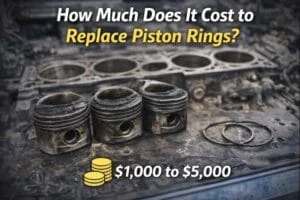
Replacing piston rings typically costs between several thousand dollars on the low end and well into the five-figure range on the high end, depending on the vehicle, engine design, and labor involved.
For many everyday passenger vehicles, the repair often lands in the middle thousands, while performance engines, larger vehicles, or engines with complex designs can push the cost much higher.
This wide range exists because piston ring replacement is not a simple “parts swap.” It’s one of the most labor-intensive engine repairs you can do.
Why Replacing Piston Rings Is So Expensive
To access the piston rings, the engine must be partially or completely disassembled. That means:
- removing the engine or stripping it down in the vehicle
- removing the cylinder head
- taking out the pistons
- inspecting cylinder walls
- measuring clearances
- reinstalling everything with precision
You’re paying for time, expertise, and precision, not just parts.
Labor: The Biggest Part of the Bill
The piston rings themselves aren’t outrageously expensive. Labor is where the cost comes from.
Depending on the engine, labor can involve:
- 20 to 40+ hours of work
- specialized measuring tools
- careful reassembly and torque procedures
- extensive testing afterward
Even at modest labor rates, those hours add up quickly.
This is why two shops can quote dramatically different prices. Labor rates, experience, and whether the engine comes out of the vehicle all affect the final number.
Parts Involved Beyond the Rings
Once the engine is opened, it makes sense to replace or inspect:
- gaskets and seals
- bearings
- timing components
- piston skirts
- cylinder head components
- oil pump (in some cases)
These additional parts protect your investment. Skipping them might save money now but risk repeating the repair later.
Cylinder Condition Changes Everything
This is where costs can jump unexpectedly.
If cylinder walls are:
- smooth and within tolerance → rings can be replaced
- worn or scored → cylinders may need machining
- damaged beyond limits → engine block replacement may be required
Machining adds cost. Severe damage can push the repair into “engine replacement” territory.
This uncertainty is one reason shops hesitate to give firm quotes before teardown.
Engine Design Plays a Huge Role
Not all engines are created equal.
Inline engines with simpler layouts are generally:
- easier to access
- less expensive to rebuild
V-shaped engines, turbocharged designs, or tightly packaged engine bays:
- require more labor
- increase complexity
- raise costs
Modern engines also tend to be more compact, which makes disassembly slower and more intricate.
Dealership vs Independent Shop Pricing
Where you take the car matters.
Dealerships usually:
- charge higher labor rates
- follow factory rebuild procedures
- may recommend full engine replacement instead
Independent engine specialists:
- often charge less per hour
- are more flexible with repair approaches
- may rebuild rather than replace
In our experience, a reputable independent shop with engine rebuild experience often offers the best balance of cost and quality.
When Replacing Piston Rings Makes Sense
Despite the cost, there are situations where piston ring replacement is reasonable:
- the vehicle is otherwise in excellent condition
- the engine has no major block damage
- the car has sentimental or collector value
- replacement engines are hard to find
- you plan to keep the car long term
In these cases, rebuilding restores the engine and can provide many more years of use.
When It Doesn’t Make Financial Sense
Sometimes, the math doesn’t work.
Replacing piston rings may not be wise if:
- the vehicle’s value is lower than the repair cost
- the engine has multiple internal failures
- cylinder damage is extensive
- replacement engines are readily available at lower cost
This is where emotions and logic often clash. I’ve learned that stepping back and comparing options calmly saves regret later.
Engine Replacement vs Ring Replacement
Many people ask: “Why not just replace the engine?”
Sometimes, that’s the better choice.
Used or remanufactured engines can:
- cost less than a rebuild
- come with warranties
- reduce downtime
However, used engines carry unknown history. Rebuilding your existing engine ensures you know exactly what’s inside.
There’s no universal answer—it depends on availability, budget, and trust in the source.
How Long the Repair Takes
Replacing piston rings is not a quick job.
Typical timelines range from:
- several days
- to multiple weeks
Delays often come from:
- machine shop scheduling
- parts availability
- inspection discoveries during teardown
Planning for downtime is important.
Can Additives Fix Worn Piston Rings?
We’ve seen this question asked countless times.
Additives may:
- reduce symptoms temporarily
- thicken oil to slow consumption
But they do not repair worn rings. At best, they buy time. At worst, they delay necessary repairs while damage continues.
How to Approach the Decision Personally
When facing a piston ring issue, Ask yourself:
- What is the car worth realistically?
- How long do you want to keep it?
- Is the rest of the vehicle solid?
- Are there better alternatives for the same money?
Putting numbers on paper helps remove emotion from the decision.
Preventing Piston Ring Problems
From what I’ve learned, prevention matters more than repair.
Good habits include:
- regular oil changes with quality oil
- avoiding extended oil change intervals
- warming the engine properly
- addressing fuel or cooling issues early
- fixing misfires quickly
Most ring wear happens slowly. Good maintenance dramatically delays it.
Life After Piston Ring Replacement
A properly rebuilt engine can feel better than it did before.
Owners often report:
- reduced oil consumption
- improved compression
- smoother operation
- restored performance
That said, break-in procedures must be followed carefully to protect the new rings.
Final Thoughts
Replacing piston rings is one of the most serious engine repairs short of full replacement. It’s expensive, time-consuming, and requires real expertise. But it’s also a repair that can completely transform an engine when done correctly.
The key is understanding what you’re paying for and why the cost is high. Once you see the labor, precision, and risk involved, the numbers make sense.
If you’re facing this decision, take your time. Get multiple opinions. Ask detailed questions. And choose the option that fits both your budget and your long-term plans.
Engines are complex, but informed decisions don’t have to be overwhelming.