
Mechanic labor charges are often the most confusing part of a repair estimate. While parts prices are usually easy to verify, hourly labor rates can feel opaque—especially when the number seems high compared to the time spent working on the vehicle. This lack of clarity leads many drivers to question whether they’re paying a fair price or simply absorbing hidden costs.
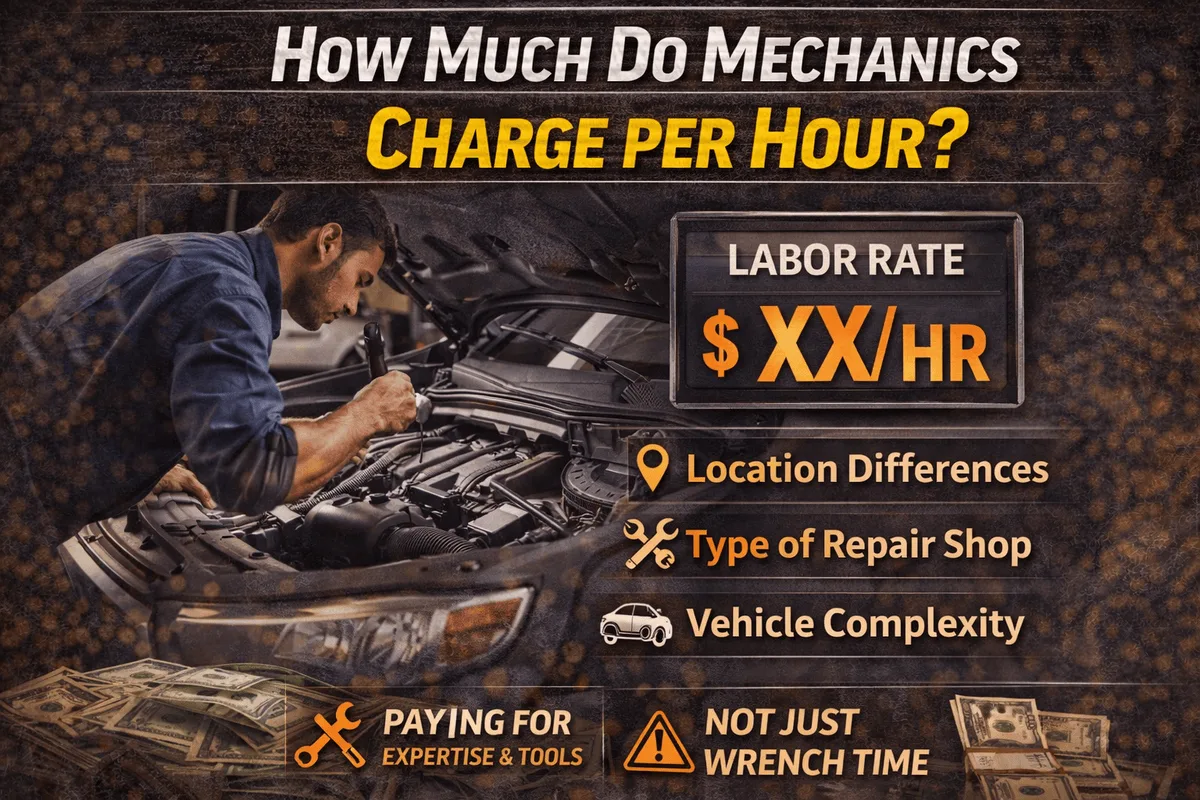
Labor rates vary widely depending on location, shop type, technician certification, vehicle complexity, and overhead expenses. A higher rate does not automatically mean overcharging, just as a lower rate does not always indicate a better deal. What matters is understanding what that hourly figure actually represents and how it translates into the final bill.
The explanation that follows breaks down typical mechanic hourly rates, why those numbers differ from one shop to another, what is included in labor costs beyond time alone, and how to evaluate an estimate with confidence. The focus is on transparency—so decisions are based on knowledge rather than uncertainty at the service counter.
The Short Answer (Then We’ll Dig Deeper)
Let’s get the basic question out of the way first.
Mechanics typically charge an hourly labor rate that ranges widely depending on location, shop type, and vehicle complexity.
There is no single “standard” rate—and that’s where confusion starts.
The real value comes from understanding why those numbers differ and what they actually include.
What “Hourly Labor Rate” Really Means
This is the first thing we had to unlearn.
When a shop says:
“Our labor rate is X per hour”
That does not mean:
- A mechanic personally pockets that amount
- You’re paying only for wrench time
- The shop is guessing
The hourly rate is a shop rate, not a wage.
It covers the entire operation, not just the person working on your car.
What You’re Actually Paying For in That Hour
This part changed how to look at repair bills.
That hourly rate helps pay for:
- Mechanic wages
- Shop rent or mortgage
- Diagnostic equipment
- Tools and machinery
- Utilities
- Insurance
- Training and certifications
- Business taxes
- Warranty support
So while it looks like “just an hour,” it’s really supporting a full operation.
Why Hourly Rates Vary So Much
One shop might charge far less than another just a few miles away. That’s normal.
Here are the biggest reasons.
1. Location Makes a Huge Difference
This is one of the biggest factors.
Shops in:
- Large cities
- High-rent areas
- Dense urban zones
Almost always charge more than shops in:
- Small towns
- Rural areas
- Low-cost regions
Higher rent, higher wages, and higher taxes all push rates up.
2. Type of Repair Shop
Not all repair shops are the same.
Independent Repair Shops
- Often lower hourly rates
- More flexibility
- Smaller overhead
Dealership Service Centers
- Usually higher rates
- Brand-specific training
- Expensive equipment
Specialty or Performance Shops
- Higher rates
- Advanced expertise
- Niche services
The shop’s focus directly affects the rate.
3. Vehicle Type and Complexity
Some shops adjust labor rates based on:
- Luxury vehicles
- European brands
- High-performance cars
Why?
- Specialized tools
- More complex systems
- Higher training requirements
Working on a basic economy car is very different from working on a high-end luxury vehicle.
4. Skill Level and Experience of Technicians
Not all mechanics have the same background.
Shops with:
- Highly experienced technicians
- Advanced diagnostics capability
- Ongoing training programs
Often charge more—and there’s a reason.
Skill reduces mistakes, speeds up diagnosis, and improves repair quality.
How Shops Decide How Many Hours to Charge
This part confuses a lot of people.
Most shops don’t just “start a stopwatch.”
They use:
- Labor guides
- Standardized time charts
- Manufacturer repair data
These guides estimate how long a job should take under normal conditions.
So even if a mechanic finishes faster, the billed time may stay the same.
Flat Rate vs Actual Time — Why It Matters
Many shops use flat-rate labor.
That means:
- A job is billed at a set number of hours
- Not based on actual minutes spent
This system:
- Rewards efficiency
- Allows predictable pricing
- Prevents surprises
It’s not about rushing—it’s about experience.
Why a “Simple” Job Can Still Be Expensive
We used to think:
“If it only takes an hour, it shouldn’t cost much.”
But some jobs:
- Require expensive diagnostic tools
- Involve difficult access
- Need careful disassembly
Time doesn’t always reflect difficulty or risk.
Diagnostics: Why You’re Charged Even If Nothing Is Fixed
This one frustrates a lot of people.
Diagnosis is labor.
Finding a problem often requires:
- Testing
- Scanning systems
- Interpreting data
- Experience-based judgment
You’re paying for knowledge, not just repairs.
Why Dealership Rates Are Usually Higher
Dealership service departments:
- Invest heavily in brand-specific tools
- Train technicians for specific systems
- Follow strict manufacturer procedures
That overhead shows up in the labor rate.
Whether it’s worth it depends on the situation.
Independent Shops vs Dealerships
Here’s my personal approach:
- Warranty work → dealership
- Routine repairs → trusted independent shop
- Complex brand-specific issues → dealership or specialist
Higher rates don’t always mean better—but sometimes they do.
Are Higher Hourly Rates Always a Bad Thing?
Not necessarily.
A higher rate can mean:
- Faster diagnosis
- Fewer repeat visits
- Better long-term results
A cheaper rate that leads to misdiagnosis can cost more in the end.
How to Tell If a Labor Rate Is Fair
This is the question everyone asks me.
Here’s what to look at:
- Does the shop explain the estimate clearly?
- Are labor hours reasonable for the job?
- Is the rate consistent with local averages?
- Is there a warranty on labor?
Transparency matters more than the exact number.
Why Two Shops Can Quote Very Different Totals
Even with the same hourly rate:
- Labor time estimates can differ
- Parts sourcing may vary
- Diagnostic approach may differ
Always compare total cost, not just hourly rate.
Can You Negotiate Labor Rates?
Sometimes—but not always.
What can work:
- Asking for options
- Combining repairs
- Choosing aftermarket parts (when appropriate)
What usually doesn’t:
- Demanding a discount without reason
Respectful conversation goes further than confrontation.
Why Online Estimates Are Often Misleading
Online calculators:
- Don’t account for vehicle condition
- Ignore corrosion or wear
- Assume ideal conditions
Real cars rarely match ideal scenarios.
What Happens If Labor Takes Longer Than Estimated?
Good shops:
- Communicate changes
- Get approval before proceeding
If a shop doesn’t do this, that’s a red flag.
Why Labor Rates Keep Increasing
This isn’t just greed.
Rates rise because:
- Vehicles are more complex
- Tools are more expensive
- Training requirements increase
- Business costs rise
Modern cars are computers on wheels.
How to Protect Myself From Unexpected Labor Costs
Here’s my personal checklist:
- Ask for a written estimate
- Confirm labor hours
- Ask what could change the price
- Request updates before extra work
Clear expectations prevent surprises.
Common Myths About Mechanic Labor Rates
Let’s clear a few up.
- “The mechanic keeps all that money” — No
- “They charge more because they can” — Not usually
- “Cheapest shop is best” — Rarely
- “Labor cost means they’re slow” — Often the opposite
Understanding removes resentment.
Is DIY Always Cheaper?
Sometimes—but not always.
DIY saves labor cost but:
- Requires tools
- Takes time
- Risks mistakes
For some jobs, paying labor is worth the peace of mind.
How Labor Rates Affect Repair Decisions
Use labor rates to decide:
- Repair vs replace
- Repair now vs later
- Whether a car is worth keeping
Labor cost is often the deciding factor—not parts.
Why Knowing This Changes How You See Repair Bills
Once you understood labor rates, repair bills felt less mysterious. stop seeing them as random numbers and started seeing them as the cost of expertise, tools, and accountability.
That shift made every conversation with a mechanic more productive.
Final Thoughts — It’s Not Just an Hour of Work
When you pay a mechanic’s hourly rate, you’re not just paying for time. You’re paying for experience, diagnosis, responsibility, and the infrastructure that keeps your car safe and reliable.
I’ve learned that the goal isn’t finding the cheapest rate—it’s finding value. A fair labor rate paired with honest work and clear communication is worth far more than a bargain that leads to repeat repairs.
If you ever feel unsure, ask questions. A good shop won’t mind explaining where your money is going.