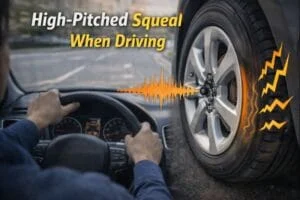
A high-pitched squealing noise while driving is one of the most common—and most misunderstood—vehicle complaints. Because the car may otherwise feel normal, the sound often creates uncertainty rather than immediate alarm.
Squeals are typically caused by friction, vibration, or slipping components, and the pitch of the noise can provide important clues about where the problem originates.
The challenge is that several different systems can produce a similar sound, ranging from minor maintenance issues to problems that affect safety if ignored. Understanding when a squeal is harmless and when it signals a developing failure requires looking at how and when the noise appears.
The sections below outline the most frequent causes of high-pitched squealing while driving, explain how professionals narrow down the source without guesswork, and clarify when continued driving is reasonable versus when inspection should happen immediately.
Why High-Pitched Noises Are So Hard to Ignore
Squealing noises grab attention because of their frequency. Unlike deep knocks or dull thumps, a high-pitched sound cuts through everything else. It’s often a sign of friction — two surfaces rubbing together in a way they shouldn’t.
What makes these noises tricky is that they don’t always mean immediate danger. Sometimes they’re harmless warnings. Other times, they’re early signs of wear that will turn into bigger problems if ignored.
The key is understanding when the squeal happens and what changes it.
When Does the Squeal Happen?
Before touching a wrench or visiting a shop, pay attention to patterns. This alone narrows the problem dramatically.
Ask myself:
- Does it happen all the time or only at certain speeds?
- Does it change when you brake?
- Does it disappear when you turn?
- Is it worse when the car is cold or warm?
- Does engine speed affect it, or only vehicle speed?
These answers tell me whether the sound is likely coming from the brakes, belts, wheels, or something else entirely.
Brake-Related Squealing: The Most Common Cause
In my experience, brakes are the number one source of high-pitched squeals.
Why brakes squeal
Brake pads are designed to press against metal rotors. As pads wear down, they can vibrate or expose wear indicators that intentionally make noise to alert you.
Common signs:
- squeal appears at low speeds
- sound gets louder when braking lightly
- noise may disappear under hard braking
- squeal often comes and goes
Some pads squeal even when they’re not worn out, especially if they’re cold, dusty, or made of harder material.
When it’s a warning
If the squeal:
- gets louder over time
- turns into grinding
- comes with vibration through the pedal
That’s no longer just noise — that’s wear reaching its limit.
Belt Squeal From the Engine Area
Another frequent cause is a slipping belt under the hood.
Belts spin accessories like the alternator and power steering. When they wear, glaze over, or lose tension, they can squeal sharply.
Clues that point to belts:
- noise changes with engine speed
- squeal is loudest during acceleration
- sound is strongest right after starting the car
- noise disappears once the engine warms up
Wheel Bearings and Rotating Components
If the squeal changes with speed but not engine RPM, start thinking about the wheels.
Possible causes include:
- worn wheel bearings
- brake dust shields touching rotors
- debris stuck near the brakes
- uneven tire wear
Wheel-related squeals often:
- increase as speed increases
- change pitch during turns
- disappear briefly on smooth roads
This type of noise shouldn’t be ignored for too long, especially if it changes when turning — that’s often a sign of bearing wear.
Suspension and Steering Components
High-pitched squeals don’t always come from spinning parts. Sometimes they come from movement under load.
Worn bushings, dry joints, or stressed components can squeal when the car moves, especially:
- when going over bumps
- during turns
- while entering driveways
- when weight shifts
These noises can sound like rubber rubbing or metal squeaking. While not always urgent, they often signal aging parts that will eventually affect handling.
High-Pitched Squeal From the Transmission Area
This one is less common, but more serious.
Some transmission-related noises produce:
- a whining or squealing sound
- noise that increases with speed
- sound present even when coasting
Low fluid levels or internal wear can cause this. If the squeal is paired with hesitation, rough shifting, or warning lights, don’t keep driving without inspection.
Exhaust and Heat Shield Issues
Thin metal vibrates easily, and exhaust systems are full of thin metal.
Loose heat shields, clamps, or exhaust components can produce:
- high-pitched rattling or squealing
- noise that appears at specific speeds
- sound that disappears above or below a certain RPM
These noises often echo, making them sound worse than they are. Still, loose exhaust parts should be secured to prevent further damage.
Tire-Related Squeals
Tires can squeal even when nothing is broken.
Common situations include:
- aggressive acceleration
- sharp turns
- uneven tire wear
- misalignment
However, constant squealing while driving straight usually points to alignment issues or worn suspension parts causing uneven contact with the road.
Cold Weather vs Warm Weather Noises
Temperature plays a bigger role than most people realize.
Cold weather can:
- stiffen rubber
- harden brake pads
- reduce belt flexibility
That’s why some squeals only appear on cold mornings and disappear once everything warms up. These aren’t always emergencies, but they’re worth monitoring.
How to Narrow the Problem Down Step by Step
When you hear a squeal, follow a simple process instead of guessing.
- Listen carefully
Note pitch, duration, and conditions. - Test braking
Does the sound change when braking lightly or firmly? - Test engine speed
Rev the engine while parked. If the noise appears, it’s engine-related. - Change speed
Does the pitch rise with speed or stay constant? - Turn the wheel
Turning often reveals bearing or suspension issues. - Visual inspection
Look for worn belts, uneven tires, or loose components.
This approach saves time and avoids replacing parts unnecessarily.
Is It Safe to Keep Driving?
This depends entirely on the source.
Generally:
- light brake squeal is usually safe short-term
- belt squeal should be addressed soon
- wheel bearing noise should not be ignored
- transmission squeal needs immediate attention
If the noise:
- suddenly gets louder
- is paired with warning lights
- affects steering or braking
- comes with burning smells
Stop driving and get it checked.
What to Tell the Mechanic
Clear communication makes diagnosis faster.
Instead of saying, “It squeals sometimes,” explain:
- when it happens
- what makes it worse or better
- how long it’s been happening
- whether it changed recently
Good details save labor time and money.
Preventing Squealing Problems
From our experience, prevention comes down to:
- regular inspections
- replacing worn parts early
- keeping brakes clean
- maintaining proper fluid levels
- not ignoring small noises
Cars almost always warn you before something fails. Squeals are one of those warnings.
Final Thought
A high-pitched squeal while driving is annoying, but it’s also useful. It’s your car’s way of saying something is rubbing, slipping, or wearing out.
Most of the time, the cause isn’t catastrophic. But ignoring it long enough can turn a small fix into an expensive repair. The key is listening carefully, staying calm, and acting before the noise escalates.
If your car is making that sound, trust your instincts. You’re not overreacting by investigating it. Understanding the noise gives you control — and control is what turns car ownership from stressful into manageable.