
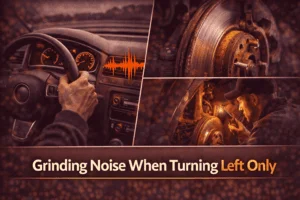
A grinding noise that occurs only when turning left is a strong directional clue rather than a random sound. When a vehicle turns, weight shifts, suspension geometry changes, and certain components are placed under load on one side while unloading on the other. If a noise appears only in one direction, it usually means a part on that side is being stressed in a way it isn’t during straight-line driving or opposite turns.
This type of symptom is commonly linked to components such as wheel bearings, CV joints, brake hardware, suspension bushings, or shields that contact rotating parts under lateral load. Because the noise may disappear completely when driving straight or turning right, it’s often dismissed at first—even though the underlying issue continues to develop.
The explanation ahead outlines the most common causes of grinding noises that occur only during left turns, explains why direction matters mechanically, and shows how technicians isolate the source without replacing parts blindly. The focus is on using the behavior of the noise itself as a diagnostic tool rather than relying on guesswork.
Why a Noise Only Happens When Turning Left
This is the first thing that confused me, and it’s the key to understanding the problem.
When you turn left:
- The car’s weight shifts
- The suspension compresses differently
- Certain parts move closer together
That shift puts extra load on components on one side of the car, usually the right front. If something is worn, loose, or damaged, it may only make noise under that specific load.
Why Straight Driving Sounds Normal
Many people assume that if a car is quiet going straight, nothing serious can be wrong. That’s not always true.
Some problems only show up:
- Under steering load
- When parts flex
- When clearances change
That’s why a grinding noise can stay hidden until you turn.
Where Does the Sound Come From?
Before anything else, try to pinpoint the area.
Grinding during left turns usually comes from:
- Front wheel area
- Suspension components
- Braking parts
Rear grinding during turning is much less common, so usually start at the front.
Brake Components: One of the Most Common Causes
Brakes are often the first place to look.
When brake parts wear unevenly or shift:
- They can rub only at certain angles
- They may grind only when turning
- The noise may disappear when driving straight
This is especially true if something is slightly loose or misaligned.
Why Brake Shields Cause Left-Turn Grinding
Brake dust shields are thin metal plates behind the rotor.
If one bends slightly:
- It may not touch the rotor normally
- But it can scrape when turning left
This creates a metallic grinding or scraping sound that comes and goes with steering angle.
Worn Brake Pads Can Grind in One Direction
Brake pads don’t always wear evenly.
If:
- One pad is thinner than the other
- The caliper doesn’t retract fully
The pad can contact the rotor when the wheel angle changes—often only during turns.
How ItoTell If It’s Brake-Related
A few clues help me:
- Does the noise change when braking?
- Does it sound metallic and sharp?
- Does it happen at low speeds too?
If yes, brakes move higher on my suspect list.
Wheel Bearings: A Big One People Overlook
Wheel bearings are another common cause of directional grinding.
When a bearing starts to fail:
- It may grind or growl
- The noise often changes when turning
- Turning one way loads the bearing more
A grinding noise when turning left often points to a right-side wheel bearing.
Why the Opposite Side Is Often the Problem
This part surprises many people.
When you turn left:
- The car’s weight shifts to the right
- The right wheel bearing carries more load
If that bearing is worn, it complains only during left turns.
How Wheel Bearing Noise Usually Sounds
Bearing-related grinding:
- Is deeper than brake noise
- Often sounds like growling or rumbling
- May get louder with speed
It can start subtle and get worse over time.
CV Joints and Turning Noise
CV joints usually click, but they can grind too when severely worn.
If the noise:
- Happens while turning
- Gets worse under acceleration
- Comes from the front
A worn joint may be involved.
Why CV Noise Can Be Direction-Specific
CV joints operate at angles.
When turning left:
- One joint bends more than the other
- Wear becomes noticeable
If one side is worn more, it may only make noise in one direction.
Suspension Components That Can Grind
Suspension parts move and rotate during turns.
Components that can grind include:
- Ball joints
- Control arm bushings
- Strut mounts
When worn, these parts can shift and rub when the wheel turns.
Ball Joints and Steering Load
Ball joints support the car’s weight while allowing steering movement.
If one is worn:
- It may grind under load
- Noise can appear only when turning
This is especially true at low speeds or when parking.
Strut Mounts: A Hidden Source of Grinding
Strut mounts allow the suspension to rotate smoothly.
When they fail:
- The strut twists instead of turning
- Metal-on-metal contact can occur
- Grinding or popping noises appear
This often shows up during slow, tight turns.
Why the Noise Is Worse at Low Speed
Many grinding noises are loudest:
- In parking lots
- During U-turns
- While pulling into driveways
Low-speed turns create maximum steering angle and suspension movement.
Tire and Wheel Contact Issues
Sometimes the noise isn’t mechanical failure—it’s contact.
Things to check:
- Tire rubbing inner fender
- Wheel touching suspension parts
- Incorrect wheel offset
This kind of grinding often sounds rough and only appears during turns.
Why Modifications Can Cause Directional Grinding
Aftermarket wheels or suspension changes can reduce clearances.
When turning:
- The tire may touch something
- Only at full lock
- Only in one direction
This is easy to miss until you hear it.
Debris Stuck Near the Brake or Wheel
I’ve seen rocks and debris cause grinding noises more than once.
A small stone:
- Can get trapped near the rotor
- Make a grinding sound
- Shift position during turns
It’s simple, but worth checking.
Why the Noise Can Come and Go
This inconsistency frustrates people.
Grinding may:
- Disappear after driving
- Get worse when cold
- Change with road conditions
That doesn’t mean it fixed itself—it means conditions changed.
How Temperature Affects Grinding Noises
Cold weather can:
- Stiffen rubber bushings
- Change metal clearances
- Make worn parts noisier
That’s why some grinding noises are seasonal.
How to Narrow It Down Step by Step
Here’s my calm approach:
- Note when the noise happens (speed, angle)
- Check if braking affects the sound
- Listen for growling vs scraping
- Inspect brakes visually
- Think about wheel bearings
- Consider suspension movement
This keeps me from jumping to conclusions.
Why Ignoring Grinding Is a Bad Idea
Grinding usually means:
- Metal contact
- Accelerated wear
- Potential safety issues
What starts as noise can turn into:
- Brake damage
- Bearing failure
- Steering problems
Catching it early saves money and stress.
Is It Safe to Keep Driving?
This depends on the cause.
If:
- The noise is light
- Steering feels normal
- It hasn’t changed
Short-term driving may be okay.
If:
- The noise is loud
- Steering feels loose
- The sound is getting worse
It’s time to stop guessing and investigate.
What to Avoid Doing
Whento hear grinding during turns, avoid:
- Cranking the wheel aggressively
- Ignoring it for weeks
- Replacing parts without understanding
Those habits almost always make things worse.
Why This Problem Feels So Unsettling
Steering-related noises feel serious because:
- They involve control
- They happen during turning
- They sound mechanical and harsh
That reaction is natural—but a calm diagnosis works better than panic.
Common Myths About Grinding Noises
“It’s just normal wear.”
Grinding is never normal.
“If it only happens turning left, it’s minor.”
Direction-specific issues often point to real wear.
“It’ll go away on its own.”
It almost never does.
Final Thoughts
A grinding noise when turning left only is your car telling you something isn’t moving the way it should. The direction matters, the sound matters, and the conditions matter. Once you understand how turning shifts weight and changes clearances, the mystery fades and patterns start to appear.
In most cases, the cause is something common—brakes, bearings, or suspension—not something exotic. The key is listening carefully, acting early, and avoiding the temptation to ignore it.