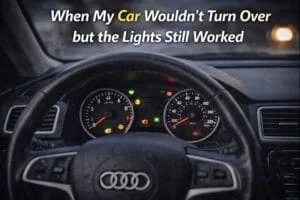
A car that shows full electrical power but does not turn over presents a specific and often misunderstood starting problem. Interior lights, dashboard indicators, and infotainment systems operate on low current, while the starter motor requires a much higher load.
When the engine remains silent despite visible power, the fault is usually isolated to the starting circuit rather than the battery itself.
This condition can be caused by several components, including the starter motor, ignition switch, safety interlocks, relays, wiring connections, or engine immobilizer systems. Because everything appears normal at first glance, the situation is frequently misdiagnosed or dismissed as intermittent.
Understanding how the starting system works—and where power flow stops—makes it possible to identify the issue logically instead of guessing.
The explanation ahead focuses on why a car can have power but still fail to turn over, how different causes present themselves, and how to narrow the problem down efficiently before unnecessary parts are replaced.
What “Won’t Turn Over” Really Means
Before jumping into causes, it helps to define what’s happening.
When a car “won’t turn over,” it means the engine isn’t cranking. The starter motor isn’t spinning the engine to begin combustion. This is different from a car that cranks but doesn’t start. In my case, the engine didn’t even try.
The fact that the lights and accessories work is important, but it doesn’t tell the full story. A car can have enough electrical power to run lights, screens, and locks, yet still lack what’s needed to crank the engine. Starting a car requires a large surge of power, far more than running electronics.
That distinction explains why this problem catches so many people off guard.
Why Lights Can Work Even When the Car Won’t Start
This was the most confusing part for me at first.
Headlights, interior lights, and the radio use a relatively small amount of electricity. The starter motor, on the other hand, demands a massive burst of power in a very short time. If the electrical system can’t deliver that surge, the starter won’t engage.
So yes, the lights working means the battery isn’t completely dead. But it does not mean the battery is healthy enough to start the engine.
That realization alone explains a large percentage of these situations.
The Most Common Cause I’ve Seen: A Weak Battery
Even though it sounds basic, this is the number one reason I’ve encountered.
How a Battery Can Fool You
A battery can:
- show normal voltage
- power lights and electronics
- unlock doors
- run accessories
and still be unable to crank the engine.
As batteries age, they lose their ability to deliver high current even if they still hold a surface charge. In my case, the battery looked fine, but it was several years old and internally worn.
Signs Pointing to a Weak Battery
- Clicking sound or complete silence when turning the key
- Dash lights dimming slightly during start attempt
- Headlights losing brightness briefly
Jump-starting the car often confirms this. If it starts with a jump, the battery is likely at fault.
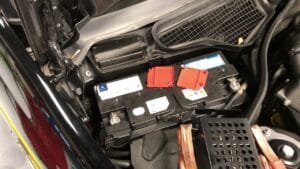
Corroded or Loose Battery Connections
Even a good battery can’t help if the power can’t flow properly.
Battery terminals and cables are exposed to:
- moisture
- heat
- vibration
- corrosion buildup
A thin layer of corrosion can interrupt the high current needed to crank the engine while still allowing enough flow for lights.
What to Look For
- Powdery residue on terminals
- Loose cable clamps
- Cables that wiggle by hand
These issues can cause intermittent starting problems that come and go without warning.
The Starter Motor: Silent but Critical
The starter’s job is simple: turn the engine fast enough to begin combustion. When it fails, the car won’t turn over at all.
Symptoms of a Failing Starter
- Single click when turning the key
- No sound at all
- Occasional starting, then sudden failure
In our experience, starter problems often show up gradually. The car might start fine for weeks, then hesitate once or twice, and finally stop working completely.
The Starter Relay and Fuse
Before assuming the starter itself is bad, there are smaller components worth checking.
The starter relay acts like a switch that allows power to flow to the starter. If it fails, the starter never receives the signal to engage.
Fuses protect the system. A blown fuse can cut the circuit entirely.
Ignition Switch Problems
The ignition switch is the part that responds when you turn the key or press the start button. Over time, internal contacts can wear out.
When this happens:
- the car may not send a signal to start
- accessories still work
- turning the key feels normal but does nothing
This failure can feel random and frustrating, because everything else appears fine.
Neutral Safety Switch Issues
Cars are designed not to start unless they’re in Park or Neutral. A faulty neutral safety switch can make the car think it’s in gear even when it’s not.
A Simple Test That Helped Me
That immediately pointed to the switch or shifter linkage as the issue.
Manual Transmission Considerations
If you drive a manual car, there’s another factor: the clutch switch.
Many manuals require the clutch pedal to be fully pressed before the engine will crank. If that switch fails or becomes misaligned, the car won’t start even though everything else works.
Security and Immobilizer Systems
Modern cars have theft-prevention systems that can prevent the engine from turning over.
If the system doesn’t recognize the key or fob:
- the car may power up
- dashboard lights may behave normally
- the engine won’t crank
This can be caused by:
- weak key fob battery
- damaged key chip
- system malfunction
Wiring and Ground Issues
Electrical systems rely on solid grounding.
A damaged ground wire can allow lights to function but block the starter’s high current path. These issues are harder to see but not uncommon, especially in older vehicles or those exposed to harsh conditions.
- ground straps
- engine-to-chassis connections
- visible wiring damage
Why Repeatedly Turning the Key Is a Bad Idea
Repeated attempts can:
- overheat the starter
- drain the battery further
- worsen electrical damage
If the car doesn’t respond after a couple of tries, it’s better to stop and diagnose calmly.
Step-by-Step Troubleshooting Process
- Observe what happens when you turn the key
- Check battery age and condition
- Inspect battery terminals and cables
- Try a jump-start
- Listen for clicks or silence
- Attempt starting in Neutral (automatic)
- Check fuses and relays
- Consider starter and ignition components
This method prevents guessing and unnecessary expenses.
When It’s Safe to Try a Jump-Start
Jump-starting is useful for diagnosis, not just convenience.
If the car starts with a jump:
- the battery is likely weak
- charging system may need checking
If it doesn’t:
- the issue lies elsewhere
That single test saves a lot of uncertainty.
When to Stop and Call for Help
Stop troubleshooting when:
- there’s no sound at all
- burning smells appear
- warning messages show up
- electrical behavior becomes erratic
At that point, professional diagnostics are safer and cheaper than trial and error.
Cost Reality Without Panic
Costs vary widely:
- battery or terminal repair: lower range
- starter replacement: moderate
- ignition or electrical diagnosis: varies
The key is accurate diagnosis. Replacing parts blindly costs more than fixing the right thing once.
Final Thoughts
When a car won’t turn over but the lights still work, it feels deceptive and frustrating. The car looks alive, yet it refuses to cooperate. The good news is that this situation almost always follows a logical cause-and-effect path.
By slowing down, observing carefully, and checking the right things in the right order, you can turn confusion into clarity. If you’re facing this issue right now, take a breath. The answer is there, and with the right approach, you’ll find it.