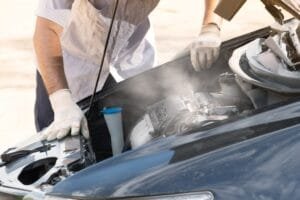

A car that runs hotter than usual can be harder to interpret than one that’s clearly overheating. The temperature gauge may stay below the red zone, no warning lights may appear, and there may be no steam or obvious signs of failure — yet the engine temperature sits higher than it normally does, especially in traffic or during longer drives.
This in-between condition is what makes the issue so easy to overlook. Full overheating feels urgent and unmistakable. A vehicle that simply runs hot often gets ignored, even though it can be an early warning of cooling system problems that become far more serious if left unchecked.
When engine temperature rises above its normal operating range, it usually means something is no longer regulating heat efficiently. That problem may start small, but it rarely fixes itself.
This guide explains what it actually means when a car runs hot, the most common causes behind it, how to tell normal behavior from a developing issue, and when driving is still safe versus when damage is likely to occur. Everything is explained clearly and practically, without technical overload or unnecessary alarm.
What “Running Hot” Actually Means
When a car is running hot but not overheating, the cooling system is still working — just not efficiently.
That usually means:
- The temperature gauge sits higher than normal
- The reading fluctuates more than it used to
- Heat builds up faster in traffic
- The engine cools down slowly after driving
The system hasn’t failed, but it’s under strain.
This is often the stage before overheating, which is why it deserves attention.
Why This Problem Is Easy to Ignore
Ignore it at first because:
- The car still drove fine
- There were no warning lights
- The gauge wasn’t maxed out
- Nothing dramatic was happening
That’s exactly why this issue sneaks up on people. The car gives you time — but not unlimited time.
Low Coolant Level Is the Most Common Cause
This is always the first thing to check.
When coolant is slightly low:
- Heat transfer becomes less efficient
- Temperature rises slowly instead of spiking
- The engine runs warmer without boiling over
Small leaks often go unnoticed. A loose hose clamp, aging hose, or slow seep can drop the level just enough to cause higher operating temperatures.
Air Trapped in the Cooling System
Air pockets disrupt coolant flow. Instead of liquid absorbing heat evenly, air creates hot spots.
I’ve seen this happen after:
- Coolant changes
- Hose replacements
- Minor cooling system repairs
The car doesn’t overheat — it just never feels quite right.
A Thermostat That’s Sticking, Not Stuck
A completely stuck thermostat causes overheating. A partially sticking one causes running hot.
When it opens late or inconsistently:
- Coolant circulation is delayed
- Heat builds up under load
- Temperature fluctuates instead of stabilizing
This one fooled me because the car never overheated — until one hot day when it almost did.
Radiator Efficiency Slowly Declining
Radiators don’t fail overnight. They clog internally over time.
Reduced efficiency causes:
- Poor heat dissipation
- Higher operating temperatures
- Worse performance in traffic
Externally, dirt and debris can also block airflow.
Cooling Fan Problems That Aren’t Obvious
A fan doesn’t have to fail completely to cause issues.
I’ve dealt with:
- Fans that run late
- Fans that don’t spin at full speed
- Fans that work only at highway speed
The result is higher temperatures at idle or low speed — but normal readings while cruising.
Water Pump Wear
A failing water pump doesn’t always leak or make noise right away.
Early signs include:
- Weak coolant circulation
- Higher temperatures under load
- Slow cooling after shutdown
This is one of those problems that quietly gets worse.
Engine Load Can Make the Problem Appear Random
Heavy loads generate more heat.
Notice higher temperatures when:
- Driving uphill
- Carrying extra weight
- Using the air conditioning
- Towing or driving long distances
The system can cope — but just barely.
Why the Gauge Doesn’t Always Tell the Whole Story
Modern gauges are dampened. That means they don’t show every fluctuation.
By the time you notice the needle climbing, the system has already been stressed for a while.
Trust patterns, not just warning lights.
Is It Safe to Keep Driving?
This depends on behavior, not just numbers.
I’m cautious if:
- Temperatures rise faster than before
- Cooling takes longer
- The car smells hot
- Heat output inside the cabin changes
Running hot is often the warning stage before real damage.
What to Check First, Every Time
My checklist:
- Coolant level (cold engine)
- Visible leaks
- Fan operation
- Hose condition
- Radiator airflow
These steps catch most issues early.
Why Ignoring This Leads to Bigger Problems
Prolonged heat:
- Breaks down oil faster
- Stresses seals and gaskets
- Weakens cooling components
I’ve learned that engines tolerate heat poorly over time, even if they never “overheat.”
Preventing This Problem in the Future
What helps:
- Regular coolant checks
- Timely fluid changes
- Replacing aging hoses
- Paying attention to temperature patterns
Cooling systems reward maintenance.
Final Thoughts
A car that runs hot but doesn’t overheat is asking for attention — not panicking, but warning. From my experience, this stage is the best time to act. Problems are easier to fix, cheaper to repair, and less stressful to deal with.
If your car feels warmer than it should, trust that instinct. Small temperature changes often lead to big consequences if ignored.