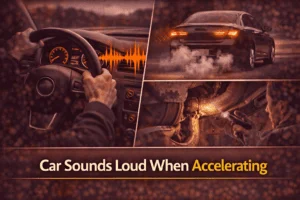
A rattling noise that appears only during acceleration is a common but often confusing symptom. Because the sound disappears when the throttle is released, it can be difficult to determine whether the issue is minor or a sign of developing mechanical trouble.
Acceleration places additional load on the engine, exhaust, and drivetrain, which can cause worn or loose components to reveal themselves briefly and then go quiet again.
Rattling under acceleration can originate from several systems, including heat shields, exhaust components, engine mounts, internal engine parts, or drivetrain hardware. The meaning of the noise depends heavily on when it occurs, how quickly it appears, and whether it changes with engine speed or vehicle load.
The explanation that follows outlines the most common causes of rattling during acceleration, explains how professionals distinguish between harmless vibrations and mechanical risk, and clarifies when continued driving is reasonable versus when inspection should happen without delay.
The goal is to replace uncertainty with a clear understanding of what the sound indicates and how to respond appropriately.
Why Rattling During Acceleration Deserves Attention
Acceleration puts your vehicle under load. More fuel, more air, more movement — everything works harder for a moment. That extra stress often reveals problems that stay hidden while cruising or idling.
What makes rattling tricky is that it’s rarely dramatic at first. It might sound harmless, almost like something vibrating against plastic. But over time, that noise can grow louder or turn into something more serious if the underlying cause isn’t addressed.
Rattling noises usually fall into two categories:
- External vibrations, which are often simpler
- Mechanical or engine-related issues, which require closer attention
Understanding the difference saves time, money, and stress.
Loose Heat Shields: The Most Common Culprit
Heat shields are thin metal panels mounted under the car to protect parts from exhaust heat. Over time, the small bolts holding them in place can rust, loosen, or break.
When you accelerate:
- The exhaust vibrates more
- The shield shakes
- A metallic rattling appears, especially at low speeds
This sound often:
- Goes away at higher speeds
- Changes with engine RPM
- Sounds like thin metal buzzing
The good news is that this is usually inexpensive to fix. Sometimes it’s as simple as tightening a bolt or securing the shield properly.
Exhaust System Issues Beyond Heat Shields
If the sound is deeper or more pronounced, the exhaust system itself may be involved.
Possible causes include:
- Loose exhaust hangers
- Cracked pipes
- Worn gaskets
- A failing catalytic converter
When parts inside the catalytic converter break down, they can rattle internally. This noise often:
- Appears during acceleration
- Sounds like shaking rocks or metal fragments
- Gets worse over time
Ignoring exhaust issues can lead to performance problems and increased emissions, so don’t put these off.
Engine Knock or Detonation: A More Serious Sound
One rattling noise that always gets my attention is engine knock. This isn’t a loose vibration — it’s a sharp, rapid sound that happens when fuel ignites unevenly inside the engine.
Common triggers include:
- Low-quality fuel
- Carbon buildup
- Incorrect ignition timing
- Faulty sensors
Notice this type of noise often:
- Happens under load
- Sounds like tapping or pinging
- Improves when easing off the gas
Engine knock shouldn’t be ignored. While modern engines can compensate to a degree, prolonged knocking can cause internal damage.
Loose or Worn Engine Mounts
The engine doesn’t sit directly on the frame. It’s supported by mounts designed to absorb vibration.
As mounts wear out:
- The engine shifts slightly during acceleration
- Metal components may contact surrounding parts
- Rattling or clunking sounds appear
This noise can feel like it’s coming from everywhere at once. I’ve found that worn mounts often cause:
- More vibration inside the cabin
- Noise when shifting gears
- Movement during hard acceleration
Replacing mounts restores smoothness and prevents stress on other components.
Timing Chain or Belt Noise
Timing components keep engine valves synchronized with piston movement. When parts wear or tensioners weaken, rattling can occur — especially during acceleration.
This type of sound:
- Comes from the engine itself
- May be louder on cold starts
- Can fade once warmed up
Timing issues are not something you ever ignore. A failure here can result in catastrophic engine damage depending on the engine design.
Loose Intake Components or Air Ducts
Not all rattles are metal-on-metal.
Plastic intake ducts, air boxes, and covers can loosen over time. Under acceleration, airflow increases, causing loose parts to vibrate.
These sounds:
- Often come from the engine bay
- May change when revving in neutral
- Can disappear if you gently press on certain components
This is one of the easier things to check visually.
Suspension and Steering Components
Sometimes the noise isn’t from the engine at all.
Acceleration shifts weight toward the rear of the vehicle. If suspension or steering parts are worn, this shift can cause rattling.
Possible sources include:
- Worn control arm bushings
- Loose sway bar links
- Aging ball joints
This type of noise may:
- Occur more on rough roads
- Be accompanied by clunks over bumps
- Change during turns
Loose Interior or Underbody Panels
Before assuming the worst, always rule out simple things.
Loose items can include:
- Plastic underbody covers
- Wheel well liners
- Interior trim pieces
- Even objects left under seats
Acceleration changes airflow and vibration patterns, making loose panels suddenly noticeable.
Transmission-Related Rattles
In some cases, the noise appears during gear changes or under load from the transmission.
Possible issues include:
- Low transmission fluid
- Worn internal components
- Loose torque converter bolts
Transmission noises often feel:
- Deeper than exhaust rattles
- More noticeable during shifts
- Accompanied by hesitation or jerking
Any rattling tied to shifting behavior deserves professional evaluation.
How to Narrow Down the Source
When diagnosing a rattle, follow a simple process:
- Note when it happens
Only during acceleration? Cold engine? Uphill? - Listen to the tone
Metallic, plastic, dull, sharp — each gives clues. - Check location
Engine bay, under the car, inside the cabin. - Observe changes
Does it change with speed, gear, or throttle input? - Inspect visually
Look for loose parts before assuming internal damage.
This method saves time and prevents unnecessary repairs.
Is It Safe to Keep Driving?
That depends entirely on the cause.
Generally:
- Light rattles from shields or trim are low risk
- Engine knock or timing noise is high risk
- Exhaust or suspension issues fall somewhere in between
If the noise:
- Gets louder quickly
- Comes with warning lights
- Is paired with power loss
Stop driving and get it checked.
When Go to a Mechanic
- When it happens
- How it sounds
- What makes it better or worse
Clear communication speeds up diagnosis and reduces guesswork.
Preventing Rattling Problems
From experience, prevention comes down to:
- Regular inspections
- Addressing small issues early
- Not ignoring new sounds
- Keeping up with basic maintenance
Cars talk to us through noises. Rattling during acceleration is one of those messages.
Final Thoughts
A rattling noise when accelerating can feel vague and frustrating, but it’s rarely meaningless. Whether it’s a loose shield or something deeper inside the engine, the sound is telling you something has changed.
The key isn’t panic — it’s attention. By listening carefully, understanding common causes, and responding early, you can often solve the problem before it turns into something expensive or unsafe.
If your car is making that noise, trust your instincts. You’re right to look into it — and now, you know exactly where to start.