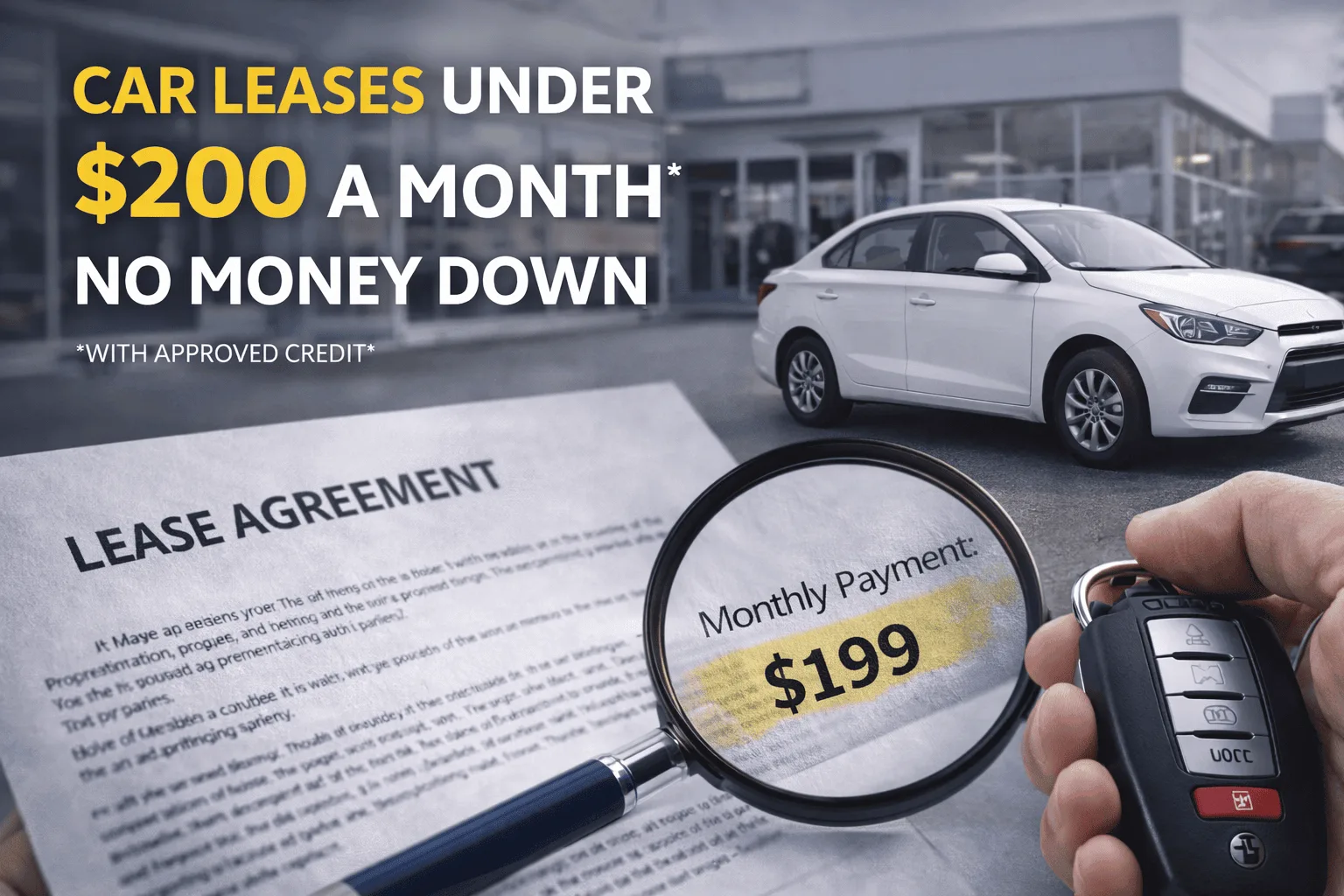
The idea of leasing a car for under $200 a month with no money down is naturally appealing. A low monthly payment, minimal upfront cost, and access to a newer vehicle sound like an ideal solution for budget-conscious drivers. It’s the kind of offer that catches attention quickly in advertisements and dealership promotions.
In reality, offers like this exist within very specific conditions. They are shaped by manufacturer incentives, vehicle selection, credit requirements, regional availability, and timing. What’s often missing from the conversation is how narrowly these deals are defined and what trade-offs usually come with them.
Low advertised lease payments may rely on limited inventory, short lease terms, mileage restrictions, or incentives that not every shopper qualifies for. Without understanding how leasing math works behind the scenes, it’s easy to misunderstand what’s realistic and what’s simply marketing.
The discussion below breaks down what a sub-$200 lease with no upfront payment actually involves, when it’s feasible, what compromises are typically required, and how to evaluate these offers clearly without unrealistic expectations.
Why the $200 Number Feels So Important
There’s something psychological about round numbers. Two hundred dollars feels manageable. It fits neatly into a budget. It sounds safe.
Dealers and advertisers know this. That’s why so many promotions hover right around that number. It becomes a mental threshold — anything under it feels affordable, anything over it feels expensive.
But monthly cost alone doesn’t tell the full story. Understanding what makes that number possible matters more than chasing it blindly.
What “No Money Down” Actually Means
This is one of the most misunderstood parts.
“No money down” does not usually mean “no money due at signing.” It typically means:
- No large upfront down payment
- But still paying fees, taxes, and registration
In some cases, those costs are rolled into the lease, which raises the monthly amount slightly. In others, they’re paid upfront even if the deal is advertised as no money down.
How Leasing Really Works Behind the Scenes
A lease payment is based on a few core factors:
- Vehicle price
- Expected value at the end of the lease
- Lease term
- Interest equivalent
- Fees and incentives
Lower monthly payments happen when the difference between the vehicle’s starting value and ending value is small — or when incentives help bridge that gap.
That’s why certain cars are more likely to hit low monthly numbers than others.
Why Only Certain Cars Qualify for Very Low Payments
Not every car can be leased cheaply.
Cars that tend to qualify for low monthly costs usually:
- Hold their value well
- Have manufacturer incentives
- Are entry-level or compact
- Are being pushed to clear inventory
Luxury models, large vehicles, and high-demand models almost never land in this range without a catch.
Why Flexibility Is Key
One thing I’ve learned quickly is that people who find these deals are flexible.
They’re flexible about:
- Brand
- Color
- Trim level
- Features
If you need a specific model with specific options, the chances of staying under $200 drop fast. The more open you are, the better your odds.
Timing Matters More Than Most People Realize
The best lease deals don’t exist all the time.
They usually appear:
- Near the end of the month
- Near the end of the year
- When a new model is arriving
- When inventory is high
If you’re shopping randomly, you may never see these offers. If you plan your timing, your chances improve significantly.
Why Advertised Deals Aren’t Always Realistic
Many advertised lease deals assume:
- Excellent credit
- Specific trims
- Limited availability
- Short mileage allowances
They’re technically real, but not universally accessible.
I’ve learned to treat ads as starting points, not promises.
Mileage Limits Are Often the Trade-Off
Low payments usually come with lower mileage limits.
Standard leases often allow a moderate amount of driving per year. Lower-cost leases may reduce that allowance.
If you drive more than average, exceeding the limit can erase any savings quickly. This is one of the most important details to understand upfront.
Why Lease Length Affects Monthly Cost
Shorter leases cost more per month. Longer leases spread costs out.
Many sub-$200 deals rely on:
- Longer lease terms
- Stable depreciation curves
This lowers the monthly number but increases total commitment time.
Credit Plays a Bigger Role Than People Admit
These deals are usually aimed at people with strong credit profiles.
Better credit:
- Reduces interest costs
- Improves eligibility
- Unlocks promotional offers
Without solid credit, hitting this price range becomes much harder.
Why Incentives Make or Break These Deals
Manufacturer incentives are often the hidden engine behind low payments.
They can include:
- Lease cash
- Loyalty programs
- Conquest offers
- Regional promotions
Without incentives, the math rarely works. That’s why these deals come and go.
What You Usually Give Up to Stay Under $200
In my experience, staying under this number usually means giving up:
- Premium features
- Higher trims
- Larger engines
- Advanced tech packages
The car will still be new and functional — just basic.
Is “No Money Down” Always a Good Idea?
Not necessarily.
Rolling everything into the lease increases the monthly payment and total cost. Putting some money upfront can lower the monthly number — but it also increases risk if the car is totaled early.
Why Fees Matter More Than People Think
Lease fees add up quietly.
These may include:
- Acquisition fees
- Documentation fees
- Registration costs
Some are unavoidable. Others vary by dealer. Ignoring them leads to surprises.
How Dealers Structure Low Monthly Deals
Dealers can manipulate payments by:
- Extending lease length
- Reducing mileage
- Applying incentives creatively
- Rolling costs forward
None of this is inherently bad — but it’s important to understand what’s being adjusted.
Why Reading the Lease End Terms Is Critical
Low monthly payments feel great — until the lease ends.
Always check:
- Wear and tear standards
- Mileage penalties
- Return requirements
- Early termination rules
Unexpected end-of-lease charges can wipe out savings.
Who These Leases Work Best For
From what I’ve seen, these deals work best for people who:
- Drive predictable distances
- Want basic transportation
- Don’t need premium features
- Maintain vehicles well
- Plan to lease again later
They’re less ideal for people who drive heavily or want flexibility.
Why Used Cars Sometimes Make More Sense
Always compare leasing against buying used.
In some cases:
- A used car costs less overall
- Ownership builds value
- There’s no mileage pressure
Low leases feel attractive, but they’re not always the cheapest option long term.
Common Mistakes People Make Chasing These Deals
Mistakes I’ve seen (and made):
- Focusing only on the monthly number
- Ignoring mileage limits
- Overlooking fees
- Assuming ads apply to everyone
- Rushing into the deal
Patience matters more than urgency here.
How to Approach Finding These Deals
My approach is simple:
- Research incentives first
- Stay flexible on models
- Ask for full cost breakdowns
- Compare multiple offers
- Read the contract slowly
This approach filters out bad deals quickly.
Are These Leases “Too Good to Be True”?
Sometimes yes. Sometimes no.
They’re real — but narrow. They work for a specific type of driver at a specific time under specific conditions.
Understanding that prevents disappointment.
Why Leasing Under $200 Feels Like a Win
For many people, these deals:
- Provide predictable costs
- Offer newer vehicles
- Reduce repair worries
- Fit tight budgets
There’s nothing wrong with that — as long as expectations match reality.
What Changed My Perspective on Cheap Leases
What changed things for me was realizing that the goal isn’t the lowest payment — it’s the right payment.
A deal that fits your life beats one that just looks good on paper.
Final Thoughts
Car leases under $200 a month with no money down aren’t myths — but they’re not everyday deals either. They live at the intersection of timing, incentives, flexibility, and understanding how leasing works.
From my experience, the biggest mistake isn’t leasing — it’s leasing without clarity. Once you understand what’s being traded for that low number, you can decide whether it’s worth it for you.
If you go into it informed and realistic, these deals can make sense. If you chase them blindly, they often disappoint.