
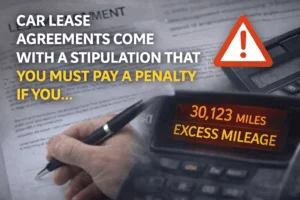
Car lease agreements often look simple at first glance. The monthly payment, the lease term, and the upfront cost tend to get the most attention. Everything else can feel like background detail—easy to skim past and easy to underestimate.
That overlooked section of a lease contract is where penalties live. Lease agreements are built around strict conditions, and financial penalties apply when those conditions are not met. Mileage limits, wear standards, early termination rules, and payment timing are all clearly defined, even if they don’t feel important on day one.
This is why lease penalties catch so many drivers off guard. The costs don’t appear gradually; they show up at the end of the lease, often all at once. By that point, the terms are no longer negotiable.
The explanation below breaks down the most common lease penalties, why they exist, how they’re calculated, and which situations trigger them. Knowing these rules in advance makes the difference between a predictable lease experience and an expensive surprise.
Why Lease Agreements Have Penalties at All
Before diving into specific situations, it helps to understand why penalties exist in the first place.
When you lease a car, you don’t own it. You’re essentially renting it for a set period under specific conditions. The leasing company calculates:
- How much the car will be worth at the end
- How much wear it will experience
- How many miles it will have
- How marketable it will be when returned
Penalties exist to protect that expected value. If something changes that value, the contract shifts the cost back to you.
The Most Common Completion of That Sentence: Exceed the Mileage Limit
This is the most well-known lease penalty, and for good reason.
Almost every lease includes a mileage allowance. If you go over it, you pay for every extra mile.
Why mileage matters:
- Higher mileage reduces resale value
- More miles usually mean more wear
- The leasing company prices the lease based on expected usage
The penalty is usually charged per mile, and it adds up faster than most people expect.
Why Mileage Penalties Hurt So Much
At first glance, a per-mile charge doesn’t sound scary.
Going even a few thousand miles over can result in:
- Hundreds of dollars
- Sometimes thousands
- A surprise bill at lease end
And because it’s written clearly in the contract, there’s usually no negotiation once the lease ends.
Another Big One: Excess Wear and Tear
This is the second most common way people get penalized.
Lease agreements define what counts as “normal” wear and what doesn’t. Anything outside that definition can trigger charges.
This can include:
- Scratches beyond a certain size
- Dents
- Cracked trim
- Worn interior surfaces
- Damage to wheels or tires
Normal use is expected. Extra damage isn’t.
Why Wear and Tear Is More Subjective Than Mileage
Mileage is numbers. Wear and tear involves judgment.
What looks minor to you may be considered excessive by an inspector. That’s where frustration often starts.
- Inspectors follow guidelines, not personal opinions
- Damage thresholds are clearly defined
- Photos and measurements are often used
Understanding those standards early makes a huge difference.
Returning the Car Without Required Maintenance
This one surprises people.
Many lease agreements require that the vehicle be:
- Properly maintained
- Serviced according to schedule
- Returned in mechanically sound condition
Skipping oil changes or ignoring warning lights can result in penalties, especially if the issue affects resale or safety.
Why Maintenance Matters Even If You’re “Just Returning the Car”
We used to think, “Why fix it if I’m giving it back?” That logic doesn’t work with leases.
If the car:
- Shows signs of neglect
- Has unresolved mechanical issues
- Triggers warning indicators
…the leasing company can charge you for bringing it back to acceptable condition.
Ending the Lease Early
This is one of the most expensive penalties.
Lease agreements almost always include heavy costs if you terminate early. That’s because the leasing company planned on collecting payments for the full term.
Ending early can involve:
- Paying remaining payments
- Fees and charges
- Difference between market value and contract value
It’s rarely cheap and rarely simple.
Why Early Termination Is So Costly
The leasing company loses predictable income when you end early. The penalty exists to make them whole.
From what I’ve seen, early termination often costs:
- More than people expect
- More than trading in a financed car
- More than waiting it out in many cases
This is why early exit options should be researched before signing.
Modifying the Vehicle
Most lease agreements prohibit modifications.
This can include:
- Aftermarket wheels
- Custom paint or wraps
- Suspension changes
- Audio system alterations
If modifications aren’t removed before return, penalties apply.
Why Modifications Trigger Charges
The leasing company wants the car returned in a condition that appeals to the widest possible buyer.
Custom changes:
- Reduce resale appeal
- Cost money to reverse
- Add uncertainty to condition
Even improvements can result in penalties if they weren’t approved.
Returning the Car Late
Yes, this happens more than you’d think.
Leases specify:
- A return date
- Sometimes even a return window
Returning the car late can result in:
- Additional daily charges
- Extended lease fees
- Administrative penalties
The contract treats time just as seriously as mileage.
Using the Car Outside Approved Purposes
Some leases restrict how the vehicle can be used.
This may include limits on:
- Commercial use
- Ride-sharing
- Delivery services
- Racing or off-road use
If the car shows evidence of prohibited use, penalties can apply.
Why Usage Restrictions Exist
Certain uses accelerate wear or risk damage. The lease price doesn’t account for that.
If the vehicle is used in ways that:
- Increase wear
- Increase accident risk
- Increase mileage unpredictably
…the leasing company protects itself through penalties.
Failing to Carry Required Insurance
Lease agreements usually require specific insurance coverage levels.
If coverage lapses or falls below requirements, you may face:
- Administrative charges
- Forced coverage fees
- Contract violations
This isn’t just a legal issue — it’s a financial one.
Exceeding Tire or Brake Wear Standards
Some people assume tires and brakes don’t matter at return. They do.
If wear is beyond acceptable limits:
- You may be charged for replacement
- Costs are often higher than retail
- Charges appear after inspection
I’ve learned it’s sometimes cheaper to replace items before returning the car.
Why Lease-End Inspections Matter So Much
The inspection is where penalties are determined.
Inspectors look for:
- Mileage overages
- Physical damage
- Mechanical issues
- Missing items like keys or manuals
Once the report is finalized, charges follow quickly.
Missing Items Can Trigger Penalties Too
This one feels small, but it adds up.
Missing:
- Spare keys
- Floor mats
- Cargo covers
- Owner’s manuals
…can result in additional charges.
Leasing companies expect everything to come back.
Why These Penalties Feel Like a Shock
From my experience, the shock comes from timing.
You don’t feel penalties monthly. You feel them all at once at lease end. That lump sum surprises people, even when it’s technically expected.
That’s why understanding the contract early matters so much.
How to Learned to Avoid Lease Penalties
Here’s what changed everything for me:
- Tracking mileage monthly
- Reading wear guidelines early
- Fixing small issues before inspection
- Asking questions before signing
- Planning the lease end in advance
Leases reward awareness.
Are Lease Penalties Ever Negotiable?
Sometimes — but not always.
Mileage overages are rarely negotiable. Wear-and-tear charges occasionally are, especially if:
- Damage is borderline
- You lease another vehicle
- You’ve been a repeat customer
It never hurts to ask, but expectations should be realistic.
Why Some People Think Leases Are “Traps”
Leases aren’t traps — but they punish inattention.
People who:
- Read contracts
- Monitor usage
- Plan ahead
…usually have smooth lease endings.
People who don’t often feel blindsided.
Who Leasing Works Best For
From what we’ve seen, leasing works best for people who:
- Drive predictable distances
- Maintain vehicles well
- Like newer cars
- Don’t modify vehicles
- Are detail-oriented
If that’s not you, leasing may feel stressful.
What That Sentence Really Means
So when you hear:
“Car lease agreements come with a stipulation that you must pay a penalty if you…”
The most accurate ending is:
- exceed agreed limits or violate agreed conditions
Mileage is just the most visible example. The real rule is about expectations versus reality.
Final Thoughts
Leasing a car isn’t bad, risky, or confusing — unless you treat it casually. From my experience, lease penalties aren’t hidden. They’re written clearly, explained early, and enforced strictly.
The problem isn’t the rules. It’s ignoring them.


