When an air conditioning system stops cooling, the compressor clutch is one of the first components technicians evaluate. The clutch is responsible for engaging the compressor when cooling is requested, and if it fails to engage, refrigerant cannot circulate—even if the rest of the system appears intact. This can leave the impression that the AC is running normally while warm air continues to blow from the vents.
An AC clutch that will not engage can be caused by a wide range of issues, from simple electrical interruptions to pressure-related safeguards or mechanical wear. Because the symptoms often look similar regardless of the cause, incorrect assumptions can lead to unnecessary part replacement or missed repairs.
What follows explains how the AC clutch functions, why engagement fails, which causes are most common, and how the problem is typically identified in a logical order. Understanding these basics makes it easier to recognize whether the issue is minor, maintenance-related, or something that requires deeper inspection before repairs begin.
What the AC Clutch Actually Does
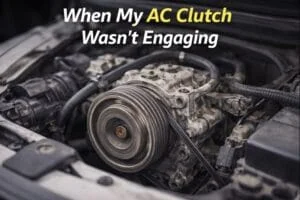
The AC clutch is a mechanical link between your engine and the air conditioning compressor. When you turn on the AC, the clutch engages, locking the compressor to the engine so it can start circulating refrigerant. When cooling isn’t needed, the clutch disengages and lets the compressor rest.
This on-off behavior protects the system and improves efficiency. When the clutch doesn’t engage, the compressor never turns on, which means no cold air—no matter how long you wait.
How to Knew the AC Clutch Wasn’t Engaging
The signs were subtle at first, then obvious.
Here’s what to notice:
- The air stayed warm no matter the setting
- No clicking sound when switching the AC on
- The outer pulley spun, but the center section stayed still
- Engine idle didn’t change when AC was turned on
That missing click is important. Under normal conditions, you can hear or feel the clutch engage. When it doesn’t happen, it’s the system telling you something isn’t right.
Why an AC Clutch Fails to Engage
Low Refrigerant Level
This was the biggest surprise for me.
Modern AC systems are designed to protect themselves. If the refrigerant level drops too low, the system prevents the clutch from engaging to avoid internal damage.
That means:
- No refrigerant doesn’t just reduce cooling
- It can stop the compressor from turning on entirely
In my case, a slow leak over time caused the system to shut itself down quietly.
Electrical Issues
The AC clutch relies on electricity to function. If that power is interrupted, nothing happens.
Common electrical causes include:
- Blown fuse
- Faulty relay
- Broken wiring
- Poor ground connection
Faulty Pressure Switch
Pressure sensors monitor the system and act as safety guards.
If pressure is:
- Too low
- Too high
the switch prevents the clutch from engaging. These sensors can fail on their own, even if the rest of the system is healthy.
A bad sensor can trick the system into thinking something’s wrong when it isn’t.
Worn or Damaged Clutch
Sometimes the problem is mechanical.
Over time, the clutch surface wears down, increasing the gap between components. If the gap gets too large, the magnetic force isn’t strong enough to pull the clutch in.
This often shows up as:
- Intermittent cooling
- AC working only when cold
- Clicking sounds without engagement
This type of failure tends to worsen gradually, not suddenly.
Compressor Issues
This is the cause everyone fears, but it’s not always the case.
If the compressor is seized or internally damaged, the system may prevent engagement to avoid further harm. In some cases, the clutch itself is fine, but the compressor can’t turn.
This usually comes with other symptoms like noise, belt issues, or prior cooling problems.
Why the System Is Designed This Way
At first, it felt frustrating that the AC would simply stop working without warning.
The system is built to:
- Prevent expensive damage
- Protect internal components
- Avoid dangerous pressure conditions
When the clutch doesn’t engage, it’s often doing exactly what it was designed to do.
What to Check First
Instead of guessing, Follow a simple order.
Step 1: Visual Inspection
Check:
- Belt condition
- Pulley movement
- Wiring around the compressor
Anything loose, cracked, or damaged can give you instant answers.
Step 2: Fuse and Relay Check
This is fast and inexpensive.
Step 3: Refrigerant Pressure
Low pressure doesn’t always mean “empty,” but it does mean the system won’t engage. This step alone solves many cases.
Step 4: Electrical Signal at the Clutch
With the AC on, the clutch should receive power.
No voltage means:
- Sensor issue
- Wiring problem
- Control module decision
Voltage present but no engagement usually points to the clutch itself.
Why Jumping the Clutch Is Risky
Yes, it can make it engage—but it bypasses all safety systems.
Doing this can:
- Damage the compressor
- Cause pressure spikes
- Mask serious issues
How Driving Habits Affect the AC Clutch
AC systems that:
- Sit unused for long periods
- Run constantly at max settings
- Operate with low refrigerant
are more likely to develop clutch issues. Occasional use year-round helps keep components healthy.
Repair Options and What They Mean
Refrigerant Service
If the system is low, proper evacuation and recharge is essential. Topping off without fixing leaks is temporary.
Electrical Repair
Fuses, relays, and wiring repairs are usually straightforward and affordable when caught early.
Clutch Replacement
Some compressors allow clutch replacement without changing the entire unit. This can save a significant amount of money.
Full Compressor Replacement
This is the most expensive route but sometimes unavoidable if internal damage exists.
The key is accurate diagnosis before replacement, not after.
When It’s Time to Call a Professional
Handle basic diagnostics yourself, but to stop when:
- Pressure readings don’t make sense
- Electrical signals conflict
- Internal damage is suspected
Final Thoughts
An AC clutch that won’t engage can feel intimidating, especially when the heat is unbearable and answers aren’t obvious. But once you understand how the system thinks and protects itself, the problem becomes far less mysterious.
If your AC clutch isn’t engaging, don’t panic. There’s a reason—and with the right approach, you’ll find it.