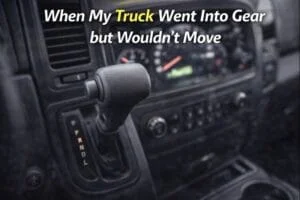
A truck that goes into gear but does not move is a confusing and potentially serious drivability problem. The engine may rev normally, the transmission may appear to engage, yet the vehicle remains stationary. Because there is no grinding noise or obvious failure, the situation often feels unclear—especially when everything looks normal from the driver’s seat.
This type of symptom can point to a range of issues, from simple linkage or sensor problems to more serious faults within the transmission, driveline, or drivetrain control systems. In some cases, the truck can be moved safely once the issue is addressed. In others, continued driving risks further damage.
Understanding what prevents power from reaching the wheels is the key to responding correctly. The explanation ahead focuses on the most common reasons a truck will not move after being put into gear, how those causes differ in severity, and what signs help determine whether the issue is minor, urgent, or a reason to stop driving altogether.
What This Problem Actually Means
When a truck goes into gear but won’t move, it means the connection between the engine and the wheels is failing somewhere. The engine is running, the shifter responds, and the dashboard shows the correct gear — but power isn’t reaching the ground.
That disconnect can happen in several places:
- inside the transmission
- in the clutch system (manual trucks)
- within the torque converter (automatic trucks)
- along the driveshaft
- at the differential
- or even at the wheels themselves
The key thing to understand is this: the truck doesn’t need to be silent or dead for something serious to be wrong. A truck can feel perfectly “alive” and still be unable to move.
The First Thing Always Check
Before assuming the worst, start with the basics. You’d be surprised how often a simple issue causes major confusion.
1. Is the Truck Actually in the Correct Gear?
It sounds obvious, but worn shifter cables or linkage problems can cause the indicator to lie. The lever might say “Drive,” but the transmission could be sitting between gears.
Always:
- shift slowly through every position
- firmly place it back into the desired gear
- watch for any hesitation or looseness in the shifter
If the shifter feels vague or doesn’t click positively into place, that’s important information.
Automatic Trucks: Common Causes I’ve Encountered
Low or Contaminated Transmission Fluid
This is one of the most common reasons an automatic truck won’t move.
Transmission fluid doesn’t just lubricate — it creates hydraulic pressure. Without enough of it, the transmission cannot engage gears properly.
Signs I’ve seen:
- delayed engagement when shifting
- no movement at all
- whining or buzzing sounds
- fluid that smells burnt or looks dark
If the fluid is low, the transmission may act like it’s in gear but fail to transfer power. If it’s burnt, internal damage may already be happening.
Torque Converter Failure
The torque converter connects the engine to the transmission. When it fails, the engine can rev freely while the truck stays still.
What tipped me off in the past:
- engine revs normally
- no grinding or clunking
- truck feels like it’s in neutral even though it’s not
This is not a minor repair, but it’s also not something that usually happens suddenly without warning signs beforehand.
Broken Transmission Pump
The pump builds pressure inside the transmission. If it fails, the transmission loses its ability to engage gears.
Symptoms to notice:
- no movement in any gear
- no engagement delay — just nothing
- fluid level looks fine, but pressure is gone
This is typically a situation where the truck will not move at all, forward or reverse.
Manual Transmission Trucks: Different Problems, Same Result
Clutch Failure
When my manual truck went into gear but wouldn’t move, the clutch was the culprit.
A worn or failed clutch disc can:
- allow the engine to spin
- prevent power transfer
- feel like the truck is slipping constantly
Common signs:
- burning smell
- clutch pedal feels different
- engine speed increases with no movement
If the clutch is completely gone, the truck won’t move in any gear.
Hydraulic Clutch Issues
Modern manual trucks often use hydraulic systems to operate the clutch.
When there’s a leak or air in the system:
- the clutch may not fully engage
- shifting may feel normal
- the truck may not move or may move weakly
This is one of the better scenarios because it’s often repairable without major teardown.
Drivetrain Problems I’ve Seen Overlooked
Broken Driveshaft or U-Joint
This one surprises a lot of people.
If the driveshaft breaks:
- the transmission can work perfectly
- the truck can shift normally
- the wheels won’t receive power
Sometimes you’ll hear a loud bang when it fails. Other times, it just quietly stops working.
Differential Failure
If the differential fails internally, power may never reach the wheels.
Clues include:
- grinding noises before failure
- fluid leaks near the axle
- sudden loss of movement
This type of failure often happens under load, like towing or accelerating uphill.
Broken Axle Shaft
In some cases, one axle breaks while the other spins freely. Depending on the differential type, this can result in zero movement.
You might notice:
- one wheel spinning
- no forward progress
- clunking sounds
When Electronics Are the Problem
Modern trucks rely heavily on sensors and computers. Sometimes the transmission itself is fine, but the system won’t allow engagement.
Examples we’ve dealt with:
- faulty transmission range sensors
- control module errors
- limp-mode activation
In these cases, the truck may refuse to move or limit power severely to prevent damage.
Why You Should Stop Driving Immediately
This is important.
If your truck goes into gear but won’t move, do not keep revving it. I’ve seen people turn a manageable repair into a total transmission failure by repeatedly trying to force movement.
Continuing to rev:
- overheats components
- damages friction materials
- spreads metal debris through the system
If the truck isn’t moving, something is already wrong. More throttle won’t fix it.
What to Do Step by Step
Here’s checklist when this happens:
- Confirm the gear selection
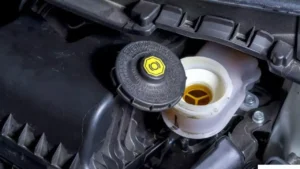
- Check transmission fluid level and condition
- Look under the truck for leaks
- Listen for unusual noises
- Test reverse as well as drive
- Stop if there’s no response
Can This Be a Simple Fix?
Sometimes, yes.
We’ve seen cases resolved by:
- adding the correct fluid
- repairing a linkage
- replacing a clutch slave cylinder
- fixing a broken driveshaft
Other times, it required major work. The key is proper diagnosis before spending money.
Cost Reality (Without Scare Tactics)
Repairs range widely:
- fluid or linkage issues: lower cost
- clutch replacement: moderate
- torque converter or transmission repair: higher
- differential or axle work: varies
The earlier the problem is addressed, the better the outcome tends to be.
Final Thoughts
When a truck goes into gear but won’t move, it’s confusing, frustrating, and sometimes scary. But it’s also a problem with patterns — and patterns can be understood.
This situation doesn’t automatically mean your truck is finished. It does mean it’s asking for attention. Listening early, diagnosing calmly, and avoiding panic make all the difference.
If you’re standing there wondering what just happened, take a breath. You’re not alone, and with the right approach, you’ll know what to do next instead of guessing.