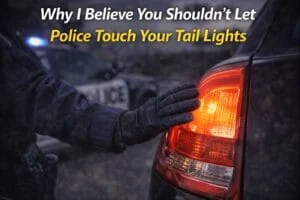
Traffic stops follow patterns that most drivers never fully notice until they happen firsthand. One detail that sometimes surprises people is the moment an officer walks past the rear of the vehicle and briefly touches the tail light. It may look casual, unnecessary, or even intrusive. For some drivers, it raises immediate questions. Is this a search? Is it legal? Does it signal suspicion?
This small gesture has existed in policing for decades. While it is less common today due to dash cameras and body cameras, the practice still appears in certain situations. The purpose is not random, and it is not designed to damage property. Instead, it developed from officer safety concerns and documentation habits during roadside stops.
Understanding why officers may touch a tail light helps remove confusion and unnecessary tension. Knowing the legal background and practical reasoning behind the action gives drivers a clearer view of what is happening. A calm, informed perspective supports safer interactions for both officers and motorists.
Why Police Sometimes Touch Tail Lights
The practice developed long before modern technology became widespread.
Officer Safety Precaution
Historically, traffic stops carried significant risk. Officers approaching a stopped vehicle could not always see clearly inside. Touching the tail light served as a subtle way to ensure the trunk was closed securely.
If someone attempted to exit the trunk unexpectedly, the officer would be positioned to respond.
Creating A Physical Record Of The Stop
Before dashboard cameras became standard, touching the tail light left fingerprints on the vehicle. In extreme cases where an officer might be harmed during a stop, those fingerprints could confirm that the officer had approached the vehicle.
This was a simple, low-tech way to create evidence of presence.
Maintaining Awareness During Approach
Walking close to the vehicle keeps the officer near the rear quarter panel, which is often considered a safer position than standing directly behind the car.
Touching the tail light may simply occur as part of that movement.
Is It Legal For Police To Touch Your Tail Lights
The short answer is yes in most jurisdictions.
No Search Occurs By Simple Touch
Brief contact with the exterior of a vehicle does not generally qualify as a search. Courts in many regions have ruled that touching the outside of a vehicle during a lawful stop is permissible.
The exterior of a car is considered exposed to public view and contact.
Limits Of The Action
Touching a tail light differs from opening doors, searching inside the trunk, or inspecting personal belongings. Those actions require additional legal justification.
A light tap on the exterior is typically allowed.
Property Damage Considerations
Officers are not permitted to damage property without cause. The contact is usually light and momentary, not forceful.
If damage were to occur, it would be subject to investigation like any other property concern.
Why The Practice Is Less Common Today
Technology has changed traffic stop procedures.
Dash Cameras And Body Cameras
Modern patrol vehicles and uniforms are equipped with cameras that record interactions. This reduces the need for physical fingerprint evidence.
Video footage now documents presence more clearly than fingerprints.
Improved Training And Visibility
Officers receive updated safety training and may approach vehicles differently depending on environment and lighting.
The tail light touch is no longer universally emphasized.
Changing Legal Standards
Evolving legal interpretations and public awareness have influenced how officers conduct stops.
Not all departments encourage the practice today.
What It Means If An Officer Touches Your Tail Light
In most cases, it means very little beyond standard procedure.
It Does Not Automatically Indicate Suspicion
The action does not necessarily mean the officer suspects wrongdoing beyond the traffic violation.
It may simply reflect training or habit.
It Is Not A Sign Of Imminent Search
Touching the tail light alone does not signal that the officer plans to search the vehicle.
Search decisions depend on separate legal criteria.
It Is Often Routine
Many officers follow consistent patterns during stops regardless of the reason for the stop.
Routine helps maintain safety and structure.
How Drivers Should Respond During A Traffic Stop
Calm behavior reduces risk and confusion.
Pull Over Safely
Signal clearly and stop in a well-lit area when possible. Keep both hands visible on the steering wheel.
Visibility promotes trust.
Avoid Sudden Movements
Wait until instructed before reaching for documents. Sudden movements increase tension.
Clear communication matters.
Stay Calm And Polite
Polite interaction helps the stop proceed smoothly. Arguments rarely change outcomes at the roadside.
Disputes can be handled later through legal channels if necessary.
Understand Your Rights
Drivers have the right to ask if they are free to leave once the stop concludes. They also have the right to decline consent searches if no warrant or probable cause exists.
Knowing rights supports respectful interaction.
Common Misconceptions About Tail Light Touching
Several myths circulate about this practice.
Myth It Signals Criminal Suspicion
Touching the tail light does not automatically imply criminal suspicion.
It is often procedural.
Myth It Allows Immediate Search Authority
The act does not grant authority to search the vehicle. Legal standards remain unchanged.
Separate justification is required for further action.
Myth It Is Always Required
Not all officers or departments use this practice. Many stops occur without any physical contact with the vehicle.
Procedures vary by region.
Balancing Officer Safety And Public Understanding
Traffic stops are among the most unpredictable encounters officers face. Small safety habits developed over time to reduce risk.
At the same time, public awareness has increased, and transparency has become more important. Clear communication between officers and drivers improves trust.
Both safety and respect matter.
When Tail Light Contact Might Be Questioned
Rarely, if the touch is excessive or results in visible damage, drivers may document the situation and follow up through proper channels.
Professional conduct standards apply to all interactions.
Most stops conclude without issue.
Final Thoughts On Should Police Touch Your Tail Lights
The practice of touching a tail light during a traffic stop originated from safety concerns and documentation needs. It is generally legal and does not, by itself, signal suspicion or authorize further action. In many places, the practice has become less common due to modern recording technology.
For drivers, the most important focus remains safe and calm interaction. Knowing what the gesture represents removes unnecessary anxiety and prevents misunderstandings. A brief touch on the rear of the vehicle is usually procedural rather than personal.
Traffic stops are structured events guided by training and law. Clear information about common procedures helps both drivers and officers approach them with greater confidence and reduced tension.