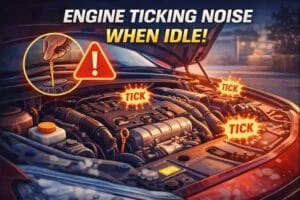
A ticking noise that appears while an engine is idling but fades when revved is a common concern for many drivers. Because the sound is often subtle and the vehicle may otherwise operate normally, it can be difficult to tell whether the noise is harmless or an early sign of mechanical wear. The lack of warning lights or temperature changes only adds to the uncertainty.
Engine ticking at idle can originate from several sources, including valvetrain components, fuel injectors, exhaust leaks, or lubrication-related issues. Some of these sounds are considered normal by design, while others point to conditions that worsen if ignored. The key difference lies in how the noise behaves, where it comes from, and how it changes with engine speed and temperature.
The explanation ahead focuses on the most common causes of engine ticking at idle, explains which noises are typical and which are not, and outlines how technicians differentiate between normal operating sounds and problems that require attention. The intent is to replace guesswork with clear criteria that help determine the next step calmly and confidently.
Why Engine Noises Are More Noticeable at Idle
When a car is idling, everything slows down. The engine isn’t under load, the exhaust note is quieter, and road noise disappears. That silence makes small sounds stand out.
At idle:
- Engine parts move slower
- Sound insulation is less effective
- Rhythmic noises become easier to hear
That’s why ticking noises often go unnoticed while driving but suddenly become obvious when stopped.
What an Engine Ticking Noise Usually Sounds Like
Most people describe it as:
- A light tapping or clicking
- A rhythmic tick that matches engine speed
- A sound that fades when RPM increases
The key detail is consistency. A steady tick at idle usually points to mechanical movement rather than random damage.
Common Causes of Engine Ticking Noise at Idle
Let me walk you through the most common reasons I’ve seen—starting with the least serious and moving toward the ones that need attention.
Low or Dirty Engine Oil
Oil lubricates engine parts and cushions movement. When oil is low, old, or thick with contaminants, parts like lifters and cam components can start making noise—especially at idle.
Signs this might be the issue:
- Ticking is louder when cold
- Noise improves after driving
- Oil looks dark or gritty
- Oil change overdue
I’ve learned that fresh oil often quiets a ticking engine almost immediately.
Hydraulic Lifters Making Noise
Many engines use hydraulic lifters that rely on oil pressure to stay quiet. When oil pressure is low at idle, lifters can tick.
Common signs:
- Ticking only at idle
- Noise fades with higher RPM
- More noticeable when engine is cold
This doesn’t always mean failure. Sometimes lifters just need clean oil and time to re-prime.
Fuel Injectors Clicking Normally
Fuel injectors open and close rapidly, and they make a ticking sound by design. On many modern engines, injector noise is more noticeable at idle.
Clues it’s normal injector sound:
- Light, fast clicking
- Even rhythm
- No change in performance
- Noise doesn’t worsen over time
Exhaust Heat Shield or Thin Metal Rattle
Sometimes what sounds like engine ticking isn’t internal at all.
Loose heat shields or thin exhaust components can make ticking or tapping sounds as they vibrate.
Signs:
- Noise comes from underneath
- Changes with vibration
- Goes away when revving
- More noticeable when stopped
This is usually harmless but annoying.
Worn Spark Plugs or Ignition Issues
When combustion isn’t smooth, the engine can develop subtle ticking or tapping sounds at idle.
Possible clues:
- Rough idle
- Slight vibration
- Reduced fuel efficiency
- Noise paired with hesitation
This is more of a performance issue than a noise issue—but the sound can be an early clue.
Vacuum Leaks Near the Engine
A small vacuum leak can create a ticking or hissing sound that’s easy to mistake for mechanical noise.
What to watch for:
- Noise changes with engine load
- Idle feels uneven
- Whistling or tapping near hoses
Vacuum leaks are often inexpensive to fix if caught early.
Timing Components Starting to Wear
This is where to stop ignoring the noise.
Timing chain tensioners, guides, or related parts can tick at idle when worn.
Warning signs:
- Noise grows louder over time
- Sound persists even when warm
- Slight rattling mixed with ticking
This doesn’t mean immediate failure—but it does mean inspection is smart.
Valves or Internal Engine Wear
This is less common but more serious.
When internal clearances grow due to wear, valves and related components can tick at idle.
Signs this may be the case:
- Persistent ticking at all temperatures
- Noise doesn’t fade with RPM
- Engine has high mileage
- Performance feels weaker
This is when professional diagnosis becomes important.
Why the Noise Often Goes Away When Driving
At higher RPM:
- Oil pressure increases
- Parts move more smoothly
- Engine load changes
- Vibrations shift frequency
That’s why ticking at idle doesn’t always mean something is failing—it often reflects conditions at low speed, not damage.
When an Engine Ticking Noise Is Usually Not a Big Deal
Stay calm if:
- The noise is light and consistent
- The engine runs smoothly
- Oil level is correct
- No warning lights are on
- The sound hasn’t changed over time
Many engines tick quietly for years without issues.
When to Take a Ticking Noise Seriously
Don’t ignore it if:
- The noise gets louder
- The sound changes suddenly
- Performance drops
- The noise is new and sharp
- It’s accompanied by knocking or grinding
Sound changes matter more than sound itself.
What to Do Step by Step When You Hear Ticking
Follow this process.
Step 1: Check the Oil
Always start here.
- Check level
- Check color
- Check smell
This step alone has solved the issue more than once.
Step 2: Listen Closely
Pay attention to:
- Where the sound comes from
- Whether it changes with RPM
- Whether it changes when warm
Location and pattern matter.
Step 3: Consider Recent Changes
Ask yourself:
- Was oil changed recently?
- Did weather change?
- Was the car unused for a while?
Context often explains noise.
Step 4: Drive Normally and Monitor
If the noise stays mild and unchanged, observe for a few days.
If it worsens, act.
Can Driving With a Ticking Engine Cause Damage?
It depends on the cause.
Safe short-term:
- Injector noise
- Light lifter tick
- Exhaust vibration
- Minor vacuum issues
Risky to ignore:
- Oil starvation
- Timing component wear
- Valve train damage
Listening early prevents expensive repairs.
Temporary Fixes: What Helps and What Doesn’t
Things that can help:
- Fresh oil of correct viscosity
- Quality oil filter
- Correct oil level
Things that don’t fix real issues:
- Noise-masking additives
- Thicker oil without diagnosis
- Ignoring sound changes
Avoid additives unless recommended by a professional.
Why Cold Engines Tick More
Cold oil is thicker. Parts haven’t expanded yet. Clearances are larger.
That’s why ticking often:
- Appears at startup
- Fades as engine warms
- Returns at idle after long stops
This behavior is common and not always harmful.
How Mechanics Diagnose Ticking Noises
Professionals usually:
- Listen with engine running
- Use stethoscopes
- Check oil pressure
- Scan for related data
- Inspect timing components if needed
A proper diagnosis saves money and guesswork.
Cost Perspective: Why Early Attention Matters
I’ve seen:
- $80 oil changes prevent $800 repairs
- Small gasket issues prevent major engine work
- Early diagnosis avoid full tear-downs
Noise is often the engine’s first warning—not its last.
My Honest Take After Years of Car Ownership
Not every ticking noise means trouble.
Engines are mechanical. They move, click, and breathe. Silence isn’t always normal, and sound isn’t always failure.
The key is change. If the sound is new, louder, or different—pay attention.
If it’s light, consistent, and unchanged—monitor calmly.
Final Thoughts
An engine ticking noise at idle can feel unsettling, especially when everything else seems fine. But panic doesn’t help—understanding does.
Start with the basics. Listen carefully. Watch for patterns. Address small things early.
Your car usually tells you what it needs long before it breaks. You just have to listen the right way.
If you’re hearing that ticking sound now, you’re already doing the right thing by learning about it.