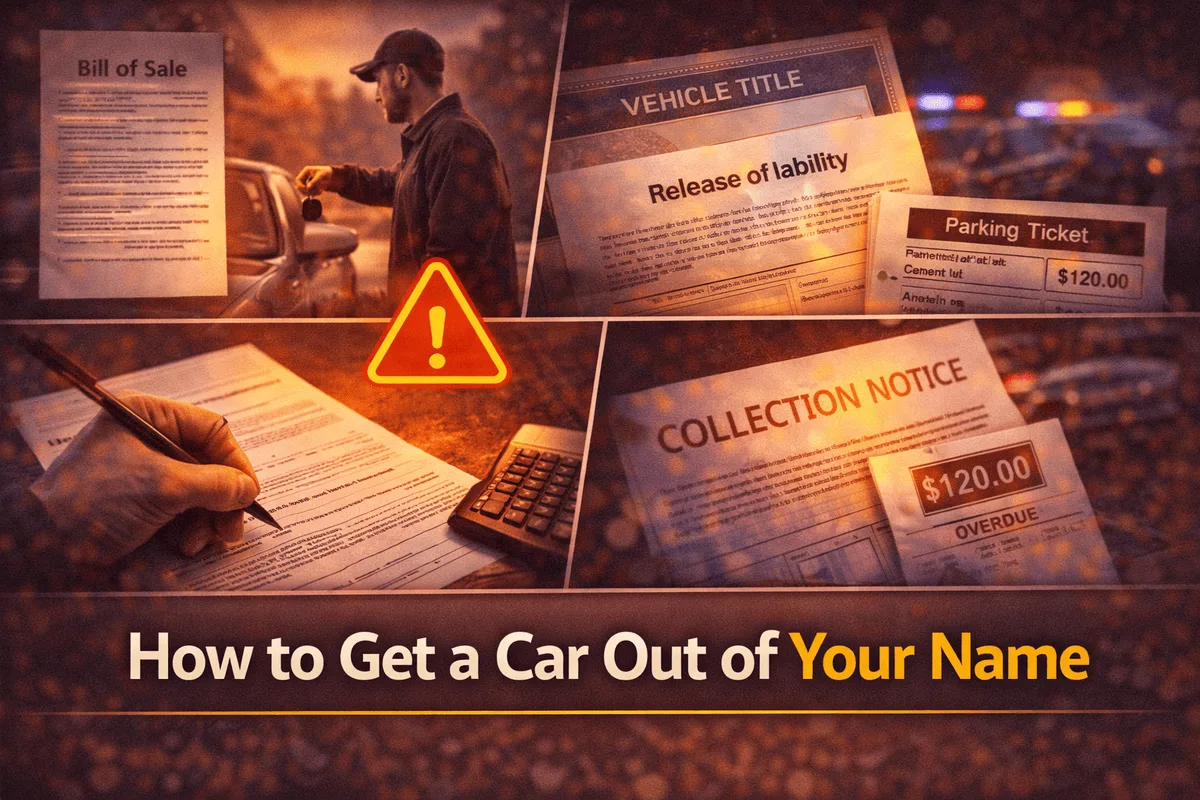
A vehicle that remains legally registered in someone’s name can continue to create obligations long after it has left their possession. Traffic violations, parking notices, toll charges, and even liability issues can still be tied to the registered owner if ownership records were never properly updated. This often comes as a surprise, especially when the vehicle was sold, given away, scrapped, or stopped running years earlier.
Removing a car from your name is not automatic. It requires specific steps that vary by situation, including how the vehicle was transferred, whether documentation exists, and how local motor vehicle authorities handle ownership changes. Simply handing over the keys or receiving payment does not end legal responsibility.
The information ahead explains how to remove a vehicle from your name correctly, what paperwork is typically required, which situations need extra attention, and how to confirm that liability has fully ended. The emphasis is on protecting yourself legally and financially by closing the loop properly rather than assuming the matter resolved itself.
Why Getting a Car Out of Your Name Matters So Much
Keeping a car in your name when you no longer control it isn’t just an inconvenience—it’s a risk.
If the car is still in your name, you may be responsible for:
- Parking tickets
- Toll charges
- Impound fees
- Registration penalties
- Legal liability in certain situations
Even if you don’t have the car anymore, records don’t update themselves. Getting it out of your name closes that door.
The Most Important Rule You Should Know
Here’s the rule to know:
Handing over the keys does not end responsibility. Paperwork does.
Until the right forms are filed and accepted, the car still follows you.
First Step: Identify How the Car Left Your Possession
Before doing anything, I always start by asking one simple question:
How did the car leave my control?
The answer determines everything that comes next.
Common situations include:
- Sold to a private buyer
- Traded in to a dealer
- Given to a family member or friend
- Totaled or scrapped
- Abandoned or left with someone
- Stolen
Each path has a different solution.
If You Sold the Car Privately
This is the most common scenario—and the one that causes the most problems.
If you sold the car privately but it’s still in your name, it usually means:
- The title transfer wasn’t completed
- The buyer never registered the car
- You didn’t file a release notice
Even if the sale was legitimate, incomplete paperwork keeps you on the hook.
Why a Bill of Sale Alone Isn’t Enough
A bill of sale helps, but it doesn’t automatically remove the car from your name.
Think of it this way:
- The bill of sale proves intent
- Title and notification update ownership
You need both for full protection.
What I Do After a Private Sale (The Right Way)
Here’s my personal checklist:
- Sign the title correctly
- Keep a copy of the bill of sale
- File a release or transfer notice immediately
- Remove the license plates if required
That release notice is what officially tells the system, “This car is no longer mine.”
Filing a Release of Liability (The Key Step)
In many places, this is the single most important action.
A release of liability:
- Notifies authorities of the transfer
- Records the date and buyer
- Protects you from future issues
I always file it as soon as the car leaves my possession—even before the buyer registers it.
If the Buyer Never Transferred the Title
This happens more often than people admit.
If the buyer:
- Never registered the car
- Never completed the title transfer
You can still protect yourself by:
- Filing a release notice
- Providing the buyer’s information if you have it
- Keeping proof of sale
This doesn’t force the buyer to act, but it cuts your legal connection.
If You Traded the Car In
Trade-ins are usually simpler, but mistakes still happen.
When I trade a car in, I:
- Confirm the dealer handles the title transfer
- Get paperwork showing the trade-in
- Keep copies of everything
If the car is still in your name after a trade-in, contact the dealer immediately. It’s usually a fixable paperwork delay.
If You Gave the Car to a Family Member or Friend
This is where people relax—and that’s where problems start.
Even if you give a car away:
- Ownership still needs to be transferred
- Titles still need signatures
- Records still need updating
Good intentions don’t replace paperwork.
Why Verbal Agreements Don’t Protect You
I’ve learned this the hard way.
“I gave it to my cousin” or “my friend said he’d handle it” doesn’t matter to official records. Until the transfer is complete, the car remains yours on paper.
If the Car Was Scrapped or Sold for Parts
This one surprises people.
Even if the car no longer exists:
- Records may still show it under your name
- Registration may still be active
When scrapping a car, I always:
- Get a receipt or certificate
- Notify the appropriate authority
- Cancel registration if required
That final notification closes the loop.
If the Car Was Totaled
If a car was totaled:
- Insurance usually handles part of the process
- But you may still need to confirm ownership status
I always check that:
- The title was properly handled
- The car was reported as totaled
- My registration was closed
Never assume it’s automatic—verify.
If the Car Was Abandoned or Left Somewhere
This is stressful, but it’s not hopeless.
If you no longer have the car and don’t know where it is:
- File a statement explaining the situation
- Provide last known details
- Submit any supporting documents
The goal is to formally separate yourself from responsibility.
If the Car Was Stolen
For stolen vehicles:
- A police report is essential
- Ownership records are flagged
- Responsibility is limited once reported
If you never filed a report, do it as soon as possible. Documentation protects you.
Why Canceling Registration Matters
Registration keeps a car “active” in the system.
When I no longer own a car, I:
- Cancel or update registration
- Remove my name from records
- Stop renewal notices
This prevents future fees and penalties.
What to Do About License Plates
This depends on local rules, but I treat plates seriously.
In many places:
- Plates stay with the owner
- Not the vehicle
If plates remain on the car, tickets can follow you. I remove them unless the rules say otherwise.
Insurance: Don’t Forget This Step
Insurance doesn’t remove ownership—but it’s still important.
After a transfer, I:
- Cancel or update the policy
- Get written confirmation
- Keep records
This avoids paying for coverage you no longer need and prevents confusion if something happens.
What If You Lost the Title?
This complicates things, but it’s fixable.
If the title is missing:
- Request a replacement
- Then complete the transfer or release
I never try to skip this step—it usually creates bigger problems later.
What If You Don’t Have Buyer Information?
This happens with old sales.
If you don’t have buyer details:
- File what you can
- Explain the situation honestly
- Attach any proof you still have
Even partial documentation is better than silence.
How Long It Takes for Records to Update
This varies, but patience helps.
After filing:
- Updates may take days or weeks
- Confirmation may arrive by mail or online
I always follow up to make sure the change actually went through.
How I Confirm the Car Is Truly Out of My Name
I don’t assume—I verify.
I check:
- Registration status
- Ownership records if accessible
- Absence of renewal notices
No news is good news—but confirmation is better.
Common Mistakes I See People Make
Here’s what I avoid now:
- Trusting the buyer to handle everything
- Skipping the release notice
- Throwing away paperwork
- Assuming time fixes the issue
Time doesn’t fix records—action does.
What to Do If Tickets or Notices Keep Coming
If notices arrive after you’ve filed paperwork:
- Respond immediately
- Provide proof of transfer
- Reference the release date
Most issues clear up once records are matched correctly.
Why Acting Quickly Saves Stress
The sooner you act:
- The easier it is to fix
- The more proof you still have
- The fewer complications arise
Waiting only adds layers.
A Simple Way I Think About It Now
I keep it simple:
If my name is on the record, I’m still responsible.
If I want zero responsibility, I need zero connection on paper.
That mindset keeps me disciplined.
Final Thoughts
Getting a car out of your name isn’t about bureaucracy—it’s about protecting yourself. Once you understand that responsibility follows paperwork, not possession, everything becomes clearer. Whether you sold, gave away, scrapped, or lost control of a car, there’s almost always a way to formally close the chapter.
The key is acting calmly, documenting everything, and following through until records are updated. It’s not glamorous, but it’s worth the peace of mind.