
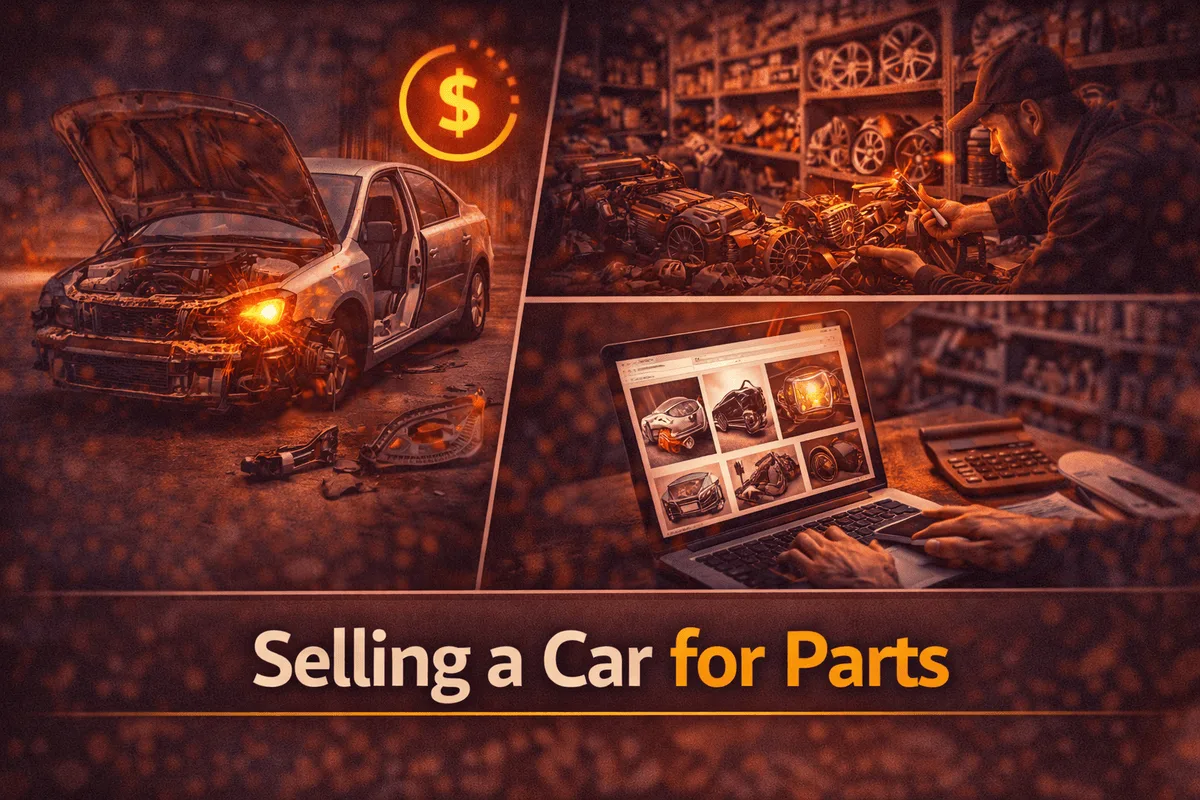
There are situations where a vehicle no longer makes financial sense to repair, even if some components are still in usable condition. When repair costs exceed the vehicle’s market value, selling it as a whole often brings little return. In these cases, selling the car for parts becomes a practical alternative rather than a last resort.
Many vehicles that are no longer roadworthy still contain valuable components, including engines, transmissions, body panels, electronics, and interior parts. The challenge lies in knowing which parts hold resale value, how to sell them legally, and whether parting out a car is worth the time and effort compared to selling it intact or scrapping it.
The information ahead outlines how selling a car for parts typically works, what items are most commonly worth removing, which situations favor parting out over other options, and how to handle the process without legal or logistical issues. The focus is on realistic expectations and practical steps so the decision is based on value, not guesswork.
What “Selling a Car for Parts” Really Means
Selling a car for parts means you’re no longer trying to sell it as a drivable vehicle.
Instead, you’re:
- Selling individual components
- Or selling the entire car to someone who will dismantle it
- Or sending it to a yard that pays based on usable parts and scrap value
The goal is to recover as much value as possible from a car that’s no longer worth repairing as a whole.
When Selling for Parts Makes Sense
In my experience, selling for parts is the right move when:
- Repair costs exceed the car’s value
- The engine or transmission has failed
- The car won’t pass inspection
- Insurance declared it a total loss
- The car has serious electrical issues
If the car can’t realistically return to reliable road use, parts often make more sense than repairs.
First Decision: Parting It Out or Selling It Whole for Parts
This is the biggest fork in the road.
You have two main options:
- Sell the entire car to someone who parts it out
- Remove and sell individual parts yourself
Both work—but they require very different levels of time and effort.
Selling the Car Whole for Parts (The Easy Route)
This is what I recommend if:
- You want it gone quickly
- You don’t have space or tools
- You don’t want ongoing hassle
You sell the entire car as a “parts car,” and someone else handles the dismantling.
Pros:
- Fast
- Minimal effort
- No storage needed
Cons:
- Lower payout
- Less control over value
This option favors convenience over maximum profit.
Parting Out the Car Yourself (The Maximum Value Route)
This route can make more money—but it’s work.
You:
- Remove parts one by one
- List them individually
- Deal with buyers over time
Pros:
- Higher total return
- Control over pricing
- Sell valuable components separately
Cons:
- Time-consuming
- Requires space
- Requires patience
I only recommend this if you’re comfortable with tools and logistics.
What Parts Are Usually Worth Selling
Not everything on a car is worth the effort.
Parts that usually have good demand include:
- Engine components
- Transmission
- Alternator and starter
- Headlights and tail lights
- Wheels and tires
- Seats and interior pieces
- Mirrors and trim
If the part is easy to remove and in good shape, it’s usually worth considering.
What Parts Often Aren’t Worth the Trouble
Some parts look tempting but rarely pay off.
These often include:
- Old hoses
- Heavily worn suspension parts
- Rusted components
- Small plastic clips
The time it takes to remove and sell these usually exceeds their value.
Why Condition Matters More Than Age
Buyers care more about condition than the car’s year.
A clean, working component from an older car can sell faster than a damaged part from a newer one. I always focus on:
- Function
- Appearance
- Completeness
Honesty here saves headaches later.
How I Decide What to Remove First
I start with:
- High-value parts
- Easy-to-access components
- Items that sell quickly
That way, even if I stop parting the car later, I’ve already recovered meaningful value.
The Importance of Space and Storage
This part catches many people off guard.
If you’re parting out a car:
- You’ll need storage space
- Parts must stay dry
- Items should be labeled
A garage or covered area makes a huge difference.
Pricing Parts Without Guessing
I never price blindly.
Instead, I:
- Look at similar listings
- Note condition differences
- Price realistically
Overpricing leads to parts sitting forever. Fair pricing moves things quickly.
How Long It Usually Takes to Sell Parts
This is not instant.
Some parts sell:
- Within days
Others:
- Take weeks or months
That’s normal. I go into this expecting it to be a gradual process, not a one-day sale.
Selling to a Salvage Yard
Salvage yards are a common option.
They typically:
- Buy the car as-is
- Pay based on weight and demand
- Handle towing
You won’t get top dollar, but it’s fast and simple.
Why Scrap Value Still Matters
Even if no parts are valuable, the car itself still has scrap value.
Metal weight alone often provides:
- A baseline payout
- A way to avoid disposal fees
This makes scrapping better than letting a car rot.
Online Selling vs Local Buyers
Each has its place.
Local buyers:
- Faster pickup
- No shipping
- Easier communication
Online buyers:
- Larger audience
- Higher prices for rare parts
- More effort
I usually start locally and expand online if needed.
Being Honest in Listings Saves Time
This is something I learned quickly.
Clear listings should include:
- Exact condition
- Any known flaws
- Whether returns are accepted
Honesty reduces disputes and wasted conversations.
What to Do With the Title
Even when selling for parts, paperwork matters.
Depending on where you live:
- The title may still be required
- A bill of sale may be needed
- Ownership must be transferred
I always check local requirements before selling.
Why “No Title” Changes Everything
Selling without a title limits your options.
Some buyers:
- Won’t touch the car
- Will offer much less
If you have the title, your car is worth more—even as parts.
Removing the License Plates
This is a small but important step.
Before selling:
- Remove plates
- Cancel registration if required
- Notify your insurance
This protects you from future issues.
How Towing Fits Into the Equation
If the car doesn’t run:
- Some buyers include towing
- Some expect you to handle it
Always clarify this upfront to avoid surprises.
What I Do to Protect Myself Legally
I keep things simple:
- Written bill of sale
- Buyer’s name and date
- Clear “sold as-is” language
This avoids misunderstandings later.
Why Some Buyers Walk Away
Don’t take it personally.
Buyers may leave because:
- They found cheaper parts elsewhere
- They misjudged condition
- They changed plans
This is normal and part of the process.
How to Know When to Stop Parting Out
There comes a point where:
- Valuable parts are gone
- Remaining parts won’t sell
- Space becomes an issue
At that point, scrapping the shell is the smart move.
Scrapping the Remaining Shell
Once stripped:
- The shell still has value
- Metal recyclers will take it
- Space is freed up
This closes the loop cleanly.
Emotional Side of Selling a Car for Parts
This surprised me.
Even when a car is worn out, letting it go piece by piece can feel strange—especially if you’ve owned it a long time. That feeling is normal. But practicality usually wins.
Common Mistakes I See People Make
Here’s what I avoid:
- Overpricing everything
- Keeping parts “just in case”
- Ignoring paperwork
- Letting the car sit too long
These mistakes cost time and money.
Is Selling for Parts Worth It?
In many cases, yes.
Selling for parts:
- Recovers value
- Prevents waste
- Helps other cars stay on the road
It’s often the most sensible ending for a worn-out vehicle.
A Simple Way I Decide
I ask myself:
“Is this car worth more as a whole—or as pieces?”
When the answer is “pieces,” the path becomes clear.
Final Thoughts
Selling a car for parts isn’t about giving up—it’s about making a smart, practical decision. When a car reaches the end of its useful life as a vehicle, it still has value as a collection of parts that others need. Whether you choose to sell it whole or part it out yourself depends on your time, space, and patience.
The key is going in with clear expectations. This process rewards planning, honesty, and realism. Done right, it can turn a dead car into something useful again—just in a different form.

