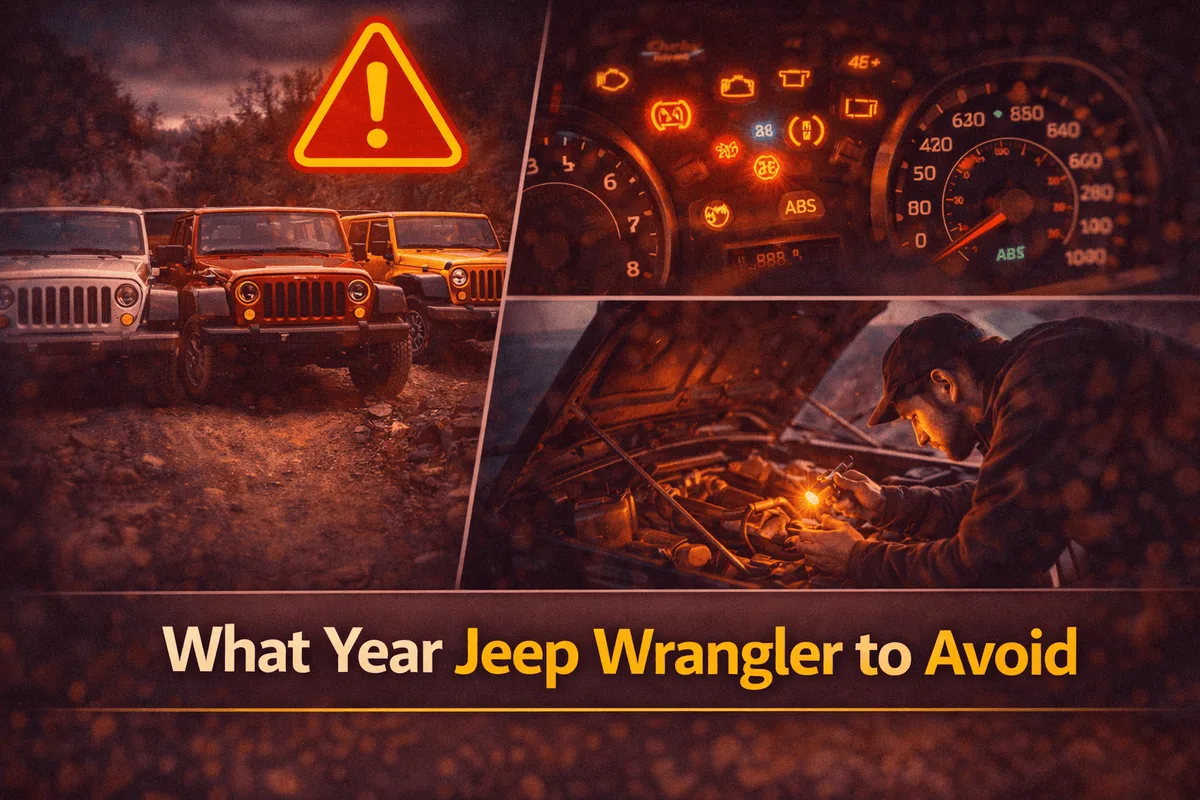
The Jeep Wrangler has a strong identity built around off-road capability, modular design, and long-standing brand appeal. For many buyers, it represents a vehicle that can handle daily driving while still offering trail-ready potential. However, that reputation does not apply evenly across every model year.
Over time, the Wrangler has gone through multiple powertrain changes, transmission updates, and design revisions. Some of these transitions produced reliable, well-regarded years, while others introduced recurring mechanical or electrical issues that prospective buyers should be aware of before committing. Reliability, maintenance demands, and ownership costs can vary significantly depending on the year and configuration.
The information ahead highlights Wrangler model years that tend to raise concerns, explains the common problems associated with those years, and clarifies which issues are manageable versus which ones deserve caution. The emphasis is on helping buyers make informed decisions based on patterns and real-world ownership data rather than reputation alone.
Why Model Year Matters So Much With the Jeep Wrangler
Wranglers don’t change gradually the way many vehicles do. When Jeep updates something, it’s often a big mechanical or design shift, not a small tweak.
That means:
- Some years introduce new engines
- Some years bring new transmissions
- Some years have first-generation systems
And first-generation systems are where problems often show up.
A Quick Reality Check Before Naming Specific Years
Before we get into individual years to avoid, you must be clear about one thing.
Every Wrangler:
- Has quirks
- Feels rougher than a typical SUV
- Requires more owner involvement
Avoiding certain years doesn’t mean buying a Wrangler becomes “problem-free.” It just reduces your chances of dealing with known, repeated issues that many owners have experienced.
Early 2007–2008 Models: Why I’d Be Careful
These years marked a major change for the Wrangler.
What changed:
- A completely new generation
- New interior design
- New electronics
- New engine pairing
The problem wasn’t the idea—it was execution.
Why these years raised concerns:
- Engine-related complaints
- Electrical glitches
- Early reliability issues
Many owners describe these years as “teething period” models, where the platform hadn’t fully matured yet.
2012 Model Year: A Big Transition That Didn’t Go Smoothly
This year stands out more than most.
It introduced:
- A new engine
- Major mechanical updates
- Big expectations
Unfortunately, it also introduced problems that took time to iron out.
Common concerns reported by owners:
- Engine performance issues
- Cooling-related complaints
- Inconsistent reliability
It’s not that every 2012 Wrangler is bad—but this year has a higher chance of problems compared to the years immediately after it.
2013–2014: Improved, But Still Not My First Choice
These years improved on earlier changes, but they weren’t perfect.
What got better:
- Engine refinement
- Smoother operation
- Fewer early failures
What still concerned some owners:
- Electrical quirks
- Minor drivability complaints
If I were choosing between similar-priced Wranglers, I’d usually look past these years unless the condition and maintenance history were exceptional.
2005–2006 Models: Older Isn’t Always Simpler
Some people assume older Wranglers are safer because they’re simpler.
That’s not always true.
For these years:
- Age-related wear is a major factor
- Parts fatigue becomes unavoidable
- Rust issues become more common
Even if the design itself wasn’t flawed, time becomes the enemy here.
Rust: The Silent Dealbreaker in Older Wranglers
This deserves its own section.
Wranglers are often:
- Driven off-road
- Exposed to mud, salt, and water
- Washed improperly underneath
Years to be cautious of if rust protection wasn’t good:
- Early 2000s models
- Vehicles from snow or coastal regions
Rust can:
- Weaken frames
- Cause safety issues
- Be extremely expensive to fix
I’d rather avoid a rusty Wrangler than almost any other problem.
2018 First-Year Redesign Models: Why I’d Pause
Any first-year redesign is risky, and the Wrangler is no exception.
First-year changes often bring:
- New technology
- New electronics
- New systems that haven’t been fully tested in the real world
Early reports from owners included:
- Electrical issues
- Software-related glitches
- Build quality inconsistencies
Later years tend to fix these issues once real-world feedback rolls in.
Why “Avoid” Doesn’t Mean “Never Buy”
This is important.
When I say “years to avoid,” I really mean:
- Years to approach carefully
- Years that demand deeper inspection
- Years where maintenance history matters more than mileage
A well-maintained Wrangler from a weaker year can still be better than a neglected one from a “good” year.
Transmission Behavior: A Big Clue When Test Driving
One thing I always pay attention to is how the Wrangler shifts.
Red flags during a test drive:
- Harsh shifting
- Delayed gear engagement
- Strange noises when changing gears
Certain years had more complaints about shifting behavior, especially when paired with newer engines.
Electrical Issues: A Common Theme in Certain Years
Wranglers aren’t known for luxury-grade electronics, but some years stand out.
Common complaints included:
- Warning lights appearing randomly
- Sensors behaving inconsistently
- Dash features failing intermittently
These issues are frustrating because they:
- Don’t always leave you stranded
- Are hard to diagnose
- Can become expensive to chase
Why Owner Reviews Matter More Than Advertisements
I learned quickly not to rely on marketing claims.
Owner feedback reveals:
- Patterns of repeated issues
- Real-world durability
- Long-term satisfaction
When the same complaint shows up again and again for a specific year, I take that seriously.
The “Good Years” Often Come After Fixes
One pattern I noticed while researching Wranglers is this:
- A change is introduced
- Problems appear
- Jeep refines the design
- Reliability improves
That’s why later years of a generation are often safer than the early ones.
Mileage vs Year: Which Matters More?
This is where people disagree, but here’s my take.
I’d rather buy:
- A slightly older Wrangler
- With clear maintenance records
Than:
- A newer Wrangler
- With unknown history
That said, problematic years with high mileage multiply risk.
How Off-Road Use Changes the Equation
Wranglers are meant to go off-road—but not all off-road use is equal.
Things I look for:
- Evidence of hard trail use
- Poorly installed modifications
- Lack of underbody protection
Some problematic years become worse if they’ve been pushed hard without proper care.
Modifications Can Hide or Create Problems
This surprised me.
Aftermarket parts can:
- Improve capability
- Or hide existing issues
Suspension lifts, oversized tires, and electrical add-ons can stress systems that were already marginal in weaker model years.
Why Maintenance Records Matter More Than Ever
For years to avoid, records are everything.
I want to see:
- Regular fluid changes
- Recall work completed
- Consistent servicing
A missing history is a bigger red flag on a questionable year.
What I’d Personally Avoid If Given the Choice
If I had many options available, I’d generally be cautious with:
- Early redesign years
- Years known for widespread complaints
- Older models with visible rust or heavy wear
That doesn’t mean I’d reject them outright—but I’d go in with eyes open.
The Cost Factor: Cheap Upfront Can Be Expensive Later
Wranglers from weaker years are often cheaper.
That lower price can:
- Be a great deal
- Or hide future repair costs
I always ask myself:
“Am I saving money—or just delaying the expense?”
Why Some Owners Still Love “Bad Years”
This might sound strange, but it’s true.
Some owners:
- Fix issues early
- Maintain their Wranglers carefully
- End up with reliable vehicles
That’s why blanket statements never tell the whole story.
A Simple Way I Decide Whether to Walk Away
Here’s my personal checklist:
- Known problem year? → Inspect deeper
- No service history? → Walk away
- Rust present? → Walk away
- Drives poorly? → Walk away
No Wrangler is worth constant stress.
What I’d Recommend Instead of Panicking
If you’re worried about buying the “wrong” year:
- Focus on condition
- Get a professional inspection
- Be patient
There are a lot of Wranglers out there. You don’t need to rush into one with known issues.
Final Thoughts
The Jeep Wrangler is a special vehicle—but that doesn’t mean every model year deserves blind trust. Some years introduced changes that needed time to mature, and others are now simply showing their age. Knowing which years to approach carefully doesn’t make you negative—it makes you informed.
If there’s one thing I’ve learned, it’s this: the best Wrangler isn’t defined by the year alone, but by how it’s been treated. Understanding the risky years just helps you ask the right questions before you buy.