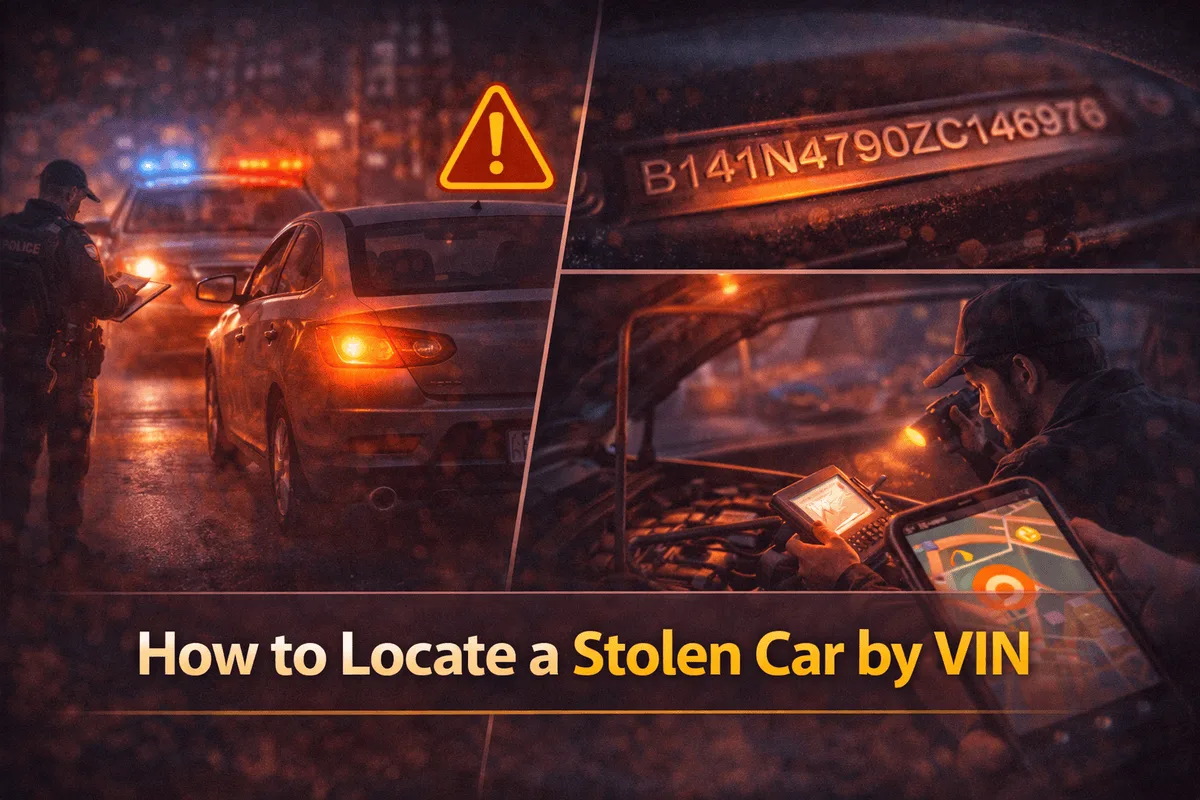
When a vehicle is reported stolen, attention quickly turns to identification details that might assist with recovery. One of the most important of these is the Vehicle Identification Number (VIN). Unlike license plates, which can be removed or altered, the VIN is permanently tied to the vehicle and used across law enforcement, insurance, and registration systems.
At the same time, there are limits to what a VIN can do on its own. Public access is restricted, and misuse of VIN-related tools can create legal complications rather than solutions. Knowing how the VIN is actually used—and who is authorized to use it—helps set realistic expectations during an already stressful situation.
The information that follows explains how a VIN factors into stolen vehicle recovery, what it can and cannot reveal, how authorities and insurers rely on it, and which steps meaningfully support recovery efforts. The focus is on lawful actions, proper documentation, and practical next steps that prioritize safety and clarity over false promises.
First, Let’s Be Clear About the VIN
A VIN (Vehicle Identification Number) is a unique fingerprint for your car. It doesn’t act like a GPS, and it won’t show a live location on a map. But it does play a critical role in recovery.
What the VIN does well:
- Identifies the exact vehicle
- Connects records across systems
- Flags the car as stolen nationwide
What it cannot do:
- Track movement in real time
- Reveal a location by itself
- Replace law enforcement involvement
Understanding this early prevents frustration later.
Why the VIN Still Matters More Than Anything Else
Even though it doesn’t “locate” the car on its own, the VIN is what allows systems to recognize your car anywhere it appears.
Once reported properly, the VIN becomes:
- A red flag in databases
- A trigger during traffic stops
- A marker during inspections, towing, or resale attempts
Most recovered vehicles are found because the VIN was flagged and checked—not because someone chased it down themselves.
Step One: Confirm the Car Is Actually Stolen
I know this sounds obvious, but it matters.
Before anything else, I would:
- Confirm it wasn’t towed
- Check with property management
- Call the local non-emergency line to ask about recent tows
This avoids wasting time and creating confusion in official records.
Step Two: File a Police Report Immediately
This is the most important step—and the one that unlocks everything else.
When you file a report:
- The VIN is entered into national databases
- The car is officially flagged as stolen
- Other agencies are alerted automatically
I would not delay this, even if I hoped the car might “turn up.” Time matters here.
What Information Helps the Police Most
When reporting the theft, I’d make sure to provide:
- The VIN
- License plate number
- Make, model, and color
- Any distinguishing features
- Approximate time and location of theft
The VIN is the anchor, but details help recognition.
How the VIN Is Used After the Report
Once the VIN is entered:
- Patrol officers can see it during stops
- Automated readers may flag it
- Inspection stations may catch it
- Tow yards may identify it
You don’t see this activity happening—but it’s constant.
Why You Usually Can’t “Search” the VIN Yourself
A lot of people look for online tools that promise to locate a car by VIN. That’s where expectations need to be realistic.
Public VIN searches can:
- Show history
- Confirm theft status
- Reveal past records
They cannot:
- Show current location
- Reveal private data
- Replace police systems
Any site claiming live tracking through a VIN alone is misleading.
When the VIN Helps Indirectly
Here’s where the VIN really shines.
If your stolen car:
- Is stopped by police
- Is involved in an incident
- Is towed or abandoned
- Is brought for inspection or resale
…the VIN check immediately flags it as stolen. That’s how many recoveries happen—quietly and unexpectedly.
Why You Should Share the VIN With Your Insurance Company
I’d notify my insurer as soon as the police report is filed.
Why this helps:
- It documents the theft
- It links the VIN to a claim
- It can assist recovery coordination
Insurance companies often work directly with recovery services and law enforcement.
How License Plate Readers Work With VINs
Many areas use automated plate readers.
These systems:
- Scan license plates
- Cross-check records
- Alert authorities if something is flagged
If the plate has been changed, the VIN still matters when the car is physically inspected later.
What Happens If Thieves Change the Plates
This is common—and it doesn’t defeat the VIN.
Even if:
- Plates are removed
- Plates are swapped
- Stickers are altered
The VIN remains embedded in the vehicle. It’s extremely hard to erase completely without obvious damage.
Where VINs Are Typically Checked
VINs are commonly checked during:
- Traffic stops
- Emissions or safety inspections
- Registration attempts
- Towing intake
- Auction processing
This is why stolen cars often resurface weeks or months later.
Why Recovery Takes Time
This is one of the hardest parts emotionally.
Most stolen cars aren’t found in the first few hours. Many are:
- Abandoned later
- Used briefly
- Recovered during unrelated checks
The VIN works in the background. Patience is part of the process—even though it’s difficult.
Can I Use the VIN to Track Online Listings?
You can watch listings for similar vehicles, but I would not contact sellers or attempt confrontation.
What I would do:
- Note suspicious listings
- Share information with police
- Let authorities handle verification
The VIN protects you legally when it’s used through the proper channels.
GPS, Telematics, and VINs: How They Connect
If your car has:
- Factory tracking
- A connected app
- A subscription service
Those systems may help with location—but they are separate from the VIN itself.
The VIN helps authorities confirm identity once the car is found. Tracking systems help find it sooner if they’re active.
What Not to Do (This Matters)
When emotions are high, it’s easy to make risky choices. I would avoid:
- Trying to locate the car myself
- Confronting anyone
- Using shady “tracking” services
- Sharing personal info publicly
Recovery should never put you in danger.
Why Social Media Sometimes Helps (Carefully)
Sharing details can help awareness, but I’d keep it smart:
- Share photos and general info
- Avoid exact locations or accusations
- Direct tips to authorities
The VIN itself is better kept within official channels.
What If the Car Is Found but Damaged?
This happens more often than people expect.
If recovered:
- The VIN confirms ownership
- The police notify you
- Insurance steps in
The condition may vary, but recovery still matters for legal and financial reasons.
What If the Car Is Never Found?
This is hard to talk about—but preparation helps.
If the car isn’t recovered:
- The VIN remains flagged
- Claims are processed
- Records prevent legal resale
The VIN ensures the car can’t quietly disappear into the system.
Why VIN-Based Recovery Is About Visibility, Not Tracking
This is the key mindset shift.
The VIN doesn’t chase the car.
It makes the car impossible to hide forever.
Any time it resurfaces in a legitimate process, the system recognizes it.
How Long Does the VIN Stay Flagged?
Once reported stolen:
- The VIN remains flagged until cleared
- Recovery or insurance resolution updates it
It doesn’t expire quietly.
What I’d Tell Anyone Going Through This
I know how helpless it can feel. You want action, not paperwork. But the VIN is powerful precisely because it works quietly and legally across systems you don’t see.
The best thing you can do is:
- Report quickly
- Provide accurate details
- Stay patient
- Protect your safety
Most recoveries happen because the VIN did its job behind the scenes.
Final Thoughts
You can’t locate a stolen car by VIN in the way movies make it look—but you can use the VIN to make recovery possible. It’s the strongest identifier your car has, and once it’s flagged, it turns every official checkpoint into a chance for recovery.
I know waiting is the hardest part. But the VIN keeps working even when you feel like nothing is happening.