When a vehicle is reported stolen, attention quickly turns to identification details that might assist with recovery. One of the most important of these is the Vehicle Identification Number (VIN). Unlike license plates, which can be removed or altered, the VIN is permanently tied to the vehicle and used across law enforcement, insurance, and registration systems.
At the same time, there are limits to what a VIN can do on its own. Public access is restricted, and misuse of VIN-related tools can create legal complications rather than solutions. Knowing how the VIN is actually used—and who is authorized to use it—helps set realistic expectations during an already stressful situation.
The information that follows explains how a VIN factors into stolen vehicle recovery, what it can and cannot reveal, how authorities and insurers rely on it, and which steps meaningfully support recovery efforts. The focus is on lawful actions, proper documentation, and practical next steps that prioritize safety and clarity over false promises.
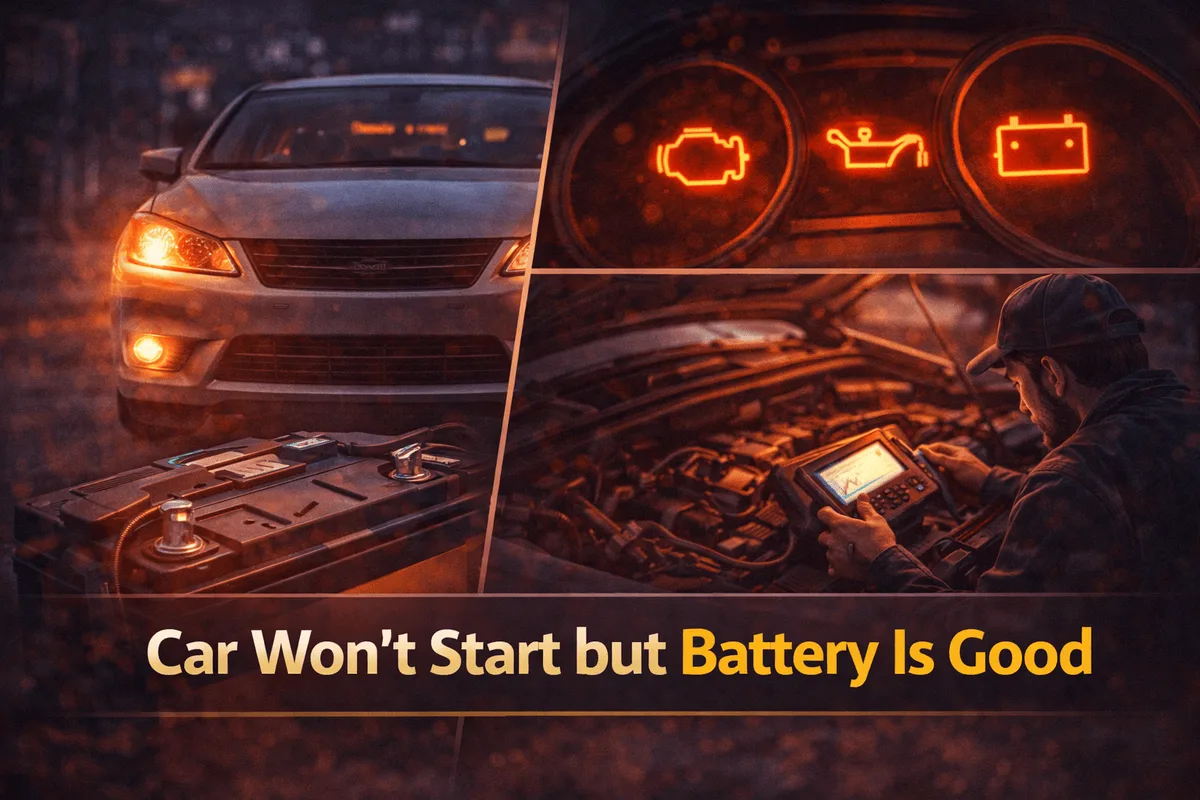
What “Battery Is Good” Actually Means
When people say the battery is good, they usually mean:
- The lights turn on
- The radio works
- The dashboard looks normal
- The car unlocks and locks
That tells us the battery has some power, but starting an engine requires far more than powering accessories. Starting demands a large, sudden surge of energy and a lot of coordination between systems.
So when a car won’t start but the battery is good, it means:
- Power is available
- But something else is blocking or interrupting the start process
Why a Car Needs More Than a Battery to Start
Starting a car is a chain reaction. Everything has to agree at the same time.
For a successful start, the car needs:
- Electrical power
- Fuel delivery
- Air intake
- Correct timing
- Security approval
- Working sensors
If even one link in that chain fails, the engine won’t start—even if the battery is perfectly fine.
First Big Clue: Does the Engine Crank or Stay Silent?
This is the most important question I ask myself.
There are two main scenarios:
- The engine does not crank at all
- The engine cranks but does not start
Each one points to very different causes.
If the Engine Does Not Crank
If you turn the key or press the button and:
- Nothing happens
- Or you hear a single click
- Or complete silence
Then the problem is usually related to starting authorization or power delivery, not fuel.
Starter Motor Issues That Mimic Battery Problems
A failing starter motor can look exactly like a bad battery.
Symptoms include:
- Silence when turning the key
- Occasional starting, then sudden failure
- Clicking sounds without cranking
The battery may be strong, but the starter simply isn’t doing its job anymore.
Starter Relay and Electrical Control Problems
Between the battery and the starter motor sits a network of relays and switches.
If a relay fails or sticks:
- Power never reaches the starter
- The engine doesn’t crank
- Everything else appears normal
This is one of those invisible problems that feels mysterious until it’s found.
Neutral Safety and Gear Position Issues
Modern cars won’t start unless they’re sure the vehicle is in the correct gear.
If the car doesn’t detect:
- Park
- Or Neutral
…it may block starting completely.
That’s why sometimes moving the shifter slightly or trying Neutral instead of Park changes the outcome.
Brake Pedal and Clutch Switch Problems
Push-button start cars rely on confirmation signals.
The system checks whether:
- The brake pedal is pressed
- Or the clutch is fully engaged
If the switch sending that signal fails, the car won’t allow starting—even with a good battery.
Security and Anti-Theft Systems Blocking the Start
This is a big one, especially in newer vehicles.
If the car:
- Doesn’t recognize the key
- Detects a communication issue
- Thinks the wrong key is present
…it may block the engine entirely.
In this case, the car is choosing not to start, not failing to start.
Why the Engine May Crank but Still Not Start
If the engine turns over normally but doesn’t fire, the battery is almost certainly not the issue.
This usually points to:
- Fuel delivery problems
- Ignition issues
- Airflow or sensor issues
The engine is physically spinning—it just isn’t igniting properly.
Fuel Problems That Stop the Engine From Starting
Fuel needs to reach the engine at the right pressure and timing.
If fuel delivery is weak or delayed:
- The engine cranks endlessly
- Starting takes much longer than usual
- The engine may start and immediately stall
Fuel-related issues often show up suddenly, even if the car was fine yesterday.
Why You Might Smell Fuel but Still Not Start
This confuses a lot of people.
Smelling fuel doesn’t mean combustion is happening correctly. It can mean:
- Fuel is present
- But ignition is weak or mistimed
In that case, the engine turns but never truly fires.
Air Intake Problems You Can’t See
An engine needs clean, measured air.
If airflow is restricted or misread:
- The fuel mixture becomes incorrect
- Combustion becomes unstable
- Starting becomes difficult or impossible
This can happen quietly without warning lights.
Sensors That Matter Most During Startup
Startup depends heavily on sensor input.
During starting, the car relies on:
- Temperature information
- Position data
- Air measurement
If the data is wrong, the engine doesn’t know how much fuel to use, and starting suffers.
Why the Car Sometimes Starts After Several Tries
This detail matters more than most people think.
If the car:
- Fails at first
- Starts after multiple attempts
It often means:
- Fuel pressure is building slowly
- A sensor is warming up
- An electrical connection is inconsistent
Repeated attempts change conditions slightly each time.
When the Car Starts and Then Dies Immediately
This is always unsettling.
The engine fires, runs briefly, then shuts off.
This usually means:
- The engine can start
- But can’t sustain idle
That points toward airflow control or fuel stability issues rather than battery power.
Electrical Connections That Look Fine but Aren’t
Even with a good battery, poor connections can block power where it matters.
Common culprits include:
- Corroded terminals
- Loose ground cables
- Aging wiring
These issues don’t always affect lights or accessories—but they can prevent starting.
Why Jump-Starting Doesn’t Always Help
People often try jump-starting immediately.
If the issue is:
- Authorization-related
- Sensor-related
- Starter-related
Jump-starting won’t change anything, even though the battery is fine.
That’s why a jump can fail while lights still look strong.
Why This Happens Suddenly Without Warning
Many people tell me:
“It was fine yesterday.”
That’s common.
Components can:
- Fail internally without noise
- Degrade until they cross a threshold
- Be sensitive to temperature changes
The car doesn’t always give gradual warnings.
Short Trips and Starting Problems
Short trips don’t give the system time to stabilize.
Over time, this can:
- Reduce charging efficiency
- Increase moisture buildup
- Stress electrical components
Starting problems often show up in cars used mainly for short drives.
Why Warning Lights Don’t Always Appear
Not every starting problem triggers a warning light.
Some issues:
- Stay within acceptable limits
- Occur only during startup
- Don’t persist long enough to be flagged
That’s why you can have real trouble without dashboard clues.
How I Personally Narrow Down the Cause
When my car won’t start but the battery is good, I ask:
- Does the engine crank?
- Does it start after several tries?
- Does it start better when warm?
- Does it start in Neutral?
Those answers quickly point me in the right direction.
What I Don’t Do Anymore
I avoid:
- Replacing random parts
- Assuming the battery is lying
- Ignoring early signs
Guessing usually costs more than diagnosing calmly.
When It’s Safe to Try Again (And When It’s Not)
If the car:
- Cranks normally
- Shows no warning lights
- Eventually starts
You may be able to drive short-term—but it’s still a warning.
If the car:
- Becomes unpredictable
- Cranks slower over time
- Stops responding entirely
It’s time to stop and investigate properly.
Why Waiting Makes Things Worse
Most no-start issues begin small.
Waiting can lead to:
- Being stranded unexpectedly
- More components being stressed
- Higher repair costs
Addressing the issue early almost always saves trouble.
What This Problem Is Usually Not
It’s important to say this clearly.
A car that won’t start with a good battery does not automatically mean:
- The engine is ruined
- The car is unreliable forever
- Repairs will be extreme
Many causes are manageable once identified.
A Simple Way I Think About It Now
I keep it simple:
If the battery is good and the car won’t start, then the problem is either:
- Authorization
- Power delivery to the starter
- Fuel
- Air
- Information (sensors)
Finding which one applies makes everything clearer.
Final Thoughts
When a car won’t start but the battery is good, it feels frustrating because the obvious answer isn’t correct. I’ve learned that starting problems are rarely random—they follow patterns. Once you stop blaming the battery and start paying attention to sounds, behavior, and timing, the problem becomes much easier to understand.
Your car isn’t being stubborn. It’s reacting to something it doesn’t like or doesn’t trust. The key is listening early, before a simple issue turns into a no-start emergency.