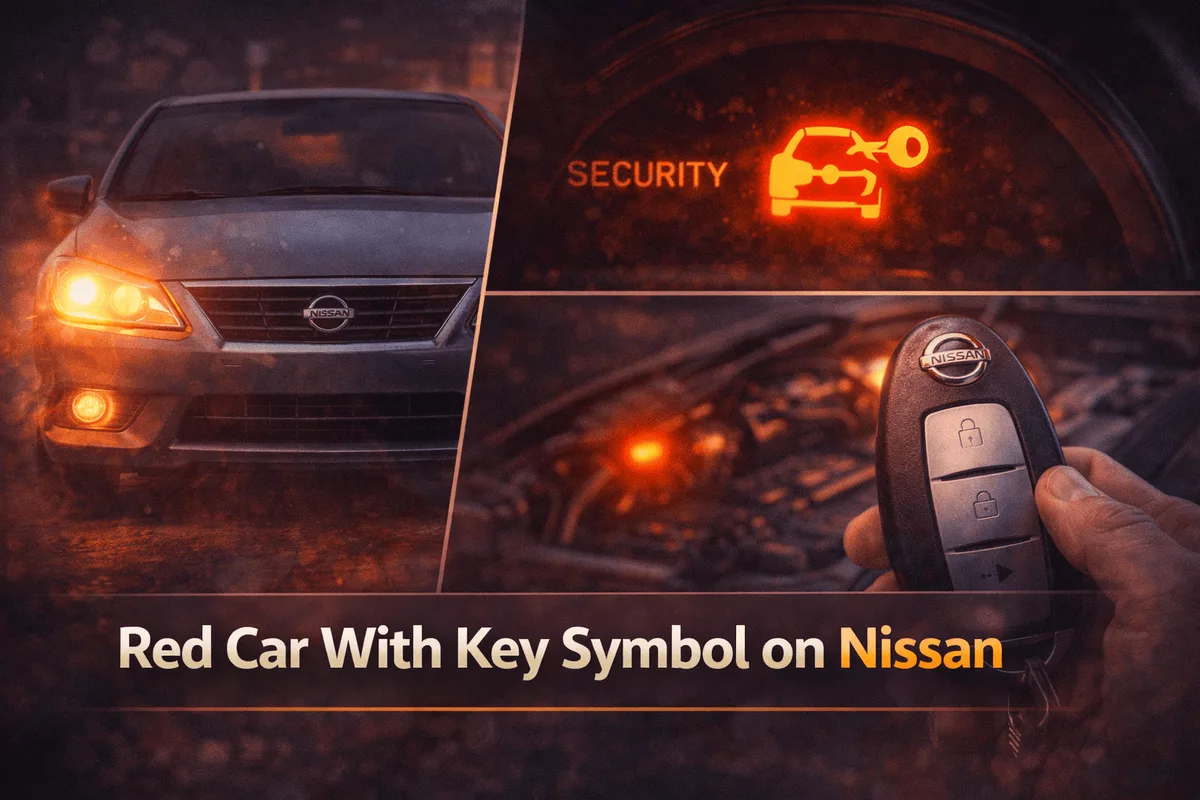
The red car with a key symbol on a Nissan dashboard is not a general warning light—it belongs to the vehicle’s anti-theft and immobilizer system. When this symbol appears, it indicates that the car is not recognizing the key correctly or that the security system has detected a condition that prevents normal operation. As a result, the engine may refuse to start, start and stall immediately, or remain disabled even though electrical power appears normal.
This warning often causes confusion because it can appear suddenly and without other obvious symptoms. Battery strength, starter operation, and dashboard electronics may all seem fine, which leads many drivers to suspect unrelated problems. In reality, the issue is usually tied to key recognition, signal communication, or a fault within the immobilizer system itself.
The explanation ahead clarifies what the red car-and-key symbol means on Nissan vehicles, why it appears, which situations commonly trigger it, and how the problem is typically resolved. The emphasis is on recognizing the difference between a security lockout and a mechanical failure so the situation can be addressed correctly without unnecessary repairs or panic.
What the Red Car With Key Symbol Means on a Nissan
On Nissan vehicles, that red car with a key icon is not a general warning light. It’s directly connected to the car’s security and key recognition system.
In simple terms, it means:
- The car does not recognize the key properly
- Or the security system is active
- Or communication between the key and the car has a problem
This light is Nissan’s way of saying, “I’m not confident that the correct key is present or authorized.”
Why This Light Feels So Stressful
Unlike a check engine light, this symbol often appears when:
- The car won’t start at all
- The engine cranks but won’t fire
- The car shuts off immediately after starting
That’s why it creates instant anxiety. It doesn’t warn you about something coming later—it affects whether you can drive right now.
How Nissan’s Security System Works (Plain Explanation)
Modern Nissan vehicles use an electronic anti-theft system. The key isn’t just a piece of metal—it carries a coded signal.
Here’s what happens when you try to start the car:
- The key sends a signal
- The car checks that signal
- If the code matches, the engine is allowed to start
- If it doesn’t, the car blocks starting
The red car with the key symbol appears when that process doesn’t go smoothly.
Common Situations When This Light Appears
Over time, I’ve noticed this light usually shows up in a few specific situations.
These include:
- The car won’t start at all
- The car starts and then shuts off
- The light stays on solid
- The light flashes repeatedly
- The issue appears suddenly, without warning
Each of these gives a clue about what’s going on.
Flashing vs Solid Light: Why the Difference Matters
This is something many people miss.
- Flashing light:
Usually means the security system is active or the car is not detecting a valid key. - Solid light:
Often means there’s a communication issue between the key and the car.
Neither should be ignored, but flashing usually points more directly to a key-related problem.
The Most Common Cause: Weak Key Fob Battery
This is the first thing I always check—and for good reason.
A weak key battery can:
- Unlock the doors
- Turn on the dashboard
- But fail during engine authorization
Starting the car requires a stronger signal than unlocking it. That’s why the key can “half work” and still trigger the warning.
Why the Car Sometimes Starts Anyway
This part confuses a lot of people.
Sometimes the car:
- Starts after several tries
- Starts if you move the key closer
- Starts once, then fails later
That’s because the signal strength or interference changes slightly each time. It doesn’t mean the problem is gone—it just means it’s inconsistent.
Where You Hold the Key Can Matter
This surprised me when I first learned it.
The car’s key receiver is usually in a specific area. If the key is:
- Too far away
- Blocked by metal objects
- Interfered with by electronics
…the signal can weaken enough to trigger the warning.
Why Spare Keys Sometimes Work Better
If you have a spare key and it works while the main one doesn’t, that’s a huge clue.
It usually means:
- The original key’s battery is weak
- The key itself is damaged
- The key has lost proper communication
This helps rule out deeper vehicle problems quickly.
Interference Inside the Car
Modern cars are full of electronics, and sometimes they interfere with each other.
Common sources include:
- Other key fobs
- Phones placed directly on the key
- Aftermarket electronics
This interference can confuse the car’s receiver and trigger the symbol.
When the Light Appears While Driving
This is less common, but it does happen.
If the red car with key symbol appears while driving:
- The engine usually keeps running
- The system is warning of a communication issue
It doesn’t usually shut the car off mid-drive, but it does mean the system detected something abnormal.
Why the Car May Not Start Even With a Strong Battery
This is an important distinction.
Many people replace the car battery first, only to find:
- The dashboard lights up
- Accessories work
- But the engine still won’t start
That’s because this issue is authorization-related, not power-related. The car is choosing not to start, not failing to start.
Push-Button Start and Brake Pedal Issues
If your Nissan uses push-button start, the system checks multiple conditions.
The car must detect:
- A valid key
- A pressed brake pedal
- Proper gear position
If the brake pedal signal is inconsistent, the car may not complete the start process, even with the key present.
Gear Selector and Safety Checks
The system also confirms:
- The car is in Park or Neutral
If the car isn’t fully in the correct position, the engine may be blocked from starting, and the warning can appear.
After Battery Replacement or Jump-Starting
I’ve seen this issue pop up right after:
- Replacing the car battery
- Jump-starting the vehicle
Sudden voltage changes can confuse the security system temporarily, leading to key recognition problems.
When the Key Is Actually Damaged
Keys aren’t indestructible.
Damage can happen from:
- Dropping the key repeatedly
- Water exposure
- Physical wear over time
Even if the key looks fine on the outside, internal damage can affect its signal.
Why the Warning Can Appear Suddenly
One of the most frustrating things is when the light appears out of nowhere.
This happens because:
- Key batteries weaken gradually
- Internal key damage accumulates
- System tolerance reaches a limit
The car works fine—until one day it doesn’t.
What I Do Immediately When I See This Light
Here’s my calm, step-by-step approach:
- Try the spare key
- Replace the key fob battery
- Move the key closer to the start area
- Remove other electronics from the key ring
- Make sure the brake is fully pressed
These steps solve a large percentage of cases without further trouble.
Why Repeated Start Attempts Sometimes Help
Each attempt slightly changes:
- Signal timing
- Key position
- System response
That’s why the car may eventually start—but again, that’s a temporary success, not a fix.
When the Light Means More Than a Key Issue
In some cases, the problem isn’t the key itself.
It can involve:
- The key receiver in the car
- Security system modules
- Wiring issues
These are less common, but they do happen—especially as vehicles age.
Why Warning Lights Don’t Always Explain Everything
Nissan’s system doesn’t always display a clear message. Sometimes you only get the symbol.
That’s because:
- The system knows there’s a problem
- But can’t pinpoint it clearly enough to describe
That’s frustrating, but not unusual.
Can You Drive With This Light On?
If the car:
- Starts normally
- Drives without issues
You can usually drive temporarily. But if the light stays on, it’s a sign the issue hasn’t resolved and may leave you stranded later.
What You Should Avoid Doing
When you see this light, Avoid this:
- Ignoring it for weeks
- Assuming it will “fix itself”
- Replacing random parts
This issue is specific, and guessing often wastes time and money.
Why This Warning Is Different From Others
Most dashboard lights warn about wear or efficiency.
This one controls permission. The car decides whether you’re allowed to start it. That’s why it feels so final when it appears.
How Often This Turns Out to Be Simple
The good news is that in many cases, the fix is simple.
Most commonly:
- Key battery replacement
- Using a spare key
- Reducing interference
The challenge is recognizing that before assuming the worst.
My Personal Rule With This Warning
If you see the red car with the key symbol more than once, Treat it as a real issue, even if the car eventually starts.
Waiting until it becomes a complete no-start situation is the worst timing.
Final Thoughts
Seeing a red car with a key symbol on a Nissan dashboard is unsettling—but it’s also very specific. The car is telling you it’s unsure about key authorization, not that the engine is failing. Once you understand that, the situation becomes much easier to approach calmly.
From my experience, most cases are manageable, especially when caught early. The key is paying attention to patterns instead of hoping it goes away.