
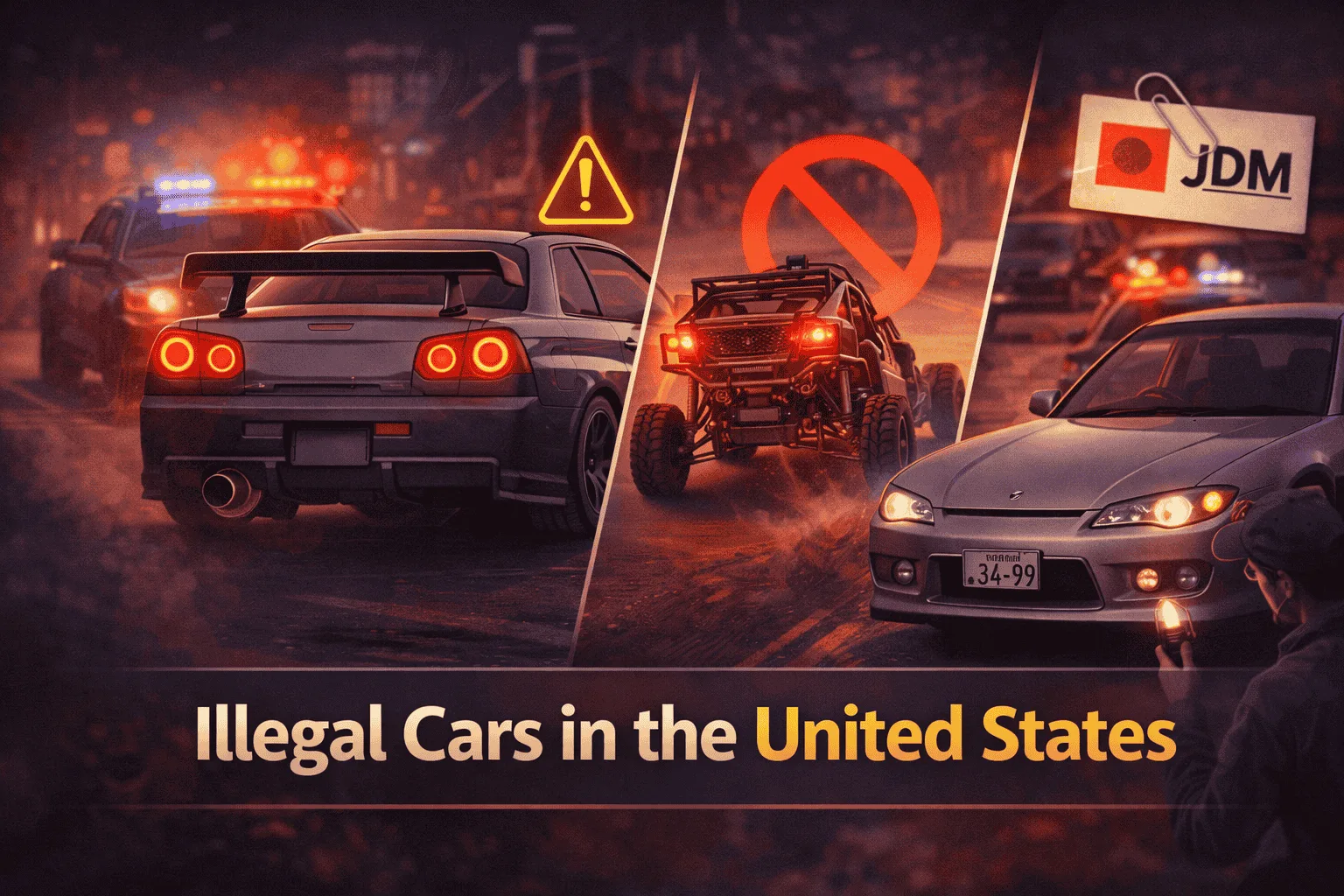
Not every car that looks road-ready is actually legal to drive in the United States. Vehicles can be deemed illegal for many reasons, including noncompliance with federal safety standards, emissions regulations, import restrictions, or state-specific registration rules. In many cases, owners are unaware of these issues until a registration is denied, insurance is voided, or enforcement action occurs.
Illegal vehicle status is not limited to extreme cases or intentional rule-breaking. It often affects imported models, modified cars, gray-market vehicles, or cars altered for performance or appearance without meeting regulatory requirements. The complexity of overlapping federal and state laws makes it easy to assume a vehicle is compliant when it is not.
The explanation ahead outlines what makes a car illegal in the U.S., the most common situations that lead to compliance problems, how federal and state regulations differ, and what steps help prevent costly mistakes before buying, importing, or modifying a vehicle. The focus is on awareness and prevention rather than fear or speculation.
What “Illegal Car” Really Means in the U.S.
When people hear “illegal car,” they often imagine something extreme—like a stolen vehicle or a race car flying down the highway. In reality, most illegal cars look completely normal.
In the U.S., a car becomes illegal when it doesn’t meet required laws or standards for public roads. That can involve:
- Safety rules
- Emissions standards
- Import regulations
- Registration and title issues
- Modification limits
A car can be illegal nationwide, illegal in certain states, or illegal only under specific conditions.
Federal Laws vs State Laws (This Is Where Confusion Starts)
One of the biggest misunderstandings I see is assuming one rule applies everywhere.
There are two layers of legality:
- Federal rules (apply across the country)
- State rules (vary widely)
A car can be:
- Federally legal but state-illegal
- State-legal but federally illegal
- Fully legal in one state and illegal in another
This is why someone can drive a car legally in one place and get cited or impounded in another.
Imported Cars That Aren’t Road Legal
This is one of the most common issues—and one of the most expensive mistakes.
Not every car built overseas is allowed on U.S. roads. To be legal, an imported vehicle usually must:
- Meet U.S. safety standards
- Meet U.S. emissions rules
- Be properly documented
If it doesn’t, it may never be eligible for registration.
Why Some Imported Cars Are Banned
Many overseas cars were built for different markets with different rules. They may lack:
- Required crash protection
- Approved lighting systems
- Proper emissions equipment
Even if the car is mechanically sound, it may still be illegal because it doesn’t meet U.S. standards.
The “25-Year Rule” Explained Simply
You’ll often hear people talk about a special age rule.
In simple terms:
- Cars that are 25 years old or older are often exempt from certain federal requirements
That’s why older imported cars suddenly become legal when they hit that age. Before that, importing them for road use can be extremely difficult or impossible.
Cars Imported Under False or Incomplete Paperwork
This is where people get burned.
Some cars are imported using:
- Incorrect classifications
- Temporary exemptions
- Incomplete compliance claims
They may get registered at first, but years later the paperwork can be reviewed—and registrations revoked. When that happens, the car may be seized or forced off the road.
Right-Hand-Drive Cars and Legal Gray Areas
Right-hand-drive cars aren’t automatically illegal in the U.S., but they raise red flags.
Issues often involve:
- Safety concerns
- State inspection requirements
- Insurance complications
Some states allow them easily. Others make registration extremely difficult or impossible.
Kit Cars and Homemade Vehicles
Building a car from scratch sounds exciting—until legality enters the picture.
Kit cars and custom builds must usually:
- Pass safety inspections
- Meet emissions rules (depending on state)
- Be titled correctly
If the paperwork doesn’t match the build, the car can be ruled illegal even if it runs perfectly.
Track Cars and Race Cars on Public Roads
Race cars are built for speed, not public safety.
Common reasons they’re illegal on streets:
- No headlights or turn signals
- No emissions equipment
- Excessive noise
- No crash protection
Even if you add lights, that doesn’t automatically make a race car street-legal.
Off-Road Vehicles Used on Streets
Off-road vehicles are designed for trails, not traffic.
These include:
- Dune buggies
- Rock crawlers
- Dirt bikes
- ATVs
Most are illegal on public roads because they lack:
- Proper lighting
- Safety features
- Emissions compliance
Some states allow limited use, but full street legality is rare.
Cars With Illegal Modifications (Very Common)
This is where many regular drivers run into trouble.
A car that was once legal can become illegal due to modifications like:
- Removed emissions equipment
- Excessive exhaust noise
- Unsafe suspension changes
- Improper lighting
- Extreme tint levels
The car itself isn’t banned—but how it’s modified makes it illegal.
Emissions Violations That Make Cars Illegal
Emissions rules are strict for a reason.
Removing or altering emissions systems can:
- Make the car illegal to drive
- Prevent registration renewal
- Lead to fines or failed inspections
Even if the engine runs fine, missing emissions equipment can make the car non-compliant.
Why Some Cars Pass Once and Fail Later
This surprises a lot of people.
A car may:
- Pass inspection initially
- Get registered
- Be driven legally for years
Then later:
- Laws change
- Inspections become stricter
- Old exemptions disappear
Suddenly, the same car becomes illegal to register.
Insurance Doesn’t Equal Legality
This is a big misconception.
Just because a car is insured does not mean it’s legal. Insurance companies may insure vehicles that:
- Aren’t properly registered
- Are illegally modified
- Don’t meet road standards
If something happens, legality can become a serious issue.
Cars With Title Problems
Some cars are illegal to drive simply because the paperwork is wrong.
Examples include:
- Salvage titles not properly rebuilt
- Incorrect VIN information
- Missing ownership history
If the title can’t be validated, the car may not be road-legal—no matter how good it looks.
Why Enforcement Seems Inconsistent
You might see illegal cars driving around every day and wonder why nothing happens.
Enforcement often depends on:
- Local priorities
- Traffic stops
- Inspections
- Accidents or complaints
Many illegal cars aren’t noticed until something draws attention to them.
What Happens When an Illegal Car Is Discovered
The outcome depends on the situation.
Possible consequences include:
- Fix-it tickets
- Fines
- Registration cancellation
- Vehicle impoundment
In serious cases, the car may never be allowed back on public roads.
Can Illegal Cars Be Made Legal?
Sometimes yes. Sometimes no.
It depends on:
- Why the car is illegal
- State laws
- Availability of compliant parts
Minor issues are often fixable. Major compliance failures usually aren’t.
Why “Street Legal” Claims Online Can Be Misleading
Online listings often say:
“Street legal”
That phrase means nothing by itself.
What matters is:
- Where the car is registered
- Which rules it meets
- Whether it complies with current laws
Always verify claims independently.
How I Protect Myself Before Buying a Car
Here’s my personal checklist:
- Verify the title type
- Confirm emissions compliance
- Check state-specific rules
- Avoid vague import paperwork
- Ask how the car passed inspection
If answers are unclear, I walk away.
State-to-State Moves Can Create Legal Problems
A car that’s legal in one state may not be legal in another.
When moving:
- Registration rules change
- Emissions standards differ
- Inspection requirements tighten
This catches a lot of people off guard.
Why “Grandfathered” Cars Are Risky
Some cars remain legal only because:
- They were registered long ago
- Rules weren’t enforced strictly at the time
Once ownership changes or registration lapses, that protection may disappear.
Illegal Cars Aren’t Always Obvious
That’s what makes this topic tricky.
Illegal cars can be:
- Clean
- Well-maintained
- Quiet
- Fully functional
The issue is paperwork, compliance, or regulations—not appearance.
Common Myths I’ve Heard (And Why They’re Wrong)
“It passed inspection once, so it’s fine forever.”
Not always.
“Police haven’t stopped me, so it’s legal.”
Enforcement isn’t constant.
“I’ll fix it later if needed.”
Some issues can’t be fixed later.
Why This Matters More Than People Think
Driving an illegal car isn’t just about tickets.
It can affect:
- Insurance claims
- Resale value
- Legal responsibility after accidents
Understanding legality protects more than just your wallet.
My Honest Advice to Anyone Interested in Unique Cars
I love unique cars. Imports, customs, builds—they’re exciting. But legality always comes first.
If you’re unsure:
- Ask before buying
- Research your state laws
- Don’t rely on assumptions
The best car is one you can enjoy without constant worry.
Final Thoughts
Illegal cars in the United States aren’t always exotic or obvious. Most problems come from misunderstanding rules, trusting bad information, or assuming legality is permanent. Once you understand how federal and state laws interact, the picture becomes much clearer.
If there’s one takeaway from this guide, it’s this: legality is about compliance, not appearance. A little research upfront can save you from losing a car you love later.