
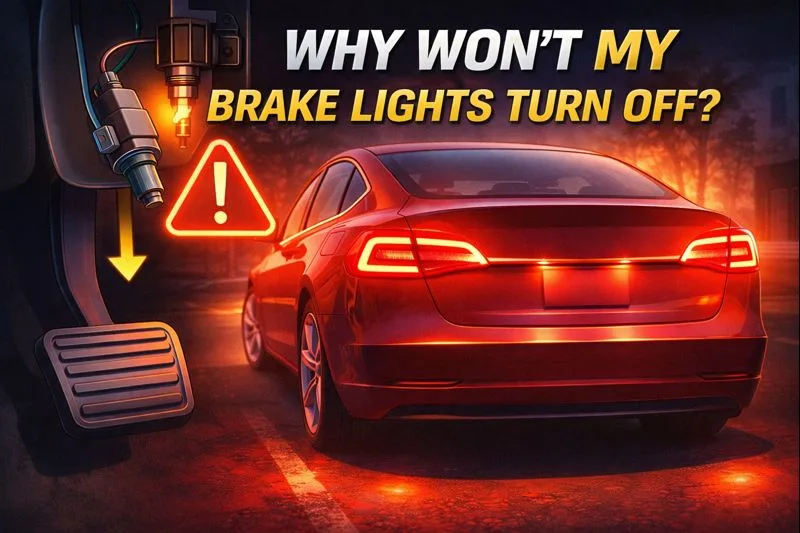
Brake lights that remain on when a vehicle is parked and turned off indicate a fault that should not be ignored. Under normal operation, brake lights illuminate only when the pedal is pressed. When they stay lit without driver input, it signals a problem within the brake light circuit rather than normal vehicle behavior.
This issue is most often related to components such as the brake light switch, pedal position mechanism, wiring faults, or electronic control modules. Because the lights may stay fully illuminated or appear dimly lit, the problem can go unnoticed until the battery drains or another symptom appears. Left unresolved, it can lead to repeated dead batteries and raise safety concerns.
The explanation ahead outlines why brake lights can stay on with the car off, which parts are commonly responsible, how to identify the root cause, and what steps stop the issue without unnecessary repairs. The emphasis is on practical diagnosis and prevention so the problem is resolved correctly the first time.
What Brake Lights Are Supposed to Do (And Why This Matters)
Brake lights are one of the simplest yet most important safety features on any vehicle. When you press the brake pedal, a small switch sends power to the rear lights, letting drivers behind you know you are slowing down or stopping. When you release the pedal, that power should cut off immediately.
When brake lights stay on, it means the system thinks the brakes are still being applied—even when my foot is nowhere near the pedal. That false signal is where most of the trouble starts.
Ignoring it isn’t an option. Apart from draining the battery, it creates confusion for other drivers and can even cause accidents.
The Most Common Reason: A Faulty Brake Light Switch
This is where most problem turned out to be hiding.
The brake light switch sits near the brake pedal, usually tucked under the dashboard. Every time you press the pedal, it moves slightly and activates the switch. Over time, that small part can wear out, get stuck, or fall out of alignment.
In my case, the switch wasn’t broken—it had shifted just enough to stay engaged all the time.
Signs I noticed:
- Brake lights stayed on even with the car off
- Pedal felt normal, which made the issue confusing
- No warning lights on the dashboard
This tiny component caused a surprisingly big headache.
How Pedal Position Plays a Bigger Role Than You’d Expect
Something I didn’t realize until much later is how sensitive modern cars are to pedal position.
Even a slight obstruction—like a loose floor mat or debris—can prevent the pedal from returning fully. When that happens, the switch never resets.
I now always check:
- Floor mats aren’t sliding forward
- Nothing is resting behind the pedal
- The pedal snaps back freely when released
It sounds basic, but you’d be surprised how often this simple issue causes brake lights to stay on.
When Electrical Problems Enter the Picture
Not all brake light issues are mechanical. Some are electrical, and those can feel intimidating at first.
Wiring issues
Wires running from the pedal switch to the rear lights can:
- Fray over time
- Get pinched during repairs
- Corrode from moisture
A damaged wire can keep power flowing when it shouldn’t.
Blown or incorrect fuses
I’ve seen cases where someone replaced a fuse with the wrong rating. That can cause odd behavior, including lights staying on constantly.
Electrical problems don’t always look dramatic. Sometimes everything seems fine until you notice something draining the battery overnight.
How Modern Cars Complicate Things Further
Older vehicles relied on simple mechanical switches. Newer ones add layers of electronics.
In many modern cars:
- Brake lights connect to onboard computers
- Systems communicate with cruise control and stability features
- Sensors replace simple on-off switches
This means a fault in one system can show up as a brake light issue. I learned quickly that guessing doesn’t help here—methodical checking does.
Why Ignoring This Problem Is a Bad Idea
I’ll be honest—my first instinct was to deal with it “later.” That would’ve been a mistake.
Here’s what can happen if brake lights stay on:
- Battery drains completely overnight
- Other drivers misjudge your intentions
- Cruise control may stop working
- Inspections can fail
- Internal components overheat
It’s not just an annoyance. It’s a safety and reliability issue.
What to Check First (And What You Should Too)
Before reaching for tools or calling for help, you should through a simple checklist.
- Turn the car fully off and remove the key
- Look at the brake lights from behind
- Press and release the brake pedal manually
- Check for obstructions around the pedal
- Listen for a faint click from the switch
That clicking sound can tell you a lot. No click often means the switch isn’t moving correctly.
Temporary Solutions (For Emergencies Only)
I want to be very clear here—temporary fixes are not permanent solutions.
In situations where I needed to prevent battery drain overnight, I’ve seen people:
- Disconnect the battery
- Pull the brake light fuse temporarily
These steps stop the lights, but they also disable safety features. I only consider them short-term measures until proper repairs are done.
When It’s Time to Replace the Brake Light Switch
Replacing the switch sounds complicated, but in many vehicles it’s surprisingly straightforward.
What matters most is:
- Getting the correct part
- Installing it at the right distance from the pedal
- Ensuring it activates and releases properly
Improper adjustment can cause the same issue all over again.
If you’re unsure, this is one repair where professional help is worth it.
Professional Diagnosis: What Mechanics Actually Check
When I eventually spoke with a technician, I learned what happens behind the scenes.
They typically:
- Test switch continuity
- Inspect wiring paths
- Scan for stored system errors
- Check pedal travel specs
This systematic approach saves time and avoids unnecessary replacements.
Rare But Real Causes I Didn’t Expect
Some less common issues surprised me:
- Aftermarket remote starters interfering with signals
- Corrosion inside the rear light housing
- Control module software glitches
These aren’t everyday problems, but they do happen—especially in vehicles with modifications.
Why This Feels So Stressful as a Car Owner
There’s something uniquely frustrating about a problem you can see but don’t immediately understand.
Brake lights staying on feels like your car is arguing with you. You know it’s wrong, but it won’t explain why.
What helped me most was slowing down, observing carefully, and treating it as a system—not a mystery.
How to Prevent This From Happening Again
Now, you should do a few things regularly:
- Check pedal movement during cleaning
- Replace worn switches early
- Keep floor mats properly secured
- Pay attention to small changes
Most brake light issues give subtle warnings before becoming obvious.
Final Thoughts
If your brake lights won’t turn off, it doesn’t mean your car is falling apart. In most cases, it’s a small component doing a big job—and failing quietly.
Approach the problem calmly. Start simple. Respect the system. And don’t ignore it.
I’ve learned that the best car owners aren’t the ones who know everything—they’re the ones who pay attention and act early.