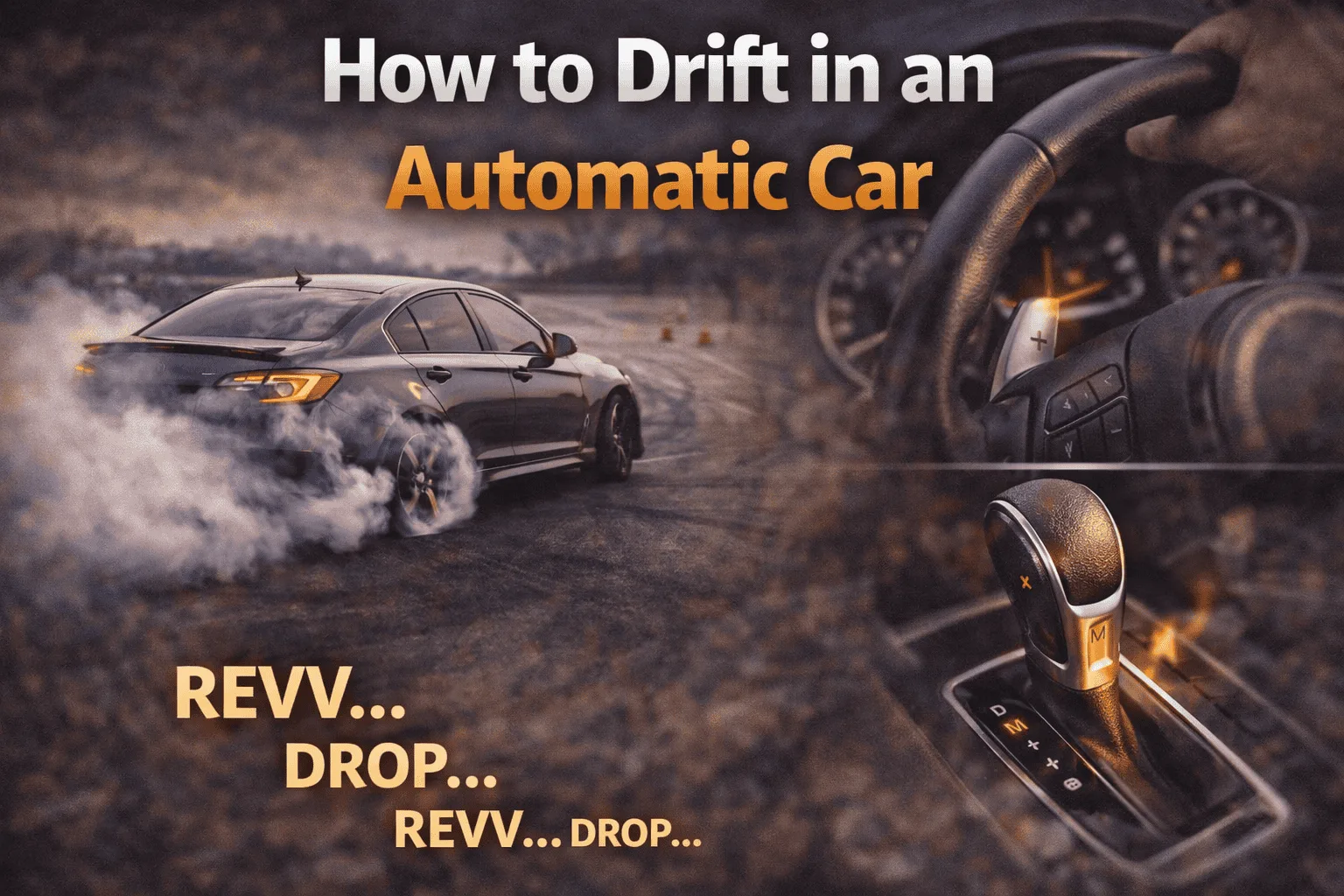
Drifting is often associated with manual transmissions, rear-wheel drive layouts, and professional motorsport settings. This has led to a common assumption that automatic cars are excluded from the practice altogether. In reality, automatic transmissions are capable of drifting under certain conditions—but the mechanics, limitations, and requirements differ significantly from what is typically shown in videos or films.
Automatic transmissions manage gear selection and torque delivery differently, which affects how power is applied during loss of traction. These differences influence vehicle control, throttle response, and recovery once the rear tires break grip. As a result, drifting an automatic car requires a clearer understanding of drivetrain behavior and a more controlled environment than casual driving scenarios provide.
The discussion ahead explains how drifting works at a mechanical level, how automatic transmissions change the dynamics, which setups make it possible, and where the limits are. The emphasis is on realistic expectations, vehicle safety, and appropriate settings rather than myths, shortcuts, or risky experimentation.
What “drifting” really means (without the movie version)
Drifting isn’t just sliding sideways. At its core, it’s about controlled oversteer—the rear tires lose traction while the front tires maintain direction. The driver balances throttle, steering, and vehicle momentum to hold an angle through a corner.
Key ideas:
- You’re not “losing control”; you’re managing it.
- Balance matters more than power.
- Smooth inputs matter more than aggression.
This definition matters because automatics handle power and gear selection differently than manuals.
Why automatics are different (and sometimes misunderstood)
Manual drivers can choose gears precisely and use the clutch to influence wheel speed. Automatics, by design, decide gears for you—or at least help decide. That changes how traction breaks and how power is delivered.
What’s different in automatics:
- Gear changes are computer-controlled.
- Torque converters smooth power delivery.
- Engine braking is limited unless modes are used.
What helps automatics:
- Modern sport modes.
- Paddle shifters or manual shift gates.
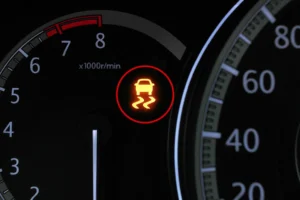
- Traction systems you can partially adjust (on track).
Automatics aren’t worse—they’re just different tools.
The cars that make learning easier (conceptually)
Not every automatic car is suited for drift training, even on a closed course.
Generally easier platforms:
- Rear-wheel drive layouts (power goes to the rear).
- Vehicles with sport/manual shift modes.
- Cars with limited traction aids that can be adjusted for track use.
More challenging:
- Front-wheel drive (requires very specific setups).
- All-wheel drive (possible on track, but advanced).
- Cars with non-adjustable stability systems.
This doesn’t mean you must own a certain car—it means expectations should match reality.
Safety and legality: where learning actually happens
Every credible drift driver I’ve spoken with learned in controlled environments:
- Skid pads with instructors.
- Track days with drift sessions.
- Professional driving schools.
- Simulators (seriously helpful).
Why this matters:
- You need space to make mistakes.
- You need runoff areas.
- You need instruction, not guesses.
If a place doesn’t allow it, it’s not the place to try.
The physics you need to understand first
Before any technique, there’s physics. This is the part many people skip—and then struggle.
Weight transfer
When a car turns, weight shifts:
- Braking shifts weight forward.
- Acceleration shifts weight rearward.
- Steering shifts weight side to side.
Drifting works by timing weight transfer so rear grip reduces predictably.
Traction circle (simplified)
Tires can only do so much at once. If they’re turning hard, they have less grip for acceleration. Controlled drifting lives at that edge.
Understanding this saves parts—and prevents spins.
Automatic transmissions and “holding gears”
On track, automatics often have modes that help:
- Sport mode delays upshifts.
- Manual gates/paddles let you select a range.
- Engine braking improves when gears are held.
Why this matters:
- Consistent power delivery helps balance.
- Unexpected upshifts break control.
- Predictability builds confidence.
This is why track instruction matters—they teach configuration, not tricks.
Techniques you’ll hear about (explained, not instructed)
You’ll hear names thrown around online. I’ll explain what they are conceptually—without step-by-step instructions.
- Power-induced oversteer: using engine torque to reduce rear grip (requires appropriate drivetrain and space).
- Lift-off oversteer: easing off throttle mid-corner to shift weight forward.
- Weight transfer initiation: timing steering and speed to influence balance.
These are principles, not street moves. On track, instructors teach them progressively with cones and speed limits.
Why traction control isn’t the enemy (at first)
Many people think you must turn everything off immediately. In reality:
- Modern systems can teach you limits safely.
- Partial assistance can prevent spins.
- Learning feels matters more than “rawness.”
Experienced instructors often start students with aids on, then reduce them gradually.
Tires, brakes, and wear (the unglamorous truth)
Drifting—done properly—uses consumables.
What wears faster:
- Rear tires (by design).
- Brake components (from heat).
- Fluids (from thermal stress).
On track, this is expected and managed. On the street, it’s dangerous and uncontrolled.
The mental side: patience beats bravado
What surprised me most wasn’t the technique—it was the mindset.
Progress comes from:
- Repetition, not force.
- Listening to feedback (tires, steering).
- Accepting slow improvement.
Chasing angles too early leads to spins, not skill.
Common myths I had to unlearn
“Automatics can’t drift.”
They can—in the right environment.
“More power makes it easier.”
Balance and control matter more than horsepower.
“You learn by trying hard.”
You learn by trying smart, with guidance.
Simulators: the underrated teacher
I didn’t expect this, but modern simulators helped enormously:
- Zero risk.
- Instant feedback.
- Muscle memory development.
Many professional schools recommend sim time before track time.
When drifting isn’t the right goal (and that’s okay)
Not everyone enjoys it—and that’s fine.
You might discover you prefer:
- Precision track driving.
- Autocross.
- Performance driving without sliding.
All of these build car control skills that transfer safely to the road.
My honest advice if you’re curious
If you’re interested in drifting an automatic car, here’s what I’d tell a friend:
- Learn the theory first.
- Find a legal, controlled environment.
- Start slow, with instruction.
- Respect the limits—yours and the car’s.
- Enjoy the learning, not the spectacle.
The goal isn’t to look impressive. It’s to understand control.
Final thoughts: skill grows where safety exists
Drifting looks dramatic, but the real beauty is in control, patience, and understanding physics. Automatic cars can absolutely be part of that journey—when approached the right way.
What matters most isn’t the transmission. It’s the mindset. Learn in the right place, with the right expectations, and you’ll gain skills that make you a better, safer driver overall—whether you ever hold a slide again or not.