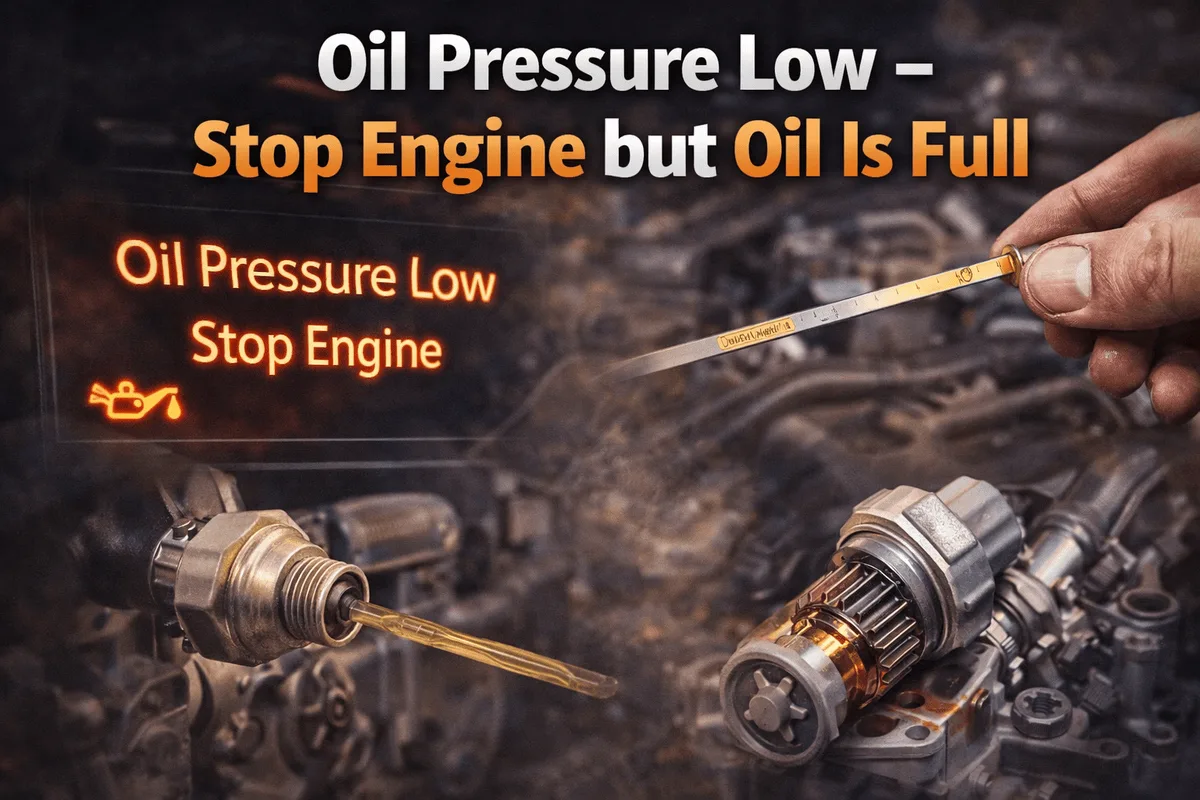
The warning message “Oil Pressure Low – Stop Engine” is one of the most serious alerts a vehicle can display. Unlike routine maintenance reminders or sensor notifications, this warning indicates that the engine may not be receiving adequate lubrication at that moment. Even when the oil level appears normal, low oil pressure can still place critical engine components at immediate risk.
Oil level and oil pressure are often confused, but they represent different conditions. A full oil pan does not guarantee proper circulation, and several failures can interrupt pressure without reducing oil quantity. When pressure drops, bearings, camshafts, and other moving parts can suffer damage within seconds.
The information that follows explains what this warning actually signifies, why it can appear even when oil levels are correct, which failures commonly trigger it, and how to respond safely. The emphasis is on recognizing the urgency of the message and identifying the cause accurately before deciding whether the vehicle can be driven or must remain shut down to prevent severe engine damage.
First, let’s clear up the biggest misunderstanding
This is the most important thing to understand:
Oil level and oil pressure are two completely different things.
- Oil level is how much oil is in the engine
- Oil pressure is how well that oil is moving through the engine
You can have:
- Full oil and low pressure
- Low oil and normal pressure (briefly)
That dashboard warning is about pressure, not quantity.
Why oil pressure matters more than oil level
Oil doesn’t protect your engine just by being there. It has to be pumped under pressure to reach critical parts like bearings, camshafts, and valve components.
Oil pressure:
- Creates a protective film between moving metal parts
- Prevents direct metal-on-metal contact
- Helps remove heat from stressed areas
Without proper pressure, even a full engine of oil can’t do its job.
What that warning message really means
When your car says “Oil Pressure Low – Stop Engine”, it’s not suggesting you stop—it’s commanding you to stop.
That warning means:
- The engine is not receiving enough oil pressure
- Critical internal parts may not be protected
- Continued running could cause severe damage
This is one of the few warnings you should never ignore.
What to do immediately when you see this warning
Don’t debate it and “just drive a little farther.”
Here’s my immediate response:
- Pull over safely
- Shut the engine off
- Wait a few minutes
- Check the oil level
Even if the oil looks fine, do not restart the engine casually.
Common reasons oil pressure is low even when oil is full
1. Faulty oil pressure sensor
This is one of the most common—and least scary—causes.
The sensor:
- Measures oil pressure
- Sends data to the dashboard
If it fails:
- It may trigger a false warning
- Pressure may actually be normal
However, you cannot assume it’s just the sensor without verification.
2. Worn or failing oil pump
The oil pump is the heart of the lubrication system.
If it wears out:
- Oil doesn’t circulate properly
- Pressure drops even with full oil
This is a serious mechanical issue and often requires significant repair.
3. Clogged oil pickup screen
Inside the oil pan is a pickup tube with a screen.
Over time:
- Sludge or debris can clog it
- Oil flow becomes restricted
- Pressure drops suddenly
This problem often develops slowly, then appears suddenly.
4. Oil that’s too thin or wrong type
Using the wrong oil can cause pressure issues.
Problems occur when:
- Oil viscosity is too low
- Oil breaks down from heat
- Incorrect oil was used during service
Thin oil flows easily—but may not build enough pressure.
5. Internal engine wear
As engines age, internal clearances increase.
This can lead to:
- Oil leaking past bearings
- Inability to maintain pressure
- Low readings even with good oil
This usually happens gradually and worsens over time.
6. Blocked oil passages
Sludge buildup can block internal channels.
Blocked passages:
- Prevent oil from reaching certain parts
- Lower system pressure
- Starve components of lubrication
This is often linked to missed oil changes.
7. Oil filter problems
A poor-quality or defective oil filter can cause issues.
Possible problems include:
- Internal collapse
- Stuck bypass valve
- Restricted flow
This is why filter quality matters more than people think.
Why restarting the engine can make things worse
I’ve seen people shut the car off, wait a minute, then restart to “see if the light goes away.”
That’s risky.
If pressure is truly low:
- Each second of running increases wear
- Bearings can be damaged quickly
- A minor issue can become catastrophic
Restarting should only happen after diagnosis.
What low oil pressure feels like (before the warning)
Sometimes the engine gives hints before the light appears.
Possible signs include:
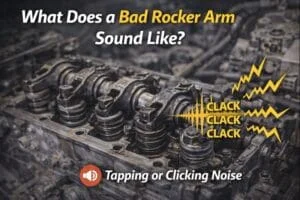
- Ticking or knocking noises
- Rough idle
- Loss of power
- Engine running hotter than usual
These symptoms mean damage may already be starting.
Why the oil light is not like other warning lights
Many dashboard warnings allow you to “get home.”
Oil pressure warnings do not.
This warning exists because:
- Damage can happen extremely fast
- Repairs are expensive
- Engines are unforgiving without lubrication
It’s one of the few lights that deserves immediate respect.
How a mechanic diagnoses the problem
When we had this checked professionally, here’s what they did.
Step 1: Verify oil pressure manually
A mechanical gauge is connected to:
- Confirm actual pressure
- Compare against sensor readings
This separates real problems from sensor faults.
Step 2: Inspect the sensor and wiring
Sensors fail often and are:
- Relatively inexpensive
- Easy to replace
This is usually checked early in the process.
Step 3: Check oil condition and type
They confirm:
- Correct viscosity
- No contamination
- No excessive thinning
Oil condition matters as much as level.
Step 4: Deeper inspection if needed
If pressure is truly low, further steps may include:
- Oil pan removal
- Pump inspection
- Internal engine evaluation
This is where costs can rise.
Can You Should drive with low oil pressure if the oil is full?
I’ll say this clearly:
No.
Even a short drive can:
- Damage bearings
- Score crankshaft surfaces
- Turn a repair into a full engine replacement
Oil pressure problems are not something to “test.”
Why oil pressure problems can appear suddenly
Many people say, “It was fine yesterday.”
That’s common because:
- Oil pump failures can be sudden
- Sensors can fail without warning
- Sludge can finally block flow completely
The absence of warning doesn’t mean absence of risk.
Is this always an expensive repair?
Not always—but it can be.
Possible outcomes:
- Sensor replacement (lower cost)
- Oil and filter correction (lower cost)
- Oil pump repair (higher cost)
- Internal engine repair (very high cost)
Early diagnosis makes a huge difference.
How maintenance habits affect oil pressure
Engines with consistent care are far less likely to suffer this issue.
Good habits include:
- Regular oil changes
- Correct oil type
- Quality filters
- Avoiding overheating
Neglect doesn’t always show immediately—but it always shows eventually.
My rule for oil pressure warnings
After going through this once,you should follow a simple rule:
If the oil pressure warning appears, the engine stays off until proven safe.
No exceptions. No guessing.
What NOT to do when this happens
I’ve seen these mistakes too often:
- Ignoring the warning
- Restarting repeatedly
- Assuming it’s “just a sensor”
- Driving to “see if it clears”
These choices often turn manageable repairs into disasters.
How long an engine can survive low pressure
This is uncomfortable but important.
Some engines suffer damage:
- In seconds
- Within a minute
- Almost immediately under load
There’s no safe grace period.
Can low oil pressure be intermittent?
Yes—and that’s dangerous.
Intermittent pressure loss can:
- Lull you into false confidence
- Cause cumulative damage
- Eventually become permanent
Intermittent problems still need attention.
My emotional reaction (because this stuff is stressful)
Won’t lie—this warning is scary. It triggers fear, frustration, and confusion all at once. But panic doesn’t help. Understanding the issue does.
Once you know that oil level and pressure are different, everything clicked. That knowledge alone helped me make better decisions and avoid serious damage.
Final thoughts: respect this warning
“Oil Pressure Low – Stop Engine” is not a suggestion, and it’s not a minor inconvenience. It’s your engine asking for immediate protection. Even when oil is full, pressure problems can silently destroy internal parts if ignored.
If you’ve seen this warning, the smartest move is to stop, stay calm, and diagnose properly. Acting early can mean the difference between a small fix and losing an engine.