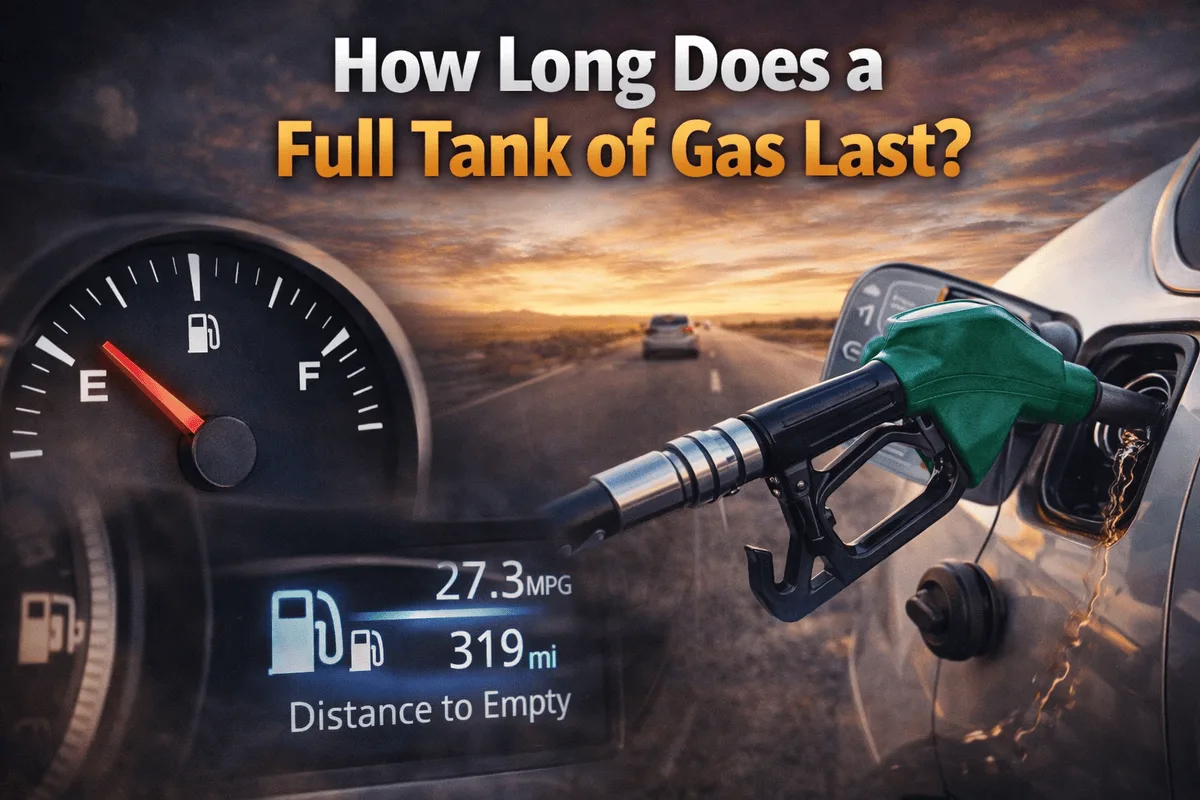
A full tank of fuel represents different things to different drivers. For some, it covers several days of commuting and errands. For others, it barely lasts through a short stretch of heavy traffic or highway driving. The variation isn’t random—it’s shaped by how a vehicle is driven, where it’s driven, and how it’s designed to use fuel.
Fuel range depends on more than the size of the tank or the number printed on a window sticker. Driving patterns, road conditions, load, climate, maintenance, and even driving style all influence how quickly fuel is consumed. This is why two drivers with the same vehicle can experience very different refill intervals.
The explanation ahead breaks down what actually determines how long a full tank lasts in real-world use, how to estimate fuel range realistically, and why advertised mileage often fails to match daily experience. The emphasis is on practical factors that affect fuel use so expectations are based on reality rather than simple averages or calculator results.
The simple answer (before we go deeper)
A full tank of gas can last anywhere from a couple of days to several weeks.
That wide range exists because fuel usage depends on:
- Tank size
- Fuel efficiency
- How far you drive
- Where and how you drive
Mileage alone doesn’t tell the full story. Time matters just as much.
What a “full tank” actually means
Before talking about how long it lasts, it helps to understand what “full” really represents.
Every car has:
- A specific fuel tank capacity
- A fuel gauge that’s more of an estimate than a measurement
When the gauge says full, you’re starting with a known amount of fuel—but how quickly it disappears depends on what happens next.
The biggest factor: fuel efficiency
Fuel efficiency is the foundation of this entire question.
A car that uses fuel efficiently:
- Travels farther on the same amount of fuel
- Makes a full tank last longer
A car that burns more fuel:
- Covers fewer miles
- Visits the gas station more often
Efficiency varies widely between vehicles, and even the same car can behave differently depending on conditions.
Tank size matters more than people realize
Two cars can have similar fuel efficiency but very different tank sizes.
For example:
- A small car with a small tank may get great mileage but still need frequent fill-ups
- A larger car with a bigger tank may travel farther between stops even if efficiency is lower
This is why some vehicles feel like they “never need gas,” while others seem thirsty no matter what.
How many miles a full tank usually covers
Here’s a realistic way you think about it.
A full tank often provides:
- A few hundred miles for many cars
- More than that for very efficient vehicles
- Less than that for heavy or high-performance ones
But miles alone don’t answer the “how long” question. We need to talk about how those miles are used.
Daily driving habits change everything
This is where real life steps in.
If you drive:
- A short distance every day
- Mostly for commuting or errands
A full tank might last:
- One week
- Two weeks
- Even longer
If you drive:
- Long distances daily
- Frequent highway trips
- Delivery or work-related miles
That same full tank could be gone in just a few days.
City driving vs highway driving
This difference alone can double or cut your fuel life in half.
City driving
City conditions usually burn more fuel because of:
- Frequent stops
- Idling at traffic lights
- Short trips where the engine never fully warms up
A full tank disappears faster in stop-and-go traffic.
Highway driving
Highway driving is usually easier on fuel because:
- Speeds are steady
- Fewer stops
- Engine operates efficiently
On long highway trips, a full tank can last significantly longer in terms of miles.
Short trips quietly drain fuel faster
Short drives:
- Use more fuel during engine warm-up
- Don’t allow efficient operating temperature
- Add up quickly without covering much distance
Five short trips in a day can burn more fuel than one longer, steady drive.
Weather plays a bigger role than expected
Fuel usage changes with the seasons.
Cold weather
Cold conditions:
- Thicken engine fluids
- Increase warm-up time
- Reduce efficiency
A full tank often lasts fewer days in winter.
Hot weather
Extreme heat:
- Increases air conditioning use
- Adds load to the engine
This also shortens how long a tank lasts, especially in city traffic.
Driving style: the silent fuel killer
Aggressive habits:
- Hard acceleration
- High speeds
- Sudden braking
All burn more fuel than necessary.
Gentle habits:
- Smooth acceleration
- Anticipating stops
- Steady cruising
These stretch a full tank noticeably without much effort.
How long a full tank lasts in real-world scenarios
Let me break this down into everyday situations instead of numbers.
Light daily use
If you:
- Drive short distances
- Work from home or nearby
- Combine errands
A full tank might last two to three weeks or more.
Average commuter
If you:
- Drive to work daily
- Cover moderate distances
- Mix city and highway driving
A full tank often lasts one to two weeks.
Heavy daily driving
If you:
- Commute long distances
- Drive for work
- Take frequent highway trips
A full tank may last a few days to a week.
Why two people get different results in the same car
I’ve seen this firsthand.
Two drivers, same model, same tank size—but very different fuel habits.
Reasons include:
- Driving style
- Route choice
- Traffic patterns
- Vehicle maintenance
Fuel life isn’t just about the car—it’s about the driver.
Vehicle condition matters
A car in good shape uses fuel more efficiently.
Issues that shorten tank life:
- Low tire pressure
- Dirty air filters
- Old spark plugs
- Poor alignment
Small maintenance issues quietly reduce how long a full tank lasts.
Fuel gauge accuracy (or lack of it)
Fuel gauges aren’t perfectly precise.
Things to know:
- “Full” may not always mean the same amount
- The needle can drop faster at first
- Some cars are conservative near empty
I’ve learned to use mileage tracking instead of trusting the gauge alone.
Using the trip meter to estimate tank life
This is one of my favorite habits.
After filling up:
- Reset the trip meter
- Drive normally
- Watch how many miles accumulate
Over time, you’ll learn:
- How far a full tank lasts for you
- When you realistically need to refuel
This removes guesswork.
How long gas lasts if the car isn’t driven
This question comes up often, especially for spare cars.
If a car sits:
- Fuel doesn’t disappear instantly
- But it does degrade over time
A full tank can physically last months, but driving it occasionally is better for the car overall.
Idling: fuel burned without distance
Idling doesn’t move you anywhere, but it still burns fuel.
Common causes:
- Long warm-ups
- Waiting in parking lots
- Heavy traffic
Enough idling can noticeably shorten how long a tank lasts.
How You Should make a tank last longer
Don’t obsess over fuel, but to do follow a few habits.
What works for me:
- Combining trips
- Avoiding unnecessary idling
- Keeping tires properly inflated
- Driving smoothly, not slowly
These habits extend fuel life without sacrificing comfort.
Myths about fuel usage
“Driving slower always saves fuel.”
Not always. Extremely low speeds can be inefficient.
“Premium fuel lasts longer.”
It doesn’t, unless the engine specifically requires it.
“Topping off makes fuel last longer.”
It doesn’t change usage, just the starting quantity.
Why time matters more than mileage for many drivers
Most people don’t ask, “How many miles does my tank last?”
They ask, “How many days until I need gas again?”
Time depends on:
- Your routine
- Your environment
- Your habits
Understanding your pattern matters more than average numbers.
Planning fuel use for road trips
On long trips, fuel life becomes easier to predict.
Usually:
- Check average efficiency
- Estimate distance
- Plan stops conservatively
On highways, tanks tend to last longer per mile than in city driving.
When a tank seems to empty unusually fast
If a full tank suddenly lasts much less than usual, it’s worth paying attention.
Possible reasons:
- Tire pressure changes
- Seasonal weather shifts
- Traffic pattern changes
- Maintenance issues
Fuel doesn’t vanish randomly—there’s always a reason.
The emotional side of fuel anxiety
I’ve felt it—that moment when the gauge drops faster than expected and you start doing mental math. Understanding how long a tank lasts removes that stress. Knowledge turns anxiety into planning.
Final thoughts: it’s not a mystery once you understand it
A full tank of gas doesn’t have a fixed lifespan. It lives and dies by how, where, and how often you drive. Once you understand the factors involved, you stop guessing and start predicting.
For me, that’s the real value—knowing my car, my habits, and what to expect instead of watching the gauge nervously.
If you want, tell me what kind of car you drive and how you usually use it. we can help you estimate how long a full tank realistically lasts for you, not just in theory.