Rough idling, hard starting, fuel odors, or a recurring warning light can often be traced back to a part most drivers never think about: the purge valve. It’s a small component in the evaporative emissions system, but when it stops working correctly, the effects can show up in several confusing ways.
The purge valve controls how fuel vapors are routed from the fuel tank into the engine to be burned. When it sticks open, sticks closed, or operates at the wrong time, the air–fuel mixture is disrupted. That imbalance can cause unstable idle, starting issues, poor fuel control, and emissions-related fault codes—even though the engine itself may be mechanically sound.
The explanation that follows covers what the purge valve does, why it fails, how those failures typically present themselves during everyday driving, and which conditions tend to shorten its lifespan. The emphasis is on real-world symptoms and cause-and-effect behavior so the problem can be recognized and addressed without unnecessary parts replacement or guesswork.
First, What the Purge Valve Actually Does (Plain Language)
Before we talk about failure, let’s understand its job.
The purge valve is part of your car’s emissions control system. Its role is simple:
- It controls fuel vapors
- It sends those vapors from the fuel system to the engine
- It opens and closes at specific times
Instead of letting fuel vapors escape into the air, the system stores them and later burns them in the engine.
When everything works properly, you never notice it.
Why the Purge Valve Matters More Than People Think
Even though it’s small, the purge valve directly affects:
- Idle quality
- Starting behavior
- Fuel mixture
- Emissions performance
When it fails, it can disrupt how air and fuel mix—especially at idle or startup.
That’s why purge valve problems often feel random or confusing.
The Most Common Reasons a Purge Valve Goes Bad
Now let’s get to the heart of the question: what actually causes a purge valve to fail?
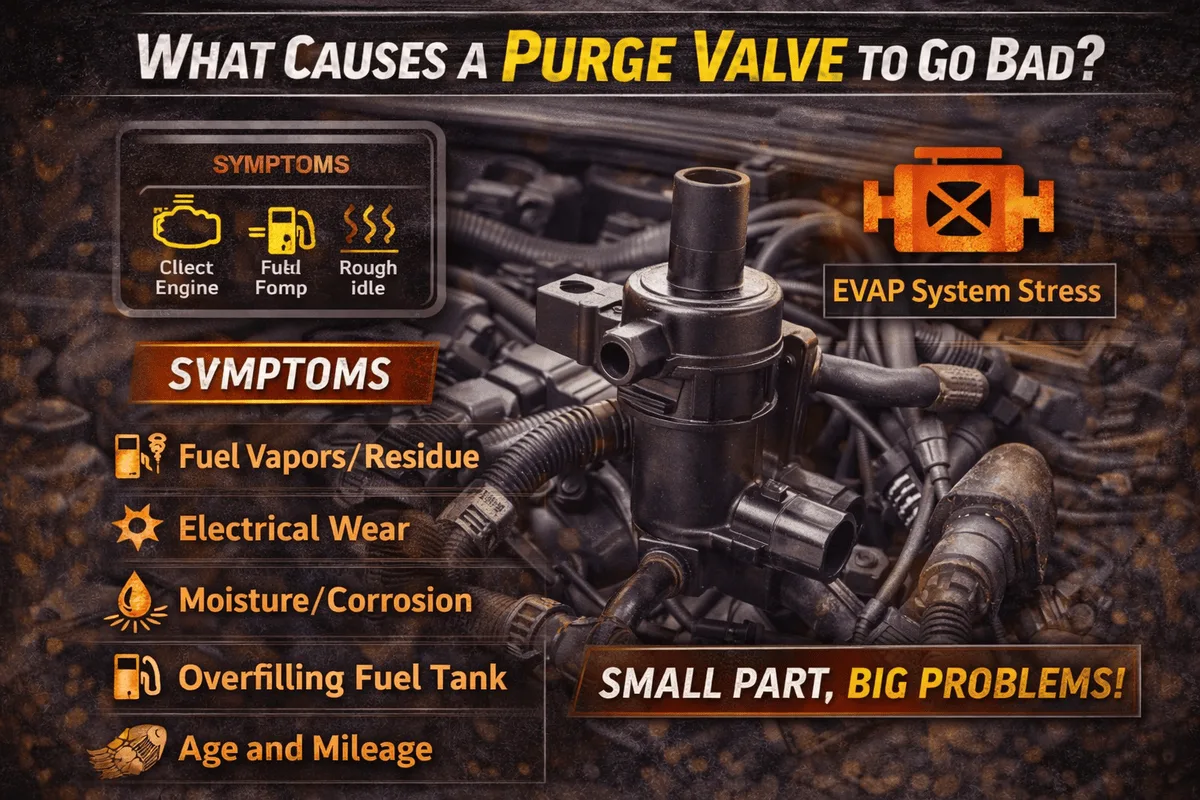
1. Constant Exposure to Fuel Vapors
This is the number one cause.
The purge valve handles fuel vapor all the time. Over years of use:
- Vapors leave behind residue
- Deposits build up inside the valve
- Internal movement becomes restricted
Eventually, the valve may:
- Stick open
- Stick closed
- React too slowly
Fuel vapors are unavoidable—aging is part of the process.
2. Carbon Buildup Inside the Valve
Fuel vapors aren’t clean air.
Over time:
- Carbon deposits collect
- Sticky residue forms
- The valve can’t seal properly
This buildup is especially common in cars that:
- Are driven mostly short distances
- Rarely reach full operating temperature
Short trips don’t give the system time to clear itself properly.
3. Electrical Wear and Tear
Most modern purge valves are electrically controlled.
Inside the valve:
- A solenoid opens and closes
- Electrical windings heat up
- Internal resistance changes
Over time:
- The solenoid weakens
- The valve stops responding consistently
- It may fail completely
Heat and age slowly degrade electrical components.
4. Moisture Contamination
Moisture is another silent killer.
Moisture can enter the system through:
- Temperature changes
- Condensation
- Poor venting
Once moisture reaches the purge valve:
- Corrosion can start
- Internal parts may stick
- Electrical connections may degrade
This is more common in humid or cold climates.
5. Dirt and Debris Entering the EVAP System
The system relies on clean airflow.
If debris enters:
- Dust or dirt can lodge inside the valve
- Movement becomes restricted
- Sealing surfaces wear prematurely
This often happens when:
- Hoses crack
- Connections loosen
- Filters degrade
Small leaks invite big problems.
6. Driving Habits That Stress the System
How the car is driven matters more than people realize.
Habits that stress the purge valve include:
- Frequent short trips
- Constant stop-and-go driving
- Rare highway driving
These conditions prevent the system from fully cycling and clearing vapors properly.
7. Overfilling the Fuel Tank
This one surprises many people.
Topping off the tank repeatedly:
- Forces liquid fuel into vapor lines
- Overwhelms the EVAP system
- Pushes fuel into the purge valve
The purge valve is designed for vapor, not liquid fuel.
Over time, this can:
- Damage internal seals
- Cause sticking
- Lead to early failure
Stopping when the pump clicks off really does matter.
8. Vacuum System Problems
The purge valve depends on stable vacuum signals.
If vacuum lines:
- Crack
- Collapse
- Leak
The valve may:
- Open when it shouldn’t
- Close at the wrong time
- Operate outside normal conditions
This accelerates wear and causes erratic behavior.
9. Heat Exposure From the Engine Bay
The purge valve often lives in a hot environment.
Prolonged heat:
- Weakens plastic housings
- Hardens seals
- Affects electrical resistance
Heat doesn’t cause instant failure—but it speeds up aging.
10. Simply Age and Mileage
Sometimes, there’s no dramatic reason.
Like many components:
- Purge valves have a lifespan
- Internal parts wear out
- Materials degrade
After enough years and miles, failure is simply normal.
How a Failing Purge Valve Usually Acts
When the purge valve starts going bad, symptoms tend to follow patterns.
Common signs include:
- Rough idle
- Hard starting after refueling
- Engine stalling at stops
- Fuel smell near the car
- Check engine light
The symptoms may come and go, which makes diagnosis frustrating.
Why a Stuck-Open Purge Valve Is So Common
One of the most frequent failure modes is sticking open.
When stuck open:
- Extra vapors enter the engine
- The fuel mixture becomes unstable
- Idle quality suffers
This often causes:
- Rough idle
- Hard starts
- Stalling after refueling
The engine is essentially getting fuel it didn’t ask for.
Why a Stuck-Closed Purge Valve Is Also a Problem
When stuck closed:
- Vapors can’t flow properly
- Pressure builds in the system
- Emissions increase
This may lead to:
- Check engine warnings
- Fuel odor
- Failed emissions tests
Different failure mode, different symptoms—but still a problem.
Why Purge Valve Problems Feel Random
Many people tell me:
“The car runs fine one day and terrible the next.”
That’s because:
- The valve opens and closes at specific times
- Problems appear during idle, startup, or refueling
- Highway driving may mask the issue
It’s not random—it’s situational.
Can a Bad Purge Valve Damage Other Parts?
Over time, yes.
Possible consequences include:
- Catalytic converter stress
- Fuel economy loss
- Increased emissions system wear
Fixing it early prevents chain reactions.
Howto Reduce the Risk of Purge Valve Failure
Here’s what you do now, consistently:
- Avoid topping off the fuel tank
- Drive long enough for full warm-up
- Don’t ignore small idle changes
- Fix vacuum leaks early
Simple habits make a real difference.
Is a Bad Purge Valve My Fault?
In most cases—no.
Purge valves fail because:
- They live in harsh conditions
- They handle fuel vapor constantly
- They’re designed to wear over time
Poor habits can accelerate failure, but many valves simply age out.
Why This Part Is Often Misdiagnosed
Purge valve issues mimic many other problems:
- Fuel system issues
- Ignition issues
- Airflow problems
That’s why the problem is often missed until testing is done.
Should You Replace It Immediately When It Goes Bad?
If symptoms are present, yes.
Driving with a failing purge valve:
- Won’t usually leave you stranded
- But will cause worsening issues
- Can lead to more expensive repairs
Early replacement is usually the smart move.
Why This Is a “Small Part, Big Impact” Problem
The purge valve doesn’t make the car move—but it affects how smoothly it runs.
Small airflow changes:
- Have big effects on idle
- Confuse fuel calculations
- Trigger warning lights
That’s why its failure feels disproportionate.
Final Thoughts — Why Purge Valves Really Go Bad
Purge valves don’t fail because they’re poorly designed. They fail because they live in a tough environment, handle fuel vapor constantly, and operate every time you drive. Heat, moisture, residue, and time slowly wear them down.
I’ve learned that when a purge valve goes bad, it’s not random—and it’s not mysterious. There’s always a reason, even if it took years to show up. Understanding those causes helps you spot the problem earlier, avoid repeat failures, and treat your car a little better going forward.
If your car is showing strange idle behavior or fuel-related symptoms, don’t overlook this small but important component. Catching it early saves time, money, and frustration.