An engine failure while driving is one of the most serious mechanical events a vehicle can experience. Unlike gradual problems that develop over time, a blown engine can happen suddenly and without much warning, instantly changing how the vehicle responds—or whether it responds at all. When it occurs on the road, the situation becomes not only mechanical but also a safety concern.
An engine can fail in different ways, and the term “blown” is often used broadly to describe severe internal damage. The actual outcome depends on what failed, how fast the vehicle was traveling, and how the driver reacts in those first moments. In some cases, the engine loses power quietly. In others, the failure is loud, violent, and accompanied by smoke, fluid loss, or dashboard warnings.
The information that follows explains what typically happens when an engine blows while driving, how the vehicle behaves during the failure, the immediate risks involved, and what steps matter most in the moments afterward. The focus is on realistic scenarios, mechanical cause-and-effect, and safety-first awareness rather than speculation or fear.
First, What “Blown Engine” Really Means
Let’s clear up the biggest misunderstanding right away.
A blown engine does not usually mean an explosion.
Most of the time, it means:
- A major internal engine failure
- Damage so severe that the engine can no longer run properly
- Repairs that are not practical or affordable
In simple terms, the engine has failed in a way that stops it from doing its job.
Does an Engine Actually Blow Up?
In movies, engines explode in fireballs. In real life, that’s extremely rare.
What usually happens instead:
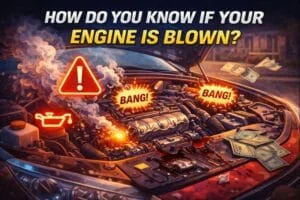
- A loud bang, knock, or snap
- Sudden loss of power
- Smoke or steam
- Engine shuts down or runs very poorly
It’s dramatic—but not cinematic.
What It Feels Like When an Engine Blows While Driving
This is different for everyone, but there are common patterns.
Here’s what to and many others have felt:
- Sudden loud noise from under the hood
- Strong vibration through the car
- Loss of acceleration
- Warning lights flashing
- Engine cutting out or limping
The car doesn’t usually stop instantly, but it stops behaving normally.
The Exact Moment the Engine Fails
When the failure happens, several things occur almost at once:
- Internal parts stop moving correctly
- Combustion becomes uneven or stops
- The engine computer detects a serious fault
- Power output drops dramatically
The car goes from “running” to “barely running” or “not running” in seconds.
What Happens to Power Steering and Brakes
This is something people worry about—and rightfully so.
Steering
- You do not lose steering completely
- Power steering assist may disappear
- The wheel becomes much harder to turn
You can still steer, but it takes more effort.
Brakes
- Brakes still work
- Power assist may be reduced
- You may need to press harder
This is why staying calm is critical.
What You’ll Likely Hear
Sound is often the first warning.
Common noises include:
- Loud knocking or banging
- Grinding metal sounds
- A sudden “pop” or “clunk”
- Hissing from steam or pressure
If you hear metal-on-metal sounds, internal damage has already happened.
What You’ll Likely See
Visual signs often follow quickly.
You may notice:
- Smoke from the hood
- Steam if coolant is involved
- Oil warning light
- Check engine light flashing
Smoke doesn’t always mean fire—it often means oil or coolant hitting hot surfaces.
What Causes an Engine to Blow While Driving
Engines don’t fail randomly. There’s almost always a reason.
Common causes include:
- Running low or out of oil
- Severe overheating
- Internal bearing failure
- Broken connecting rods
- Timing component failure
- Long-term neglect
Most blown engines give warnings long before failure.
Can the Engine Still Run After It Blows?
Sometimes—briefly.
Possible scenarios:
- Engine stalls immediately
- Engine runs very rough
- Engine enters limp mode
- Engine shuts off and won’t restart
Even if it runs, continuing to drive usually causes more damage.
What You Should Do the Moment It Happens
This is the most important part of this guide.
Here’s exactly what we recommend:
- Take your foot off the accelerator
- Turn on hazard lights immediately
- Focus on steering control
- Move safely toward the shoulder or a safe area
- Do not try to “push through it”
Your goal is safety, not saving the engine.
Should You Turn the Engine Off Right Away?
If the engine is making loud noises or smoking:
- Yes, turn it off once you’re safely stopped
If the engine stalls on its own:
- Don’t try to restart it repeatedly
Restarting can turn repairable damage into total destruction.
What Happens After You Stop
Once the car is stopped:
- The engine will likely not restart
- Fluids may leak underneath
- Warning messages may appear
At this point, the vehicle is not drivable.
Is It Dangerous When an Engine Blows?
It can be—but not usually because of fire or explosions.
The real dangers are:
- Loss of power at speed
- Reduced steering assist
- Reduced brake assist
- Being stranded in traffic
That’s why your reaction matters more than the failure itself.
What Happens Inside the Engine During Failure
Internally, one or more of these things usually occurs:
- Bearings lose lubrication
- Rods develop excessive clearance
- Pistons stop moving smoothly
- Metal parts collide
Once metal parts hit each other at high speed, damage escalates fast.
Why Engines Rarely Fail Without Warning
In most cases, there were signs beforehand:
- Knocking noises
- Oil pressure warnings
- Overheating
- Poor performance
- Burning smells
The failure while driving is often the final stage.
Can You Drive a Short Distance After It Happens?
We strongly advise against it.
Driving even a short distance can:
- Crack the engine block
- Destroy the crankshaft
- Turn a rebuild into a replacement
Towing is cheaper than replacing an entire engine.
What Happens Next: Diagnosis
After the car is towed, diagnosis usually includes:
- Checking oil and coolant
- Looking for metal debris
- Compression or leak tests
- Visual inspection
Often, the damage is obvious very quickly.
Repair vs Replacement — What Usually Happens
This depends on severity.
Options include:
- Engine rebuild (rare and expensive)
- Used engine replacement
- Remanufactured engine
- Vehicle replacement
Many blown engines are not economically repairable.
Why People Say “The Engine Is Done”
Once core internal parts are damaged:
- Repair costs exceed vehicle value
- Reliability becomes uncertain
That’s when people say the engine is “blown.”
Emotional Side of Engine Failure
This part doesn’t get talked about enough.
It feels:
- Stressful
- Sudden
- Overwhelming
Especially if it happens unexpectedly or far from home. That reaction is normal.
How to Reduce the Risk of This Ever Happening
Here’s what to do now, religiously:
- Check oil regularly
- Never ignore warning lights
- Stop driving if overheating occurs
- Listen to unusual noises
- Follow maintenance schedules
Most blown engines are preventable.
Common Myths About Blown Engines
Let’s clear a few up:
- “It happens instantly with no warning” — Rare
- “It explodes” — Almost never
- “You lose all control” — Not true
- “It’s always the driver’s fault” — Not always
Understanding removes fear.
Final Thoughts
When an engine blows while driving, it’s shocking—but it doesn’t have to be terrifying. The car doesn’t suddenly become uncontrollable, and you’re not helpless. Understanding what’s happening allows you to react safely, protect yourself, and limit further damage.
If you ever find yourself in that moment—noise, loss of power, confusion—remember this: stay calm, slow down, move to safety, and stop the engine.
That calm response can be the difference between a bad day and a dangerous one.