A deep metallic knocking sound coming from an engine is never something to ignore, especially when it changes with engine speed. When the noise becomes louder under acceleration and softens when the throttle is released, it often points to a problem inside the engine rather than a loose external component.
Rod knock is one of the most severe mechanical noises an engine can produce. It’s associated with excessive clearance between internal components that are meant to move smoothly under heavy load. Once it appears, the engine is no longer operating within safe tolerances, and continued driving can accelerate damage rapidly.
The explanation that follows describes what rod knock actually sounds like, how it behaves under different driving conditions, how it differs from other common engine noises, and what it typically indicates about engine health. The focus is on clear identification and realistic implications, helping drivers understand the seriousness of the sound without confusion or exaggeration.
First, What Rod Knock Actually Is (Without Technical Jargon)
To understand the sound, you need a basic picture of what’s happening inside the engine.
Inside your engine:
- Pistons move up and down
- Connecting rods link pistons to the crankshaft
- Bearings sit between the rods and crankshaft to keep everything smooth
Rod knock happens when those bearings wear out or fail.
When that happens:
- The connecting rod develops extra space
- Metal parts start hitting each other
- The sound escapes through the engine block
That sound is what we call rod knock.
What Rod Knock Sounds Like in Real Life
Let me describe it the way most people actually hear it.
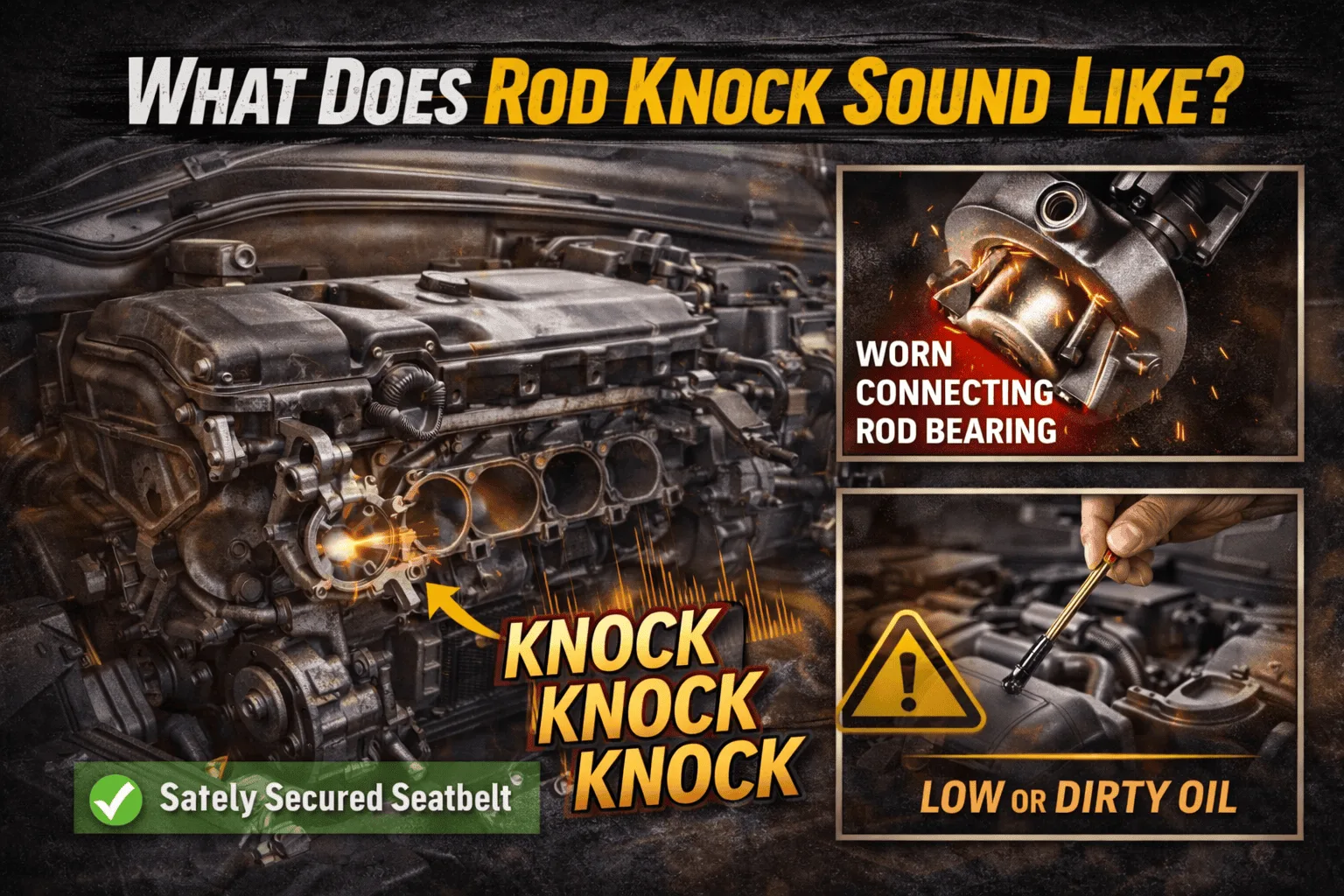
Rod knock usually sounds like:
- A deep metallic knocking
- A dull, hollow tapping
- A rhythmic “thud-thud-thud”
It’s not a light tick or a sharp click. It’s heavier. More serious. Almost like someone tapping the engine block with a small hammer from the inside.
Once you hear it clearly, it doesn’t sound normal—your gut usually tells you that immediately.
The Most Important Clue: How the Sound Changes With RPM
This is one of the biggest giveaways.
Rod knock:
- Gets louder when you press the accelerator
- Speeds up as engine RPM increases
- Often quiets down at idle
- Returns strongly under load
If the sound rises and falls directly with engine speed, that’s a major warning sign.
Where the Sound Seems to Come From
Rod knock usually sounds like it’s coming from:
- Deep inside the engine
- The lower part of the engine block
- Underneath rather than on top
That’s different from valve noise or injector ticking, which often comes from the top of the engine.
If the noise feels deep and heavy rather than light and sharp, pay attention.
How Rod Knock Sounds Compared to Other Engine Noises
This is where many people get confused, so let’s slow it down.
Rod Knock vs Engine Tick
- Engine tick: Light, fast, clicking
- Rod knock: Deep, slow, metallic
Ticking often comes from:
- Valves
- Lifters
- Injectors
Rod knock feels heavier and more threatening.
Rod Knock vs Piston Slap
- Piston slap: Hollow, slapping sound when cold
- Rod knock: Metallic knock that worsens under load
Piston slap often fades as the engine warms up. Rod knock usually doesn’t.
Rod Knock vs Detonation (Ping)
- Detonation: Sharp pinging during acceleration
- Rod knock: Consistent knocking rhythm
Detonation comes and goes depending on fuel and timing. Rod knock stays.
Rod Knock vs Exhaust Noise
Exhaust leaks can sound metallic, but:
- Exhaust noise changes with vibration
- Rod knock follows engine speed exactly
If the sound disappears when the engine is off, it’s not exhaust rattle.
When Rod Knock Is Most Noticeable
From my experience and from what mechanics see daily, rod knock is easiest to hear:
- During acceleration
- When climbing hills
- Under engine load
- Sometimes at warm idle
It may be subtle at first and get worse quickly.
Why Rod Knock Gets Louder Over Time
Once a bearing starts wearing:
- Clearance increases
- Oil pressure drops at that point
- Metal contact becomes more frequent
The noise usually:
- Starts faint
- Becomes more noticeable
- Eventually turns loud and unmistakable
Ignoring it almost always makes things worse.
What Causes Rod Knock in the First Place
Rod knock doesn’t happen randomly.
Common causes include:
- Low or dirty engine oil
- Oil starvation
- Worn engine bearings
- Overheating
- Long intervals without oil changes
Oil is what keeps those metal parts separated. Once oil protection fails, damage starts fast.
Can Rod Knock Come and Go?
This is something that confuses people.
In early stages:
- Rod knock may fade when oil is cold
- It may sound quieter at idle
- It may reappear under load
But once it starts, it rarely fixes itself.
Temporary quiet doesn’t mean the problem is gone.
What It Feels Like When You Drive
Besides the sound, you may notice:
- Rough engine behavior
- Reduced power
- Vibration through the car
- Uneasy feeling when accelerating
The engine often feels strained, even if it still runs.
Can You Drive With Rod Knock?
This is the question everyone asks.
Technically? Sometimes, for a short time.
Practically? It’s risky.
Driving with rod knock can lead to:
- Complete engine failure
- A thrown connecting rod
- A hole in the engine block
I’ve seen engines go from “still running” to “completely destroyed” in a short distance.
How Mechanics Confirm Rod Knock
While sound gives strong clues, professionals confirm it by:
- Listening with tools
- Checking oil condition
- Measuring oil pressure
- Inspecting metal shavings in oil
But even without tools, the sound alone is often enough for experienced ears.
Why Thicker Oil Sometimes Makes It Quieter (But Not Better)
Some people try thicker oil and notice:
- Noise becomes quieter
- Knocking softens temporarily
This happens because:
- Thicker oil fills the extra clearance
- Metal contact reduces slightly
But this is not a repair. It’s a delay.
The damage remains.
What Happens If Rod Knock Is Ignored
This is where things get serious.
If left untreated:
- Bearings can seize
- Rods can break
- Crankshaft can be damaged
- Engine may fail completely
At that point, repair options become very limited and expensive.
Repair Options Once Rod Knock Is Confirmed
The fix depends on how bad the damage is.
Possible outcomes include:
- Bearing replacement (engine removal required)
- Crankshaft repair or replacement
- Full engine rebuild
- Engine replacement
Unfortunately, rod knock is rarely cheap to fix properly.
Why Early Detection Matters So Much
Catching rod knock early can:
- Save the crankshaft
- Reduce repair costs
- Prevent total engine loss
That’s why recognizing the sound early is so important.
How Listen for Rod Knock
When you suspect it, listen for:
- Deep metallic knock
- RPM-related rhythm
- Change under load
- Location low in the engine
Common Myths About Rod Knock
Let’s clear up a few.
- “It’s just normal engine noise” — It’s not
- “It’ll go away on its own” — It won’t
- “Oil additives fix it” — They don’t
Rod knock is mechanical wear, not a tuning issue.
Final Thoughts — Trust Your Ears and Your Instincts
Rod knock has a sound you don’t forget once you hear it. It’s deeper, heavier, and more serious than most engine noises. If your engine is making a metallic knocking sound that follows RPM and gets worse under load, it’s not something to brush off.
I’ve learned that engines often warn us before they fail. Rod knock is one of the loudest warnings you’ll ever get. The sooner you listen and act, the more options you’ll have.
If you’re unsure, don’t panic—but don’t ignore it either. Listen carefully, trust your instincts, and get it checked before a small internal problem becomes a complete engine loss.