Booster seats occupy a unique place in child passenger safety. They no longer restrain a child the way a full car seat does, yet they still play a critical role in positioning the seat belt correctly. This in-between design is what makes questions about anchors so common—and so confusing.
Some booster seats include lower anchor connectors, while others rely entirely on the vehicle’s seat belt. At a glance, it’s not always clear whether those anchors are required, optional, or simply added for convenience. The uncertainty is understandable, especially when safety recommendations vary by seat type, child size, and vehicle design.
The explanation that follows clarifies how booster seats are meant to work, when anchor systems are used, when they are not necessary, and what actually keeps a child protected in a crash. The focus is on practical, standards-based guidance so decisions are made with confidence rather than guesswork or conflicting advice.
First, What a Booster Seat Is Actually Designed to Do
Before talking about anchors, it helps to understand the purpose of a booster seat.
A booster seat does not restrain your child the way a traditional car seat does. Instead, it:
- Lifts your child to the correct height
- Positions the vehicle’s seat belt properly
- Allows the car’s safety system to work as designed
The booster itself isn’t holding your child in place. The seat belt is.
That detail is the key to understanding whether anchoring is required.
The Short Answer (Then I’ll Explain It Properly)
Here’s the honest, simple answer:
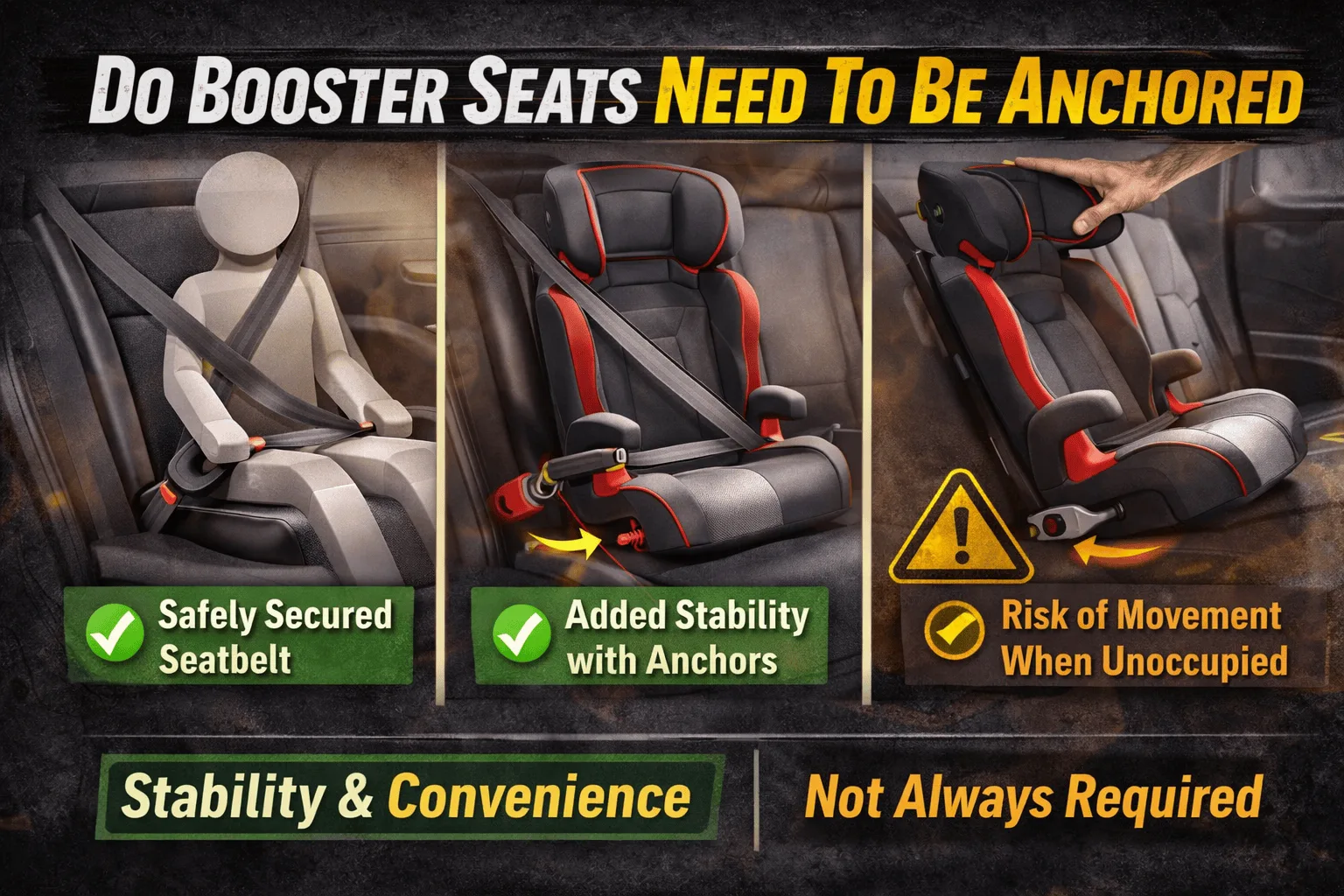
Most booster seats do NOT need to be anchored to be safe, as long as the seat belt fits the child correctly.
However…
- Some booster seats can be anchored
- Some booster seats should be anchored when possible
- Anchors serve a different purpose than many people think
Now let’s break that down calmly and clearly.
What Anchors (LATCH) Are Really For
Anchors—often called the LATCH system—are built into most modern vehicles. They were originally designed to:
- Secure infant and toddler car seats
- Replace seat belt installation
- Reduce installation errors
When it comes to booster seats, anchors serve a different role.
They do not restrain the child during a crash.
Instead, they:
- Hold the booster seat in place when not occupied
- Prevent the seat from becoming a projectile in a collision
- Keep the booster stable when a child climbs in or out
This distinction matters a lot.
Backless Booster Seats — Do They Need Anchors?
Backless boosters are the simplest type.
In most cases:
- Backless booster seats do not require anchors
- They rely entirely on the vehicle’s seat belt
When the child is seated and buckled:
- The seat belt holds the child
- The child’s weight holds the booster in place
The booster moves with the child, which is how it’s designed to work.
When Anchors Are Not Available
Many backless boosters don’t even include anchor connectors. That’s not a flaw—it’s intentional.
High-Back Booster Seats — Where Anchors Become More Common
High-back boosters are different.
They:
- Provide head and side support
- Often resemble a traditional car seat
- Are taller knows to move more when unoccupied
Because of this, many high-back boosters offer anchor attachments.
Important point:
- Anchors on a high-back booster secure the seat, not the child
The seat belt still does the real safety work.
So Why Do Some Booster Seats Have Anchors at All?
This confused me at first too.
Anchors are mainly there for:
- Stability
- Convenience
- Safety when the seat is empty
Without anchors:
- A booster can tip forward when braking
- It can shift when a child climbs in
- It can become loose if left unbuckled
Anchors solve these issues—but they don’t replace the seat belt.
Is an Anchored Booster Seat Safer in a Crash?
This is where people often get the wrong idea.
An anchored booster seat:
- Does not significantly change crash protection
- Does not restrain the child more effectively
- Does not replace correct belt fit
What matters most is:
- Shoulder belt across the chest
- Lap belt low across the hips
- Child sitting upright the entire ride
Anchors improve stability, not restraint.
When Anchoring a Booster Seat Is a Very Good Idea
While not always required, there are times when I strongly recommend anchoring if possible.
1. When the Booster Is Often Left Empty
An unanchored booster can:
- Slide around
- Tip forward
- Become a hazard in sudden stops
Anchors prevent that.
2. When You Have a High-Back Booster
These seats are taller and heavier. Anchors keep them upright and stable.
3. When Your Child Climbs In Independently
Anchors reduce movement and make it easier for kids to buckle themselves properly.
When Anchors Are Not Necessary
Anchors are not required when:
- The booster seat is designed for seat belt use only
- The seat belt fits the child correctly
- The booster stays in place during normal use
Many perfectly safe boosters fall into this category.
The Most Important Safety Factor (More Important Than Anchors)
If you remember one thing from this article, remember this:
👉 Seat belt fit matters more than anchoring.
A properly positioned belt:
- Protects the strongest parts of the body
- Reduces injury risk
- Allows the booster to do its job
No anchor can compensate for poor belt positioning.
How to Personally Check Booster Seat Safety
Here’s the simple checklist you should use every time.
- Shoulder belt crosses the middle of the shoulder
- Lap belt sits low on the hips, not the stomach
- Child sits upright without slouching
- Booster doesn’t slide excessively
- Seat stays stable when empty (anchored if possible)
Common Myths About Booster Seat Anchors
Let’s clear up a few things you hear all the time.
- “All boosters must be anchored” — Not true
- “Anchors hold the child in a crash” — They don’t
- “Unanchored boosters are unsafe” — Not if used correctly
Understanding this removes a lot of unnecessary anxiety.
What Safety Standards Actually Say (In Simple Terms)
Booster seats sold legally must meet safety standards with or without anchors, depending on their design.
Manufacturers:
- Test seats according to how they’re meant to be used
- Include anchors only when appropriate
- Clearly state requirements in manuals
If anchors were mandatory, every booster would include them.
What About Older Cars Without Anchors?
This question comes up a lot.
If your vehicle:
- Doesn’t have anchor points
- Has working seat belts
You can still safely use:
- Backless boosters
- Many high-back boosters
As long as the belt fits properly, your child is protected.
What Happens If You Don’t Anchor an Anchor-Capable Booster?
Nothing dangerous—as long as:
- The child is buckled correctly
- The seat doesn’t move excessively
However, the seat may:
- Shift more
- Tip when empty
- Be less convenient
That’s why anchors are recommended when available, not required.
When to Transition Out of a Booster Seat
Anchors don’t change this decision.
A child is ready to move on when:
- They pass the seat belt fit test
- They can sit properly for the entire ride
- The belt fits without a booster
This usually happens later than many parents expect.
Why This Topic Feels So Confusing
Think the confusion comes from:
- Mixing rules for car seats and boosters
- Seeing anchors and assuming they’re mandatory
- Overly technical explanations
Once you understand the role of the seat belt, everything becomes clearer.
My Honest Advice to Parents
Here’s how we approach it now.
- If your booster has anchors and your car supports them, use them
- If your booster doesn’t have anchors, don’t panic
- Focus on belt fit above everything else
- Read your booster’s manual carefully
Confidence comes from understanding, not guessing.
Final Thoughts — Safety Without Overthinking
Booster seats don’t need to be anchored to protect your child properly. The real safety hero is the seat belt, and the booster’s job is to position it correctly. Anchors add stability and convenience, but they’re not the deciding factor in crash protection.
I’ve learned that once you stop thinking of booster seats as “mini car seats” and start seeing them as “belt positioners,” the whole topic makes sense.
If you ever feel unsure, take a moment, check the belt fit, and trust the design. You’re doing the right thing by asking these questions—and that already makes you a careful, responsible parent.