
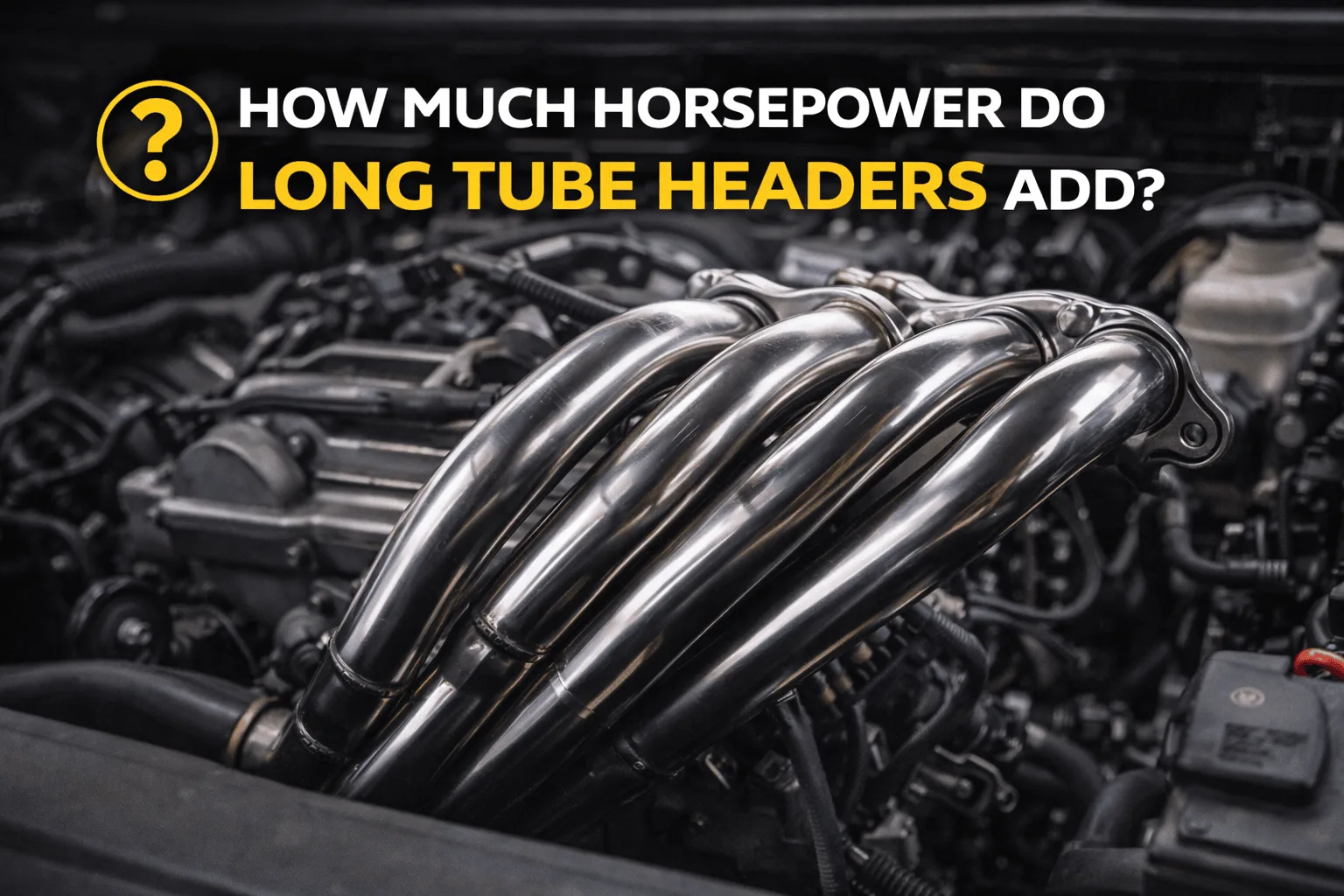
Long tube headers are often discussed as one of the most effective bolt-on upgrades for improving engine performance, yet the actual horsepower gains are widely misunderstood. Advertised numbers, forum claims, and dyno charts frequently paint very different pictures, making it difficult to separate realistic expectations from exaggeration.
Unlike simple intake or exhaust modifications, long tube headers change how exhaust gases exit the engine. That change affects airflow efficiency, cylinder scavenging, and engine breathing across certain RPM ranges. Because of this, the power increase isn’t fixed or universal—it varies based on engine design, tuning, supporting modifications, and how the vehicle is driven.
The explanation that follows breaks down how long tube headers create horsepower, where those gains typically show up, and what real-world improvements look like on street-driven vehicles rather than idealized test conditions. The focus is on practical results, not inflated numbers, so expectations are based on how the upgrade performs outside of marketing claims or dyno hype.
What Long Tube Headers Actually Do (In Simple Terms)
Before talking about horsepower, it helps to understand what these headers change.
Long tube headers replace the factory exhaust manifolds. Instead of short, compact paths for exhaust gases, they use longer, smoother tubes that guide gases away from the engine more efficiently.
Their main job is to:
- Improve exhaust flow
- Reduce back pressure
- Help cylinders clear exhaust gases more effectively
This creates better conditions for the next combustion cycle.
Why Exhaust Flow Affects Power
An engine is basically an air pump.
It makes power by:
- Pulling air in
- Mixing it with fuel
- Burning it
- Pushing exhaust gases out
If exhaust gases can’t exit efficiently, the next intake cycle is compromised. Long tube headers help clear that space faster.
Why Length Matters More Than People Think
The “long tube” part isn’t just marketing.
The length of the tubes:
- Helps time exhaust pulses
- Improves scavenging
- Encourages smoother flow
This timing effect is what separates long tube headers from short designs.
What Exhaust Scavenging Means (Without the Jargon)
Scavenging is simply the process of using exhaust movement to help pull remaining gases out of the cylinder.
With long tubes:
- Exhaust pulses create a slight vacuum effect
- That vacuum helps clear the cylinder
- Cleaner cylinders allow better combustion
Better combustion equals more usable power.
So, How Much Horsepower Do Long Tube Headers Add?
Here’s the honest answer: most cars see gains between 10 and 30 horsepower.
That range might sound broad, but it’s realistic.
Some setups see:
- Smaller gains near the low end
- Moderate gains in the middle
- Larger gains when everything is optimized
Claims beyond that usually involve additional supporting modifications.
Why There Is No Single Number
Horsepower gains depend on:
- Engine size
- Engine design
- Factory exhaust restriction
- Supporting modifications
- Tuning
Two identical headers can produce very different results on different cars.
Why Larger Engines Benefit More
Bigger engines move more air.
More airflow means:
- Greater exhaust volume
- More restriction from stock components
- Bigger improvement when flow is improved
That’s why long tube headers often shine on larger displacement engines.
Why Factory Exhaust Design Matters
Some factory exhaust manifolds are extremely restrictive.
On those engines:
- Long tube headers free up significant flow
- Gains feel dramatic
On engines with decent factory designs, gains are still present — just smaller.
Why Horsepower Gains Aren’t Always Felt Immediately
The car may not feel dramatically faster right away because:
- Power gains occur higher in the RPM range
- Throttle response changes gradually
- The engine needs to adapt
The improvement often shows up when you rev the engine higher.
Why RPM Range Matters More Than Peak Numbers
Long tube headers often improve:
- Mid-range power
- Upper RPM performance
Peak horsepower numbers matter less than where the power is gained.
That’s why some drivers feel a stronger pull even if the peak number isn’t huge.
Why Tuning Makes a Big Difference
Without tuning:
- The engine may not fully take advantage of improved flow
- Gains may be limited
With proper tuning:
- Air and fuel delivery are optimized
- Timing is adjusted
- Power gains become more noticeable
This is where many people unlock the full benefit.
How Much Power Without Tuning?
On many cars, installing long tube headers without tuning results in:
- Small gains
- Improved sound
- Slightly better throttle response
The real performance increase often comes after tuning.
Why Supporting Mods Change the Result
Long tube headers work best when:
- Intake flow is improved
- Exhaust flow continues smoothly
- The engine can breathe freely
When paired with other upgrades, gains add up.
Why Sound Changes Even When Power Gains Are Modest
Even if horsepower gains are moderate, the sound change is immediate.
Long tube headers:
- Alter exhaust tone
- Increase volume
- Deepen engine sound
This often makes the car feel more powerful, even before measuring numbers.
Why Seat-of-the-Pants Feel Can Be Misleading
Sound and vibration influence perception.
A louder, freer exhaust:
- Feels faster
- Feels more aggressive
That doesn’t mean the gains aren’t real — just that perception isn’t a dyno.
What Dyno Numbers Actually Represent
Dyno results show:
- Peak horsepower
- Torque curves
- Power delivery changes
But they don’t show how the car feels in daily driving.
Both perspectives matter.
Why Torque Gains Matter Just as Much
Long tube headers often improve torque.
More torque means:
- Better acceleration
- Stronger pull
- Improved responsiveness
Even small torque increases can make the car more enjoyable.
Why Some People See Minimal Gains
Minimal gains usually happen when:
- The factory exhaust is already efficient
- The engine isn’t airflow-limited
- Supporting mods are missing
In those cases, long tube headers still help — just not dramatically.
Why Short Trips Don’t Show the Benefit
Long tube headers shine when:
- The engine is warmed up
- RPMs are allowed to climb
- The exhaust system is fully flowing
Short, gentle drives don’t showcase their strength.
Why Long Tube Headers Favor Performance-Oriented Driving
They reward:
- Higher RPM usage
- Open throttle
- Aggressive acceleration
If you never push the engine, the gains stay hidden.
Why Heat Management Matters
Long tube headers:
- Increase heat under the hood
- Change thermal behavior
Managing heat helps maintain performance consistency.
Why Installation Quality Affects Results
Poor installation can:
- Create leaks
- Reduce efficiency
- Affect sensor readings
Proper fitment ensures gains aren’t lost.
Why Emissions and Legal Considerations Matter
Depending on location:
- Long tube headers may affect emissions compliance
- Legal restrictions may apply
This doesn’t change horsepower, but it affects ownership decisions.
Why Long Tube Headers Aren’t a “Magic Mod”
They don’t:
- Double power
- Transform a car overnight
- Replace engine upgrades
They are part of a system, not a standalone miracle.
Why People Still Love This Upgrade
Despite realistic gains, people love long tube headers because they:
- Improve engine efficiency
- Enhance sound
- Unlock hidden potential
They make the engine feel less restricted.
How I’d Describe the Gain in Real Terms
Instead of focusing on numbers, I’d say:
- The engine feels freer
- Acceleration is smoother at higher RPMs
- The car pulls stronger when pushed
That’s the real-world difference.
Why This Upgrade Is About Balance
Long tube headers work best when:
- Combined with tuning
- Matched with other airflow improvements
- Installed thoughtfully
Balance beats brute force.
Are Long Tube Headers Worth It?
For me, the answer depends on goals.
They’re worth it if:
- You want better mid-to-high RPM power
- You enjoy performance upgrades
- You plan to tune the engine
They may not be ideal for casual drivers chasing small gains.
Why Knowledge Prevents Disappointment
Understanding realistic expectations prevents regret.
Once you know what long tube headers truly offer, the upgrade becomes satisfying instead of confusing.
Final Thoughts
So, how much horsepower do long tube headers add? From everything I’ve learned, most real-world setups gain somewhere between 10 and 30 horsepower, with the biggest improvements appearing when the engine is properly supported and tuned. The gains aren’t just about peak numbers — they’re about smoother airflow, stronger mid-range pull, and better high-RPM performance.
Long tube headers aren’t magic, but they’re not hype either. They’re a meaningful performance upgrade when installed for the right reasons and paired with realistic expectations. When you understand what they do and how they work, the results feel earned — and that makes the upgrade worthwhile.
If you’re chasing honest performance rather than internet bragging rights, long tube headers deliver exactly what they promise: a freer-breathing engine and power you can actually use.