
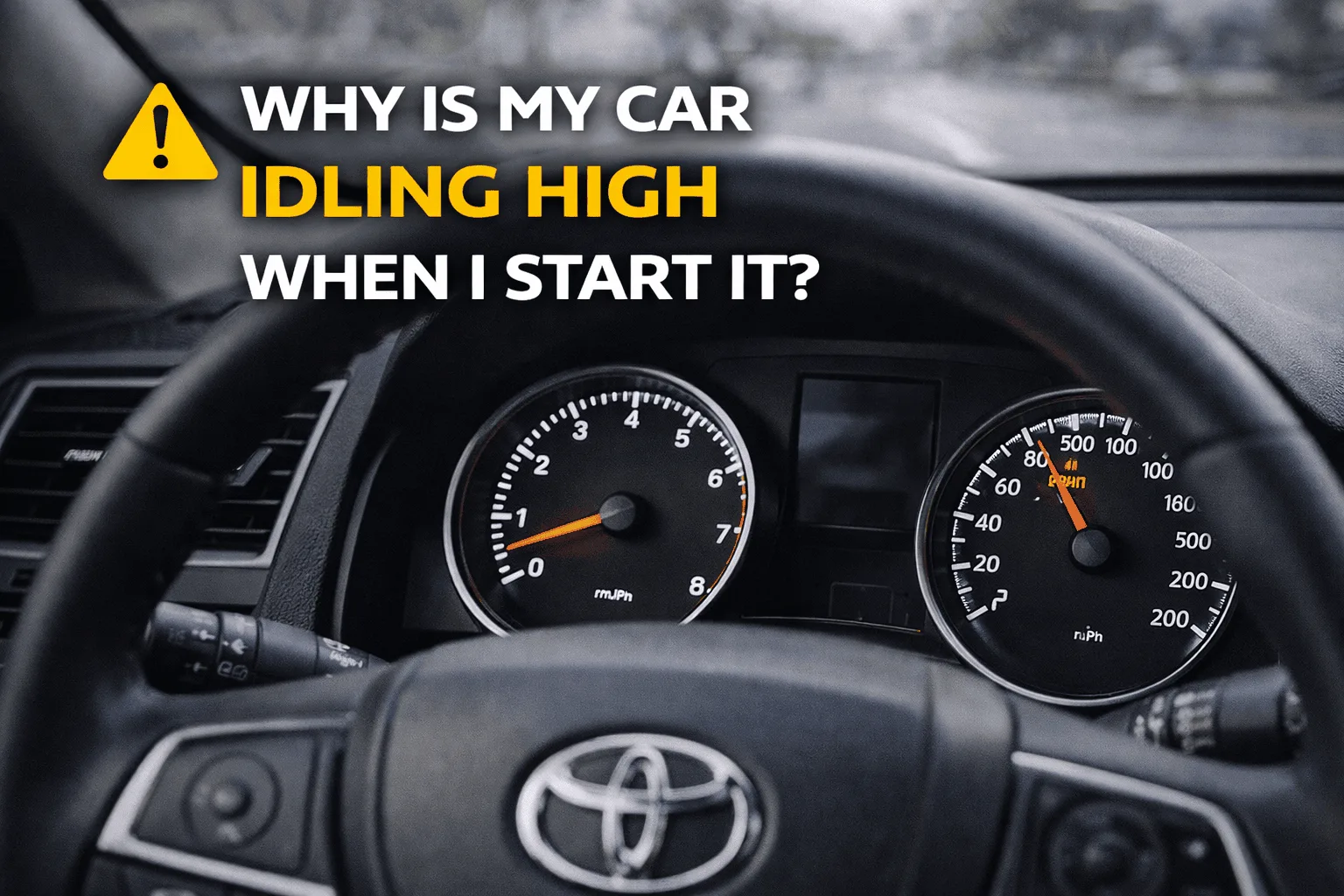
It’s not unusual for an engine to run at a higher idle speed immediately after startup, but the behavior often raises concern when it happens unexpectedly. The engine revs higher than normal, sounds louder, and takes longer than usual to settle down—even though the accelerator hasn’t been touched. For many drivers, this creates uncertainty about whether the car is operating as designed or signaling a problem.
A high idle at startup can occur for both normal and abnormal reasons. In some cases, the engine management system is intentionally raising RPM to stabilize combustion, reduce emissions, or warm critical components. In other cases, elevated idle speed points to issues with air control, sensors, or engine temperature feedback.
The explanation that follows breaks down why engines idle high during startup, how long that behavior should last, what conditions make it normal, and which signs suggest it needs attention. The focus is on helping drivers interpret what they’re seeing without panic, using clear cause-and-effect reasoning rather than assumptions.
What “High Idle” Actually Means
When people say their car is idling high, they usually mean:
- The engine speed jumps noticeably after startup
- The RPMs sit higher than usual
- The engine sounds louder or more aggressive
- The car feels like it wants to move forward
Idle speed is simply how fast the engine runs when your foot is off the gas.
Why Engines Don’t Idle the Same All the Time
It changes based on:
- Engine temperature
- Air temperature
- Electrical load
- Engine management decisions
So a higher idle doesn’t automatically mean a problem.
Why High Idle at Startup Is Often Normal
In many cases, a high idle right after starting is intentional.
The engine does this to:
- Warm itself up faster
- Stabilize combustion
- Reduce emissions
- Prevent stalling
This is especially common when the engine is cold.
Why Cold Engines Need a Higher Idle
Cold engines don’t run efficiently.
At startup:
- Fuel doesn’t atomize as well
- Internal parts haven’t expanded
- Oil hasn’t fully circulated
A higher idle helps the engine run smoothly until conditions stabilize.
Why RPMs Drop After a Short Time
If the high idle:
- Drops after a minute or two
- Settles smoothly
- Feels controlled
That’s usually a sign everything is working as designed.
Why Cold Weather Makes High Idle More Noticeable
You notice this behavior much more in winter.
Cold air:
- Thickens engine oil
- Increases internal resistance
- Slows warm-up
The engine compensates by idling higher for longer.
Why Modern Cars Behave Differently Than Older Ones
Older cars relied more on mechanical systems.
Modern cars:
- Use sensors and computers
- Adjust idle precisely
- React to many inputs
That’s why idle behavior can feel more noticeable now.
Why the Engine Control System Raises Idle
The engine management system constantly makes decisions.
At startup, it may:
- Increase air intake
- Adjust fuel delivery
- Raise idle speed
All of this happens automatically.
Why Electrical Load Affects Idle Speed
When you start the car, several systems come online.
These include:
- Battery charging
- Climate controls
- Lights
- Electronics
The engine raises idle slightly to handle the added load.
Why High Idle Feels More Aggressive Than It Is
The sound can be misleading.
Higher RPMs:
- Sound louder
- Feel more intense
- Draw attention
But sound alone doesn’t indicate damage.
When High Idle Is Completely Normal
From my experience, it’s usually normal if:
- It happens only at startup
- RPMs drop smoothly
- The engine runs smoothly
- There are no warning lights
In this case, patience is often all that’s needed.
When High Idle Starts to Feel Wrong
High idle becomes concerning when:
- RPMs stay high for a long time
- Idle speed fluctuates wildly
- The engine sounds rough
- The car lurches forward
These signs suggest something else is going on.
Why Idle Should Settle Once the Engine Warms Up
As the engine warms:
- Sensors report normal temperature
- Fuel mixture stabilizes
- Airflow normalizes
Idle speed should naturally come down.
Why a Stuck High Idle Is a Problem
If the idle never settles, it can indicate:
- Air entering where it shouldn’t
- Incorrect sensor readings
- Throttle control issues
At that point, the behavior is no longer normal.
How Airflow Plays a Big Role
Engines need a precise amount of air at idle.
If too much air enters:
- Idle speed increases
- RPMs stay elevated
Uncontrolled airflow is a common cause of persistent high idle.
Why Vacuum Leaks Can Cause High Idle
A vacuum leak allows extra air into the engine.
This can cause:
- High idle
- Rough running
- Delayed RPM drop
The engine responds by raising speed to compensate.
Why Sensors Matter So Much at Startup
At startup, the engine relies heavily on sensor data.
If a sensor sends incorrect information:
- The engine may think it’s colder than it is
- Fuel and air adjustments may be wrong
- Idle speed may remain high
Small errors can have noticeable effects.
Why Throttle Control Is Important
Modern cars use electronic throttle control.
If the throttle doesn’t return fully:
- Airflow stays elevated
- Idle speed remains high
This doesn’t always mean mechanical damage — sometimes it’s electronic behavior.
Why Idle Issues Can Appear Suddenly
High idle problems often seem to appear overnight.
That’s because:
- Sensors fail suddenly
- Connections degrade
- Deposits build up gradually
The symptom appears when the system can no longer compensate.
Why High Idle Can Come and Go
Intermittent high idle is especially confusing.
It may depend on:
- Temperature
- Humidity
- Engine load
- Startup conditions
That inconsistency makes diagnosis tricky.
Why Restarting the Car Sometimes Fixes It
Restarting can:
- Reset temporary conditions
- Clear minor inconsistencies
- Allow sensors to reinitialize
If restarting helps, the issue may be conditional rather than mechanical.
Why the Idle Can Be Higher After Short Trips
Short trips don’t allow:
- Full warm-up
- Complete system stabilization
The engine may keep idling high more often as a result.
Why Fuel Quality Can Influence Idle
Poor-quality fuel can:
- Burn unevenly
- Affect combustion stability
- Cause inconsistent idle behavior
This usually shows up more at startup.
Why Ignoring Persistent High Idle Isn’t Smart
While normal high idle isn’t dangerous, persistent high idle can:
- Increase engine wear
- Waste fuel
- Stress components
It’s worth addressing if it doesn’t resolve on its own.
How to Observe Patterns Instead of Panicking
Instead of worrying immediately, You start asking:
- Does it happen only when cold?
- How long does it last?
- Does it drop smoothly?
Patterns tell you more than isolated moments.
Why Engine Noise Alone Isn’t a Diagnosis
Engines sound different for many reasons.
Noise needs context:
- RPM behavior
- Duration
- Consistency
Sound alone doesn’t tell the full story.
Why Driving Immediately Can Mask the Problem
Once you start moving:
- Idle speed becomes irrelevant
- RPMs rise naturally
- Symptoms disappear
That doesn’t mean the issue is gone — just hidden.
Why High Idle Can Affect Shifting
High idle can:
- Make gear engagement harsher
- Cause clunks when shifting into gear
- Increase strain on the transmission
This is another sign the idle shouldn’t be ignored if persistent.
Why This Issue Is Common in Many Cars
High idle at startup isn’t brand-specific.
It happens because:
- Engines follow similar principles
- Emissions standards require warm-up strategies
- Computer control dominates behavior
It’s a modern engine reality.
Why Understanding This Reduces Stress
Once you understood the difference between:
- Normal warm-up behavior
- Abnormal persistent high idle
my anxiety disappeared.
When To Decide It’s Time to Take Action
Take action when:
- Idle stays high after warming
- RPMs fluctuate unpredictably
- The engine feels unstable
- The behavior worsens over time
Those signs mean it’s time to investigate.
Why Early Attention Saves Money
Idle issues often start small.
Addressing them early:
- Prevents additional wear
- Avoids cascading problems
- Keeps repairs simpler
Waiting rarely helps.
Why Guessing Usually Leads to Overthinking
High idle triggers fear because:
- It’s loud
- It’s noticeable
- It feels wrong
Understanding turns fear into calm observation.
Why Knowledge Is Better Than Worry
Once you know:
- What’s normal
- What’s not
- What patterns matter
you stop reacting emotionally and start responding intelligently.
Final Thoughts
If your car idles high when you start it, don’t panic right away. From my experience, a brief period of elevated RPMs at startup is often normal, especially when the engine is cold. It’s part of how modern engines warm themselves up and run cleanly.
What matters is how long the idle stays high and how it behaves. A smooth drop after warming is expected. A stubborn or erratic idle deserves attention.
Listen to your car, but don’t assume the worst. Understanding what’s happening under the hood turns confusion into confidence — and confidence makes every drive feel better.