A ticking noise from the engine is easy to ignore at first. The car still starts normally, drives fine, and doesn’t feel weak, so it’s tempting to assume it’s harmless background noise. Many engines make small sounds, and not all of them signal trouble.
The concern starts when that ticking becomes consistent. Louder. Easier to hear with the windows down or at idle. That’s usually the point where the word lifters enters the conversation—and with it, a much bigger question: is this something you can live with for a while, or are you risking serious engine damage every time you drive?
If you’re dealing with suspected bad lifters, the uncertainty is often worse than the noise itself. Some drivers are told to stop immediately. Others are told they can keep driving for months. The truth sits somewhere in between and depends on several real-world factors that don’t always get explained clearly.
What follows breaks down what lifters actually do, how lifter problems progress, how long driving may still be possible in certain situations, and what risks increase the longer the issue is ignored—without technical overload or scare tactics.
What Lifters Do Inside an Engine
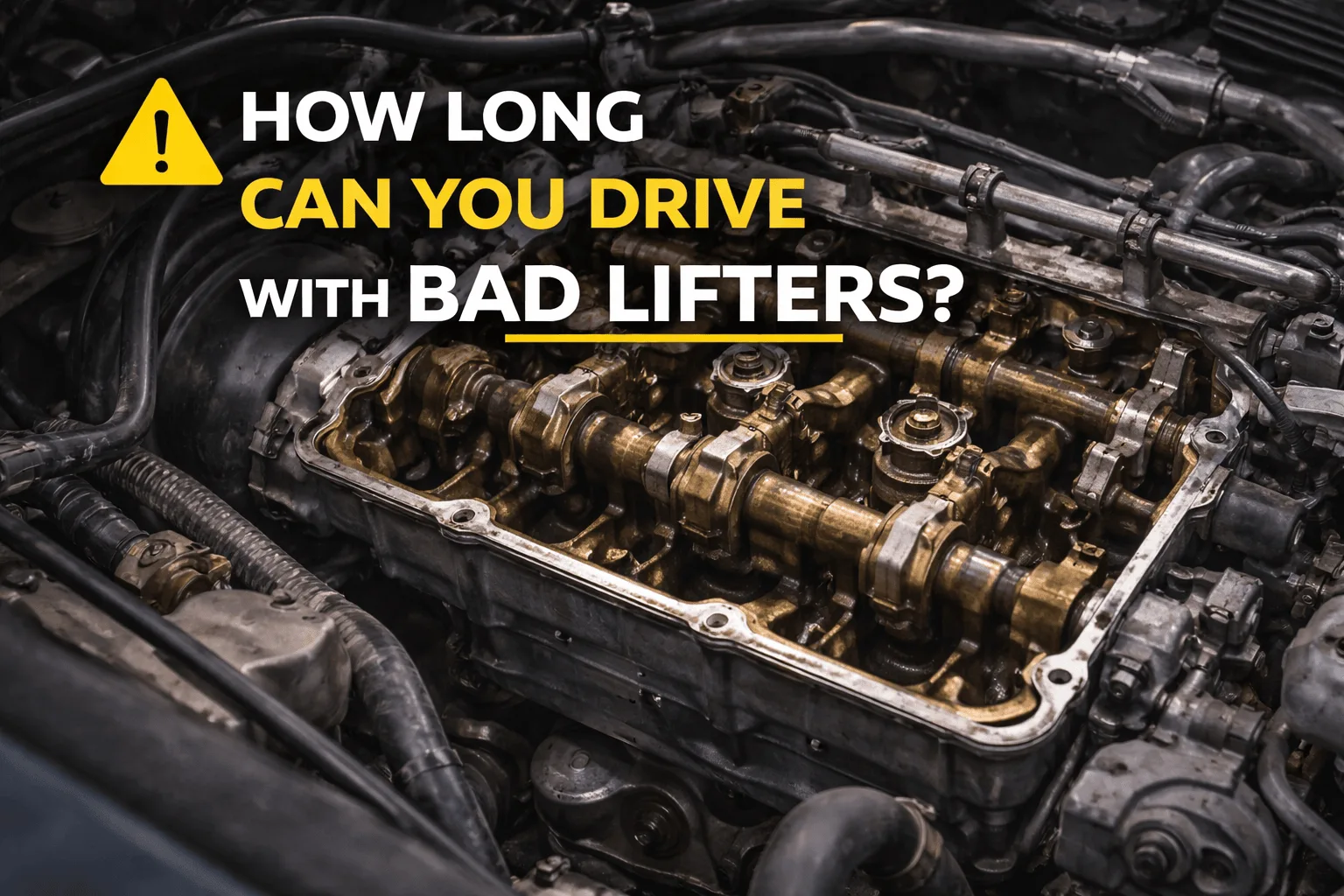
Lifters are small components inside the engine that help control how the valves open and close. They sit between the camshaft and the valves, transferring motion smoothly and precisely.
Their job is to:
- Maintain proper valve movement
- Reduce metal-to-metal contact
- Keep engine operation smooth and quiet
When they work correctly, you never think about them.
What Happens When Lifters Start Going Bad
When lifters wear out or stop working properly, they lose their ability to keep everything moving smoothly.
This can cause:
- Ticking or tapping noises
- Irregular valve movement
- Reduced engine efficiency
- Increased internal stress
At first, it’s subtle. Over time, it becomes impossible to ignore.
Why Bad Lifters Usually Start Quietly
One reason people drive with bad lifters longer than they should is because the symptoms start small.
Early signs are often:
- Light ticking at idle
- Noise that disappears when revving
- Sounds that come and go
Because the car still drives normally, it’s easy to delay action.
Why the Noise Gets Louder Over Time
Lifter wear doesn’t fix itself.
As driving continues:
- Clearances increase
- Lubrication becomes less effective
- Metal contact worsens
What starts as a faint sound slowly turns into a constant one.
So, How Long Can You Actually Drive With Bad Lifters?
Here’s the honest answer: there is no exact mileage or time limit.
Some people drive:
- A few hundred miles
- Several thousand miles
- Even months
But every mile driven with bad lifters increases risk. How long you can drive doesn’t mean how long you should.
Why Lifters Rarely Cause Immediate Breakdown
This is what gives people a false sense of security.
Bad lifters usually don’t:
- Stop the engine instantly
- Leave you stranded right away
- Trigger immediate warning lights
The engine keeps running, just less efficiently and with more internal stress.
Why Continuing to Drive Is Risky
Even though the car still moves, bad lifters affect critical engine timing.
Over time, this can lead to:
- Excessive camshaft wear
- Valve damage
- Misfires
- Loss of compression
The longer you wait, the more expensive repairs become.
Why Driving Style Affects How Long You Can Drive
How you drive matters.
Gentle driving:
- Slows wear
- Reduces stress
Aggressive driving:
- Increases engine speed
- Raises oil temperature
- Accelerates damage
Two people with the same problem can have very different outcomes.
Why Engine Speed Makes a Big Difference
Lifters work harder at higher speeds.
If you frequently:
- Rev the engine
- Drive at high RPM
- Tow or carry heavy loads
you shorten the time you can safely drive with bad lifters.
Cold Starts Make Lifter Problems Worse
Cold starts:
- Reduce oil flow initially
- Increase friction
- Stress worn components
Repeated cold starts accelerate damage.
Why Oil Quality Plays a Role
Lifters depend heavily on clean, properly flowing oil.
Poor oil condition can:
- Clog lifter passages
- Reduce lubrication
- Cause lifters to collapse or stick
Bad oil doesn’t cause all lifter problems, but it makes them worse.
Why Ignoring the Noise Is the Worst Choice
It’s tempting to turn up the radio and pretend it’s not there.
- Escalating damage
- More parts being affected
- Higher repair costs
Noise is an early warning, not an annoyance.
What Happens If a Lifter Completely Fails
In severe cases, a lifter can fail entirely.
This may cause:
- Constant loud tapping
- Valve not opening correctly
- Misfires
- Rough running
At that point, continued driving risks major engine damage.
Why Valve Damage Is a Real Concern
Lifters control valve movement.
If that movement becomes incorrect:
- Valves may not seat properly
- Combustion efficiency drops
- Heat builds up
Valve damage is far more expensive than lifter repair.
Can Bad Lifters Damage the Camshaft?
Yes — and this is one of the biggest risks.
Metal-to-metal contact can:
- Wear cam lobes
- Alter timing
- Spread metal debris through the engine
Camshaft damage often means engine teardown.
Why Metal Debris Is Dangerous
Worn lifters can shed metal particles.
Those particles:
- Travel with engine oil
- Damage bearings
- Accelerate wear elsewhere
This turns a localized problem into a system-wide one.
Why the Engine May Feel Weak Over Time
As lifters worsen, valve timing becomes less precise.
You may notice:
- Reduced power
- Poor idle
- Slower acceleration
These are signs the problem is no longer minor.
Why Fuel Consumption Can Increase
Improper valve operation leads to inefficient combustion.
That means:
- More fuel used
- Less power produced
Higher fuel use is often a late-stage symptom.
Can You Drive Short Distances Safely?
Short trips may reduce risk, but they don’t eliminate it.
Short trips still:
- Involve cold starts
- Stress lifters
- Continue wear
They buy time, not safety.
Why Highway Driving Isn’t a Safe Solution
Some people think steady cruising is easier on the engine.
But highway driving:
- Keeps RPM elevated
- Maintains constant stress
- Prevents cooling breaks
It can actually accelerate damage in some cases.
What Warning Signs Mean “Stop Driving”
Stop driving immediately if:
- The noise becomes very loud
- The engine runs rough
- Power drops significantly
- Warning lights appear
These signs suggest the problem is escalating.
Why Delaying Repair Becomes More Expensive
Replacing lifters is one level of repair.
Ignoring them can lead to:
- Camshaft replacement
- Valve work
- Full engine rebuild
Costs multiply quickly.
Why Some Engines Tolerate Bad Lifters Longer
Design differences matter.
Some engines:
- Have more robust components
- Handle wear better
- Are easier to repair
Others are far less forgiving.
Why Mileage Matters Less Than Condition
I learned that mileage alone doesn’t determine severity.
Oil quality, maintenance history, and driving habits matter more than odometer numbers.
Why DIY Diagnosis Can Be Misleading
Not every ticking noise is lifter-related.
But assuming it’s “nothing” is just as dangerous as assuming the worst.
Proper diagnosis matters before decisions are made.
How To Approach This Now
If you hear persistent ticking:
- Don’t ignore it
- Monitor changes closely
- Avoid hard driving
- Plan for repair sooner, not later
That approach reduces risk.
Why Planning Matters More Than Panic
Panic leads to rushed decisions.
Planning allows:
- Controlled repair timing
- Cost management
- Reduced damage
Knowledge buys time.
Why Lifters Are a “Now or Later” Problem
Bad lifters won’t magically improve.
The choice becomes:
- Fix them now for less
- Fix more damage later for more
That reality helped me decide faster.
Why Peace of Mind Is Worth Repairing Early
Once the noise was gone, the relief was immediate.
Driving felt:
- Smooth
- Quiet
- Confident
That peace of mind alone was worth it.
Final Thoughts
So, how long can you drive with bad lifters? From my experience, you might be able to drive for a while — sometimes longer than expected — but every mile adds risk. Bad lifters don’t usually cause instant failure, but they quietly damage critical engine components over time.
The ticking sound isn’t just noise. It’s your engine asking for attention. The sooner you listen, the simpler and less expensive the solution usually is. If you must drive temporarily, do so gently and with a plan — not denial.
Understanding the problem turns uncertainty into control. And when it comes to engine health, control matters more than luck.