Knowing whether to check transmission fluid when the engine is hot or cold is a common source of confusion. Different sources often give different answers, which makes a simple maintenance task feel more complicated than it should be.
Transmission fluid behaves differently depending on temperature. When checked incorrectly, the reading can appear too low or too high, leading to unnecessary concern or improper fluid addition. This is especially important because overfilling or underfilling a transmission can cause shifting problems, leaks, or internal damage.
The correct method depends on several factors, including transmission design, vehicle manufacturer specifications, and whether the transmission uses a dipstick at all. Some systems require the fluid to be checked at operating temperature, while others are designed to be measured cold or under very specific conditions.
This blog explains when transmission fluid should be checked hot versus cold, why temperature affects the reading, how different transmission types handle fluid expansion, and how to get an accurate result without guesswork. The goal is to provide clear, practical information so the fluid level can be checked confidently and correctly.
Why Transmission Fluid Is So Important
Before getting into when to check it, it helps to understand why transmission fluid matters so much.
Transmission fluid:
- Lubricates internal components
- Transfers power
- Helps regulate temperature
- Allows smooth gear engagement
Without the right amount — or the right condition — the transmission can’t work properly.
Why People Get Confused About Hot vs Cold
The confusion exists because:
- Different vehicles use different designs
- Fluid expands when warm
- Dipsticks may have multiple markings
- Some transmissions don’t even have dipsticks
Without context, advice can sound contradictory.
The Short Answer (Then We’ll Explain It)
For most automatic transmissions, the fluid level is checked when the engine is warm and running.
But — and this matters — there are exceptions.
That’s why understanding why matters more than memorizing one rule.
Why Temperature Changes the Reading
Transmission fluid expands as it warms up.
When cold:
- Fluid contracts
- Level appears lower
When warm:
- Fluid expands
- Level reaches its intended operating range
Manufacturers design level markings around how the fluid behaves during normal operation.
Why Checking Cold Can Give a False Low Reading
The level looked low — very low.
In reality:
- The fluid hadn’t expanded yet
- The reading didn’t represent real operating conditions
Adding fluid at that point would have caused overfilling once the transmission warmed up.
Why Overfilling Is a Bigger Problem Than Being Slightly Low
This surprised me.
Too much fluid can:
- Cause foaming
- Reduce lubrication
- Increase internal pressure
- Lead to erratic shifting
More isn’t better when it comes to transmission fluid.
Why Most Automatics Are Checked Hot
Automatic transmissions circulate fluid constantly.
When warm and running:
- Fluid fills passages and components
- The system reflects real operating conditions
- The dipstick reading becomes meaningful
That’s why most procedures specify warm checks.
Why the Engine Is Usually Running
Checking with the engine running ensures:
- The torque converter is filled
- Fluid isn’t sitting only in the pan
- Circulation matches real use
Turning the engine off changes where the fluid sits.
Why Gear Position Matters
Many instructions specify shifting through gears before checking.
This ensures:
- Fluid reaches all circuits
- Air is purged from passages
- The system stabilizes
Skipping this step can affect the reading.
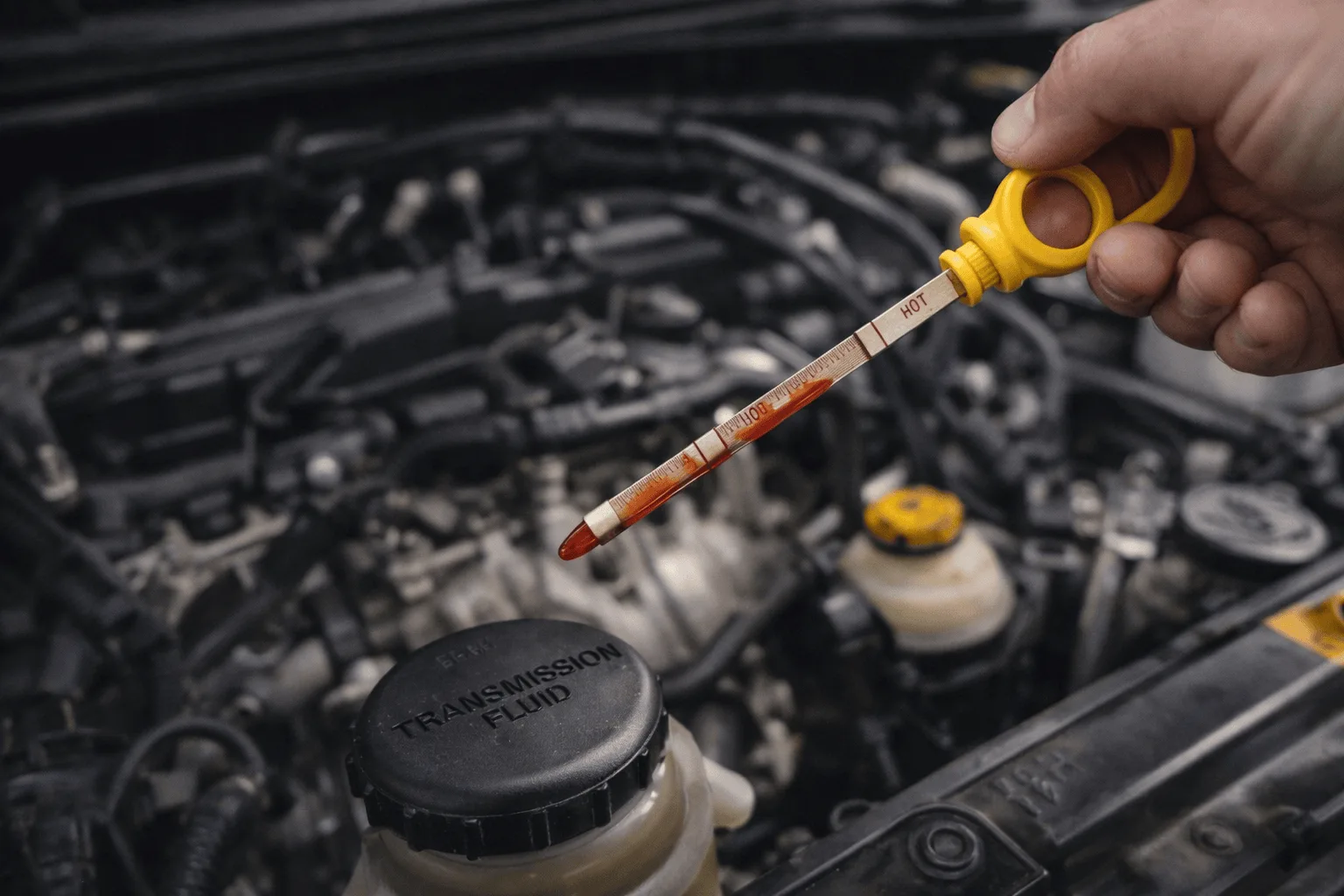
Why Some Dipsticks Have “Hot” and “Cold” Marks
Cold marks:
- Provide a rough reference
- Help during initial filling
Hot marks:
- Indicate the correct operating level
- Are the primary reference
The hot mark is the one that truly matters during normal use.
Why “Cold” Marks Are Often Misunderstood
Cold marks aren’t meant for everyday checks.
They’re usually intended for:
- Initial service fills
- Controlled conditions
- Specific procedures
They’re not a substitute for a proper warm check.
Why Some Transmissions Are Checked Cold
Here’s where exceptions come in.
Some vehicles:
- Use different fluid types
- Have sealed or semi-sealed systems
- Specify cold checks in documentation
That’s why the owner’s manual always matters.
Why Manual Transmissions Are Different
Manual transmissions:
- Don’t circulate fluid the same way
- Don’t rely on hydraulic pressure
- Often use gear oil instead
They’re usually checked cold and with the vehicle level.
Why Many Modern Cars Have No Dipstick
This added to my confusion.
Some newer vehicles:
- Use sealed systems
- Require specific procedures
- Are checked from fill ports
In these cases, temperature still matters — but access is different.
Why “Sealed” Doesn’t Mean “Never Check”
Sealed doesn’t mean immune.
It means:
- Less frequent checks
- More controlled service
- Higher importance of correct procedure
Improper checks can still cause problems.
Why the Owner’s Manual Is the Final Authority
It tells you:
- Hot or cold
- Engine running or off
- Gear position
- Exact procedure
Online advice can’t replace model-specific instructions.
Why Checking on Level Ground Is Critical
Even slight angles affect readings.
Always check:
- On flat ground
- With the vehicle level
Slopes can cause false high or low readings.
Why Cleanliness Matters When Checking
Dirt can:
- Enter the transmission
- Contaminate fluid
- Cause internal damage
Always wipe the dipstick clean before reinserting it.
Why Fluid Color and Smell Matter Too
Healthy fluid is usually:
- Clean
- Consistent in color
- Free of burnt smell
Condition tells a story that level alone can’t.
Why Low Fluid Causes Slipping and Delays
Low levels can lead to:
- Delayed engagement
- Slipping between gears
- Hesitation when shifting
These symptoms often appear before serious damage.
Why High Fluid Causes Foaming
Excess fluid:
- Gets whipped by moving parts
- Creates air bubbles
- Reduces hydraulic pressure
Foaming disrupts smooth operation.
Why Symptoms Don’t Always Appear Immediately
Transmission problems often develop gradually.
That’s why:
- Proper checks matter
- Early attention prevents damage
- Waiting rarely helps
Small mistakes can grow into big repairs.
How To Check Transmission Fluid Now
It is simple and consistent:
- Warm up the vehicle
- Park on level ground
- Shift through gears
- Leave the engine running (if specified)
- Check the hot range
No guessing. No shortcuts.
Why Never Rely on a Single Check
Recheck after:
- Short drives
- Longer drives
- Any adjustments
Consistency confirms accuracy.
Why Adding Fluid Slowly Is Important
Transmission systems are sensitive.
Add fluid:
- In small amounts
- Rechecking each time
- Never rushing
Once overfilled, removal is harder.
Why Different Fluids Matter
Using the wrong fluid can:
- Affect shift quality
- Damage seals
- Reduce lifespan
Always match the specified type.
Why “Close Enough” Isn’t Good Enough
Transmission tolerances are tight.
A little too much or too little:
- Changes pressure
- Alters behavior
- Increases wear
Precision matters.
Why People Often Misdiagnose Transmission Issues
Many problems blamed on transmissions start with:
- Incorrect fluid level
- Wrong checking method
- Improper fluid type
Getting the basics right prevents panic.
Why Cold Checks Lead to Overfilling
I’ve seen it happen more than once.
Cold checks convince people the level is low — so they add fluid — then problems appear when everything warms up.
Why Warm Checks Reflect Reality
The transmission spends most of its life warm.
That’s the condition that matters.
Why Confidence Comes From Understanding
Once you understood:
- Why temperature matters
- How fluid behaves
- What my car requires
…the confusion disappeared.
Final Thoughts
So, do you check transmission fluid hot or cold?
For most automatic transmissions, the answer is hot, with the engine running, following the manufacturer’s procedure. Cold checks are limited, situational, and often misunderstood.
The key isn’t memorizing one rule — it’s understanding why the rule exists and when exceptions apply. Once you do, checking transmission fluid stops being stressful and becomes a simple, confident task.
Your transmission depends on accuracy. Taking a few extra minutes to check it correctly can save years of trouble down the road.