
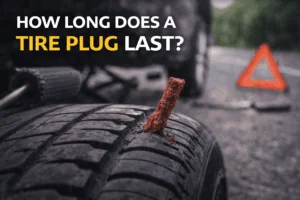
A tire plug is often seen as a quick and inexpensive solution after a puncture, but many drivers are left wondering how reliable it really is. The question isn’t just whether a plug works—it’s how long it can safely last and under what conditions it should be trusted.
Not all tire plugs perform the same way. Their lifespan depends on factors such as the location of the puncture, the type of plug used, the condition of the tire, and how the vehicle is driven afterward. In some cases, a properly installed plug can last for years. In others, it’s only a short-term measure that carries real risk if relied on too long.
Because tire plugs are often installed during stressful situations, it’s easy to treat them as a permanent fix without fully understanding their limitations. That misunderstanding can lead to unsafe driving conditions or unexpected tire failure later on.
The sections below explain how long a tire plug can realistically last, what affects its durability, when it’s considered dependable, and when replacement or professional repair is the safer option. The goal is to provide clear, practical information so decisions are based on facts—not assumptions.
What a Tire Plug Actually Is
Before talking about how long a tire plug lasts, it helps to understand what it does.
A tire plug is a flexible rubber repair material inserted into a puncture from the outside of the tire. It fills the hole and seals air inside the tire by creating friction and pressure against the rubber.
It does not:
- Repair structural damage
- Reinforce weakened tire walls
- Fix sidewall punctures
It simply seals a small hole in the tread area.
Why Tire Plugs Exist in the First Place
Tire plugs were designed as a practical solution for common tread punctures caused by nails, screws, or sharp debris. These are the most common causes of flats, especially in city driving.
For that type of damage, a plug can:
- Stop air loss effectively
- Restore normal pressure
- Allow continued use of the tire
When used correctly, it’s not a gimmick — it’s a proven repair method.
The Big Question: How Long Does a Tire Plug Last?
A properly installed tire plug can last the remaining life of the tire.
That surprises a lot of people.
We driven tens of thousands of miles on plugged tires without issues. Many others have done the same. The key word here is properly.
Why Some Tire Plugs Fail Early
When people say tire plugs don’t last, it’s usually because something went wrong in one of these areas:
- The puncture was in the wrong location
- The hole was too large
- The plug wasn’t installed correctly
- The tire was already compromised
A plug isn’t magic. It has limits.
Location Matters More Than Anything Else
This is the most important factor.
A tire plug works best when the puncture is:
- In the central tread area
- Straight through the tire
- Caused by a small object
Plugs do not hold well in:
- Sidewalls
- Shoulder areas
- Curved sections of the tire
If the hole flexes too much, the plug won’t last.
Why Sidewall Punctures Are a Hard No
Sidewalls flex constantly as you drive.
That movement:
- Stresses the plug
- Breaks the seal over time
- Increases blowout risk
No matter how well it’s installed, a plug in the sidewall is unsafe.
Size of the Puncture Makes a Difference
Small holes seal best.
A puncture from:
- A nail
- A screw
- Thin road debris
is ideal for a plug.
Larger holes or jagged damage don’t give the plug enough rubber to grip.
Quality of the Plug Kit Matters
Not all plug kits are equal.
Better kits use:
- Thick, durable rubber plugs
- Strong insertion tools
- Adhesive compounds that resist heat
Cheap kits can work, but they tend to dry out faster or lose grip over time.
Why Installation Technique Affects Longevity
If the plug:
- Isn’t inserted deep enough
- Isn’t centered properly
- Isn’t trimmed correctly
it may leak slowly or work its way out.
A rushed repair is the main reason plugs fail early.
Why Some Mechanics Call Plugs Temporary
Many shops label plugs as temporary because:
- They can’t verify how it was installed
- They don’t know the tire’s history
- They prefer repairs they control fully
That doesn’t mean plugs are unsafe — it means liability matters in professional settings.
Plug vs Patch: Why People Get Confused
A patch is installed from inside the tire, while a plug is installed from outside.
Patches:
- Require tire removal
- Reinforce the inside liner
- Are considered the most thorough repair
Plugs:
- Are faster
- Don’t require removal
- Are highly effective in the right conditions
Both can last a long time when done correctly.
Why Combination Repairs Exist
Some repairs use both a plug and a patch together.
This method:
- Seals from the outside
- Reinforces from the inside
- Offers maximum durability
It’s often used when long-term reliability is the goal.
How Driving Style Affects Plug Lifespan
How you drive matters.
Aggressive driving:
- Heats the tire more
- Increases internal pressure
- Stresses the repair area
Normal, consistent driving puts far less strain on a plug.
Why Heat and Speed Matter
Heat softens rubber and increases pressure.
High-speed driving:
- Raises internal temperature
- Expands air inside the tire
- Tests the plug seal constantly
A well-installed plug handles this, but poor installation won’t.
How Long I’ve Personally Seen Plugs Last
Plugs last:
- A few months (bad installs)
- Several years (good installs)
- The full remaining life of the tire
The difference wasn’t luck — it was conditions and care.
Why Monitoring Matters After a Plug
After installing a plug, always:
- Check pressure regularly
- Look for slow leaks
- Pay attention to handling
Early signs of failure are easy to catch if you’re paying attention.
What Warning Signs to Watch For
A plug may be failing if:
- Pressure drops repeatedly
- The tire feels unstable
- You hear air escaping
- The plug looks loose or worn
If you notice these, don’t ignore them.
Why Some Plugs Fail After Months, Not Days
Time affects rubber.
Over long periods:
- Rubber dries
- Adhesives weaken
- Heat cycles take a toll
That’s why inspection matters, even if the plug worked perfectly at first.
Can Weather Affect a Tire Plug?
Yes.
Extreme conditions like:
- Very hot summers
- Freezing winters
- Rapid temperature swings
can shorten plug lifespan if the repair wasn’t solid to begin with.
Is It Safe to Drive Long Distances on a Plug?
If the plug:
- Is in the tread
- Was installed correctly
- Holds pressure consistently
then long-distance driving is usually safe.
I’ve done it many times without issues.
When Yoy Wouldn’t Trust a Plug
Don’t trust a plug when:
- The puncture is near the sidewall
- The hole is irregular
- The tire is already worn out
- Pressure loss continues
In those cases, replacement or a different repair makes more sense.
Why Tire Age Matters
Older tires are less forgiving.
As rubber ages:
- It becomes brittle
- It seals less effectively
- Repairs are less reliable
A plug in a nearly worn tire isn’t worth the risk.
Why Plugs Get a Bad Reputation
Plugs get blamed for failures they didn’t cause.
Often:
- The tire was unsafe to begin with
- The puncture was in the wrong spot
- Installation was rushed
The plug becomes the scapegoat.
Final Thoughts
So, how long does a tire plug last? From my experience, a well-installed plug in the right location can last as long as the tire itself. It’s not automatically temporary, and it’s not automatically permanent — it’s conditional.
Pay attention to where the puncture is, how the plug was installed, and how the tire behaves afterward. Those details matter far more than blanket rules.
When you understand the limits and strengths of a tire plug, it becomes a smart solution instead of a gamble.