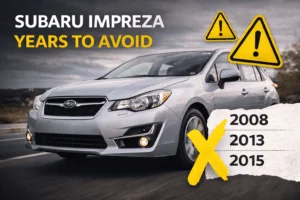
The Subaru Impreza often looks like a safe bet at first glance. It carries Subaru’s reputation for all-wheel drive capability, strong safety ratings, and everyday practicality. For many buyers, it checks the right boxes—affordable, efficient, and well suited for changing weather conditions.
That overall reputation, however, doesn’t apply evenly across every model year. While some Impreza years have proven to be durable and low-stress to own, others developed recurring issues that only became apparent after time on the road. Those problem patterns aren’t always obvious during a test drive or from surface-level research.
This doesn’t make the Impreza a poor choice—but it does make year selection critical. Knowing which model years deserve extra scrutiny can prevent unexpected repairs, frustration, and regret after purchase.
The sections ahead focus on Impreza years that raised reliability concerns, the specific issues tied to them, and how to distinguish normal aging from problems that tend to repeat across many owners. That context makes it much easier to choose wisely before committing to a used Impreza.
Why Looking at Model Years Matters More Than Brand Reputation
Brand reputation can be misleading.
Subaru as a company has built some excellent vehicles, but reliability often comes down to:
- Specific engine designs
- Transmission choices
- First-year redesigns
- Manufacturing changes
One problematic design decision can affect several model years in a row. That’s why understanding when an Impreza was built matters just as much as who built it.
Understanding Impreza Generations Helps Avoid Mistakes
Before diving into specific years, It helpful to understand the generations.
Each generation brought changes in:
- Engine design
- Transmissions
- Electronics
- Safety features
Most of the issues people complain about tend to show up at the beginning of a new generation or during major mechanical changes.
Early 2000s Impreza Models: Known Engine Concerns
Late 1990s to Early 2000s
These older models still attract buyers because of price and simplicity, but they come with a well-documented issue.
The biggest concern involves engine sealing problems. Many owners reported fluid leaks that weren’t always obvious at first. Over time, these leaks could lead to overheating or internal damage if not addressed early.
Why I’d be cautious:
- Repairs can be expensive compared to vehicle value
- Problems often worsen gradually
- Many cars from this era now suffer from age-related wear
A well-maintained example can still be fine, but neglect turns these years into risky purchases.
Mid-2000s Models: Improvements, But Not Perfect
2004–2007 Models
Subaru improved several aspects during this period, but not all issues disappeared.
Some owners experienced:
- Continued engine sealing concerns
- Cooling system sensitivity
- Electrical gremlins as vehicles aged
The cars weren’t bad, but they demanded attentive ownership. Skipped maintenance often led to bigger problems later.
These years sit in a “proceed with caution” category for me.
Late 2000s: Mixed Reviews and Transmission Complaints
2008–2010 Models
This period raised new concerns.
One of the most talked-about issues involved transmission behavior, especially in certain configurations. Owners reported hesitation, rough operation, or premature wear in some cases.
Why these years made me pause:
- Transmission complaints appeared more frequently
- Repairs could be costly
- Problems sometimes appeared suddenly
Not every vehicle was affected, but the pattern was strong enough that I’d inspect carefully before buying.
Early 2010s: A Transition Period
2011–2012 Models
These years felt like a transition phase.
Subaru was refining systems, but some vehicles still showed:
- Electrical inconsistencies
- Interior quality complaints
- Occasional drivetrain quirks
Nothing catastrophic, but enough minor issues to make me look closely at service history rather than trusting mileage alone.
The Years That Sparked the Most Debate
2013–2015 Models
This is where opinions really started to split.
Some owners loved these models. Others reported repeated issues related to:
- Transmission feel
- Oil usage concerns
- Sensor-related warning lights
What stood out to me was inconsistency. Some cars ran flawlessly. Others required repeated attention.
Why Transmission Design Matters So Much
Transmission behavior affects:
- Smoothness
- Longevity
- Repair cost
When Subaru made changes to transmission designs, especially in certain years, early adopters often experienced the roughest edges. Later refinements improved things, but early versions took the hit.
2016–2017 Models: Noticeable Improvements
Complaints became:
- Less frequent
- More isolated
- Easier to attribute to maintenance rather than design
These years benefited from lessons learned earlier, making them feel more stable overall.
Why Newer Doesn’t Always Mean Better
It’s tempting to assume newer is safer. That’s not always true.
First-year updates and new technology can introduce unexpected issues. That’s why don’t automatically recommend the newest redesign without looking at owner feedback.
Patience often pays off with Subaru models.
How Driving Habits Affect Impreza Longevity
Short trips, skipped maintenance, and aggressive driving amplify weaknesses. Regular service and thoughtful use dramatically improve reliability, even in questionable years.
Common Owner Complaints Across Problem Years
Patterns you notice repeatedly:
- Oil-related concerns
- Transmission hesitation
- Electrical warnings with no clear cause
- Interior wear earlier than expected
Patterns matter more than isolated complaints.
What to Check Before Buying Any Used Impreza
Checklist includes:
- Complete service history
- Signs of fluid leaks
- Smooth transmission behavior
- Cold start performance
- Warning light history
These checks often reveal more than a test drive alone.
Why Some Years Get a Worse Reputation Than They Deserve
Internet forums amplify negative experiences.
A handful of vocal complaints can overshadow thousands of satisfied owners. That’s why we look for trends across many reports rather than trusting one story.
Separating Real Issues From Internet Noise
Real issues show:
- Consistency across years
- Similar symptoms reported by many owners
- Repairs documented by mechanics
Noise is usually emotional, isolated, or poorly documented.
Are These Years Completely Unbuyable?
No — but they require caution.
A “year to avoid” doesn’t mean “never buy.” It means:
- Inspect carefully
- Budget for potential repairs
- Avoid neglected examples
The right car can still exist in a problematic year.
Why Subaru Loyalty Stays Strong Despite These Issues
Even with certain bad years, Subaru owners often stay loyal.
Why?
- All-wheel drive confidence
- Practical design
- Strong safety focus
- Community support
Many people forgive flaws because the overall experience still works for them.
Which Years I’d Personally Approach With the Most Caution
Based on everything you should most cautious with:
- Early 2000s models with engine sealing issues
- Late 2000s models with frequent transmission complaints
- Early years of major redesigns
That doesn’t mean avoiding them blindly — just approaching them with eyes open.
Years That Tend to Feel Safer Overall
While no car is perfect, mid-to-late production runs within a generation usually feel more refined. Subaru tends to fix issues quietly over time rather than advertising changes.
Why Research Before Buying Saves Thousands
Buying blindly can turn a good deal into an expensive mistake.
Spending a few hours researching model years often saves:
- Repair costs
- Stress
- Regret
Knowledge is leverage when buying used.
Final Thoughts
If you’re shopping for a Subaru Impreza, don’t let the brand’s reputation do all the thinking for you. Some years deserve caution, others inspire confidence, and most fall somewhere in between.
The best approach is simple: understand the common issues, inspect carefully, and never ignore maintenance history. When you do that, even a model from a “problem year” can still serve you well.