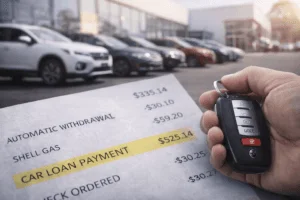
In the United States, car payments are widely treated as a normal part of adult life. When vehicle ownership comes up in conversation, the question is often about the monthly payment rather than whether the car is owned outright. Financing has become the default expectation, not the exception.
This mindset didn’t develop by accident. It’s the result of decades of changes in vehicle pricing, lending practices, advertising, and cultural attitudes toward credit. Automakers design pricing around monthly affordability, lenders normalize long loan terms, and marketing reinforces the idea that access matters more than ownership.
Over time, this structure has reshaped how people think about cars. Instead of asking what a vehicle truly costs, many focus on whether the payment fits into a monthly budget. The long-term financial impact often fades into the background until years later.
The discussion below examines why car payments became so deeply normalized in American culture, how the system encourages this behavior, and what often goes unnoticed until consumers step back and look at the full picture.
How Cars Became a Necessity Instead of a Luxury
In many parts of the world, a car is helpful. In much of America, it’s essential.
Public transportation is limited in many areas. Work, school, groceries, healthcare — all often require a vehicle. When something is essential, people focus on access first and cost second.
That’s where payments come in. Financing turns a large price into a monthly number that feels manageable. Instead of asking, “Can I afford this car?” people ask, “Can I afford this payment?”
That subtle shift changed everything.
Monthly Thinking Changed How We View Money
One of the biggest reasons car payments feel normal is because Americans are taught to think in monthly terms.
We budget monthly.
We get paid monthly or biweekly.
Bills arrive monthly.
So when a car is presented as a monthly obligation instead of a total cost, it blends right in.
People rarely talk about:
- Total price paid over time
- Interest added
- Opportunity cost
They talk about the monthly figure — because that’s how the system frames the decision.
Marketing Played a Huge Role
Car advertising rarely focuses on full prices.
Instead, it emphasizes:
- Low monthly payments
- Long financing terms
- “Affordable” numbers that feel safe
You don’t see ads saying, “This car will cost you this much over six years.” You see “Only a few hundred a month.”
That messaging slowly trains people to accept payments as the standard path to ownership.
Financing Became Easier Than Ever
Decades ago, financing a car wasn’t guaranteed. Today, it’s almost expected.
Dealerships offer:
- On-the-spot approvals
- Extended loan terms
- Minimal upfront cost
This accessibility removed friction. When something is easy, it feels normal. When it’s normal, it feels unquestionable.
Most people finance cars within minutes, without ever thinking about alternatives.
Longer Loan Terms Made Bigger Prices Feel Smaller
Loan lengths have stretched over time.
What used to be a few years slowly expanded. Longer terms lower the monthly number, even if the total cost rises.
This creates an illusion:
- Higher-priced cars feel affordable
- Payments feel manageable
- Commitment feels routine
But stretching payments over many years also stretches financial dependence on that vehicle.
Social Pressure Reinforces the Idea
There’s an unspoken social script around cars in America.
People notice:
- What their neighbors drive
- What coworkers park outside
- What friends upgrade to
When everyone around you has a newer vehicle with a payment, it reinforces the belief that this is simply how life works.
Driving an older paid-off car can feel unusual, even when it’s financially smarter.
Car Payments Became Tied to Identity
Cars aren’t just transportation in American culture. They’re identity markers.
They can represent:
- Success
- Stability
- Progress
- Adulthood
Car payments often become the “price” people pay to maintain that image, even if it strains their finances.
Many people feel pressure to upgrade not because their car failed, but because their life stage changed.
The “Everyone Has One” Effect
When something is universal, it stops being questioned.
Most adults you know likely have or have had car payments. That creates a mental baseline. If everyone else is doing it, it must be reasonable — right?
This is how normalization works. Repetition turns a choice into an assumption.
Lack of Financial Education Plays a Role
Many people aren’t taught how vehicle financing really works.
They may not fully understand:
- Interest accumulation
- Depreciation
- Long-term financial impact
Without that knowledge, a car payment feels like a necessary expense rather than a trade-off.
Depreciation Is Rarely Part of the Conversation
Cars lose value over time. That’s normal.
What isn’t normal is how rarely depreciation is discussed during buying decisions.
People focus on:
- Payment amount
- Features
- Comfort
They don’t focus on the fact that the car may be worth far less than what’s owed for years.
That gap between value and balance becomes invisible until it matters.
Leasing Reinforced the Payment Mentality
Leasing took the payment mindset even further.
With leasing:
- Ownership isn’t the goal
- Monthly cost is the main focus
- Replacement is expected
Leases train people to think of cars as subscriptions rather than assets.
Once that mindset sets in, payments feel permanent.
Cars Are One of the Few Debts People Accept Emotionally
People feel differently about car payments than other forms of debt.
They may feel embarrassed about:
- Credit card debt
- Personal loans
But car payments often feel justified because the car is visible, useful, and socially accepted.
That emotional framing makes payments easier to accept, even when they’re financially heavy.
Fear of Breakdown Drives New Purchases
Many people associate older cars with risk.
Fear of:
- Repairs
- Being stranded
- Uncertainty
Pushes people toward newer vehicles with warranties. Payments become the cost of perceived reliability.
That fear isn’t always irrational — but it does influence behavior.
Upgrading Feels Like Progress
There’s a powerful emotional pull in upgrading.
A new car:
- Feels like moving forward
- Feels like a reward
- Feels like stability
Payments become background noise in exchange for that feeling.
Over time, upgrading on schedule becomes routine rather than optional.
Why People Rarely Question It Until Later
Car payments often don’t feel heavy at first.
They become noticeable when:
- Income changes
- Other expenses increase
- Financial goals feel stalled
That’s when people start asking, “Is this really normal?”
By then, the habit is already established.
How the System Reinforces Itself
The system benefits from normalization.
Manufacturers sell more cars.
Lenders earn interest.
Dealerships move inventory.
None of this requires pressure when culture does the work naturally.
Alternatives Exist, But They’re Less Visible
Owning a car outright is possible — but it’s rarely advertised.
You don’t see ads saying:
- “Keep your car for ten years”
- “Buy used and save”
- “Avoid payments altogether”
These ideas exist, but they don’t drive profit the same way.
Why Breaking the Cycle Feels Uncomfortable
Going against the norm always feels awkward.
Driving an older car.
Saying no to upgrades.
Skipping a payment-based purchase.
These choices can feel like falling behind, even when they move you forward financially.
Is It Wrong to Have a Car Payment?
No.
The problem isn’t the payment itself. The problem is accepting it without question.
Payments can make sense in certain situations. What matters is awareness, not guilt.
Why This Conversation Matters
Cars are one of the largest recurring expenses many people carry outside housing.
Normalizing payments without reflection can quietly shape financial lives for decades.
Asking why is the first step toward choice.
Final Thoughts
So why do so many Americans believe car payments are just a normal way of life?
Because culture, convenience, marketing, and necessity all push in the same direction. Over time, that pressure turns into acceptance, and acceptance turns into habit.
The most important thing isn’t rejecting car payments entirely — it’s understanding that they’re optional, not inevitable.
Once you realize that, you stop following the script automatically and start writing your own.