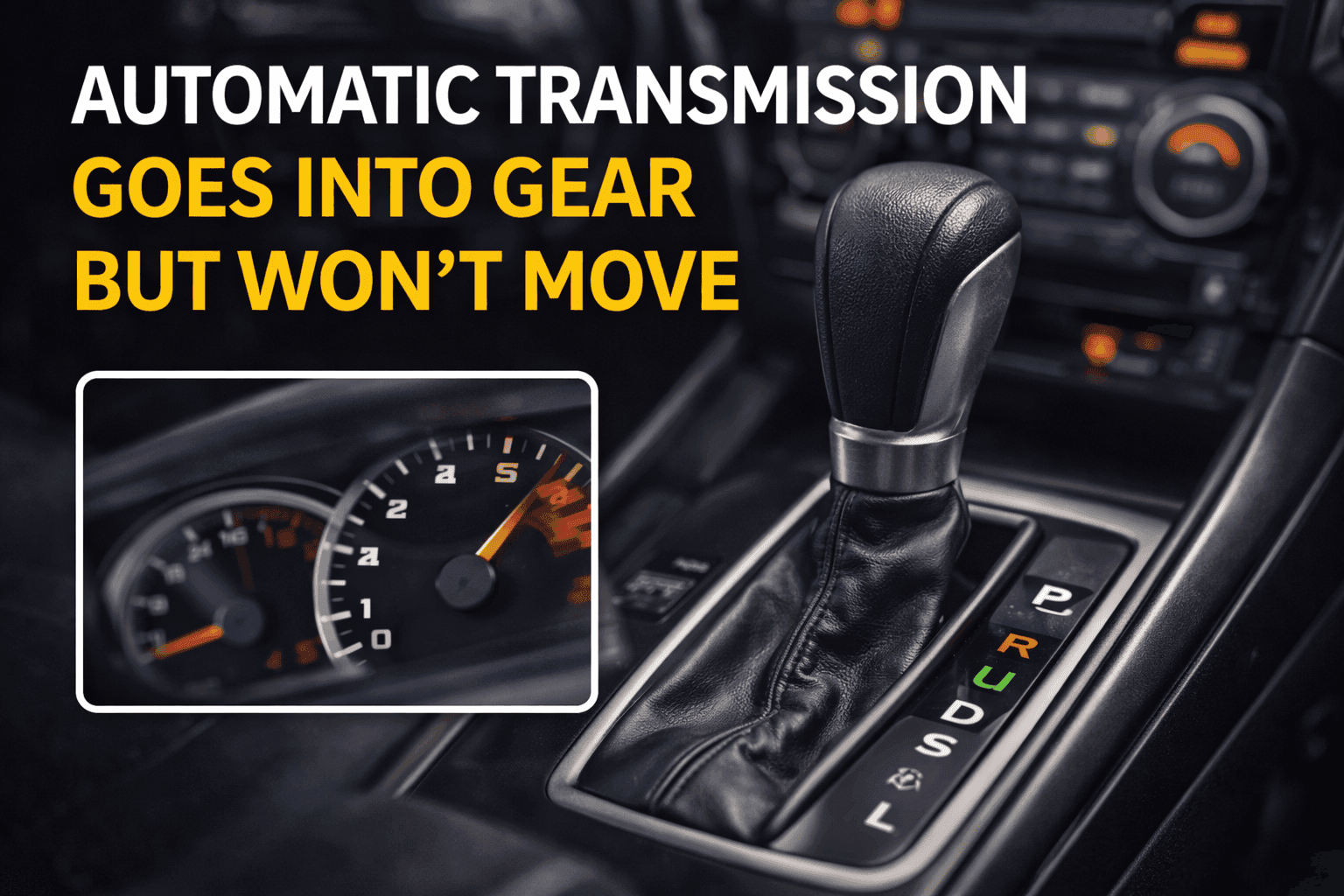
The first time my automatic car went into gear but didn’t move, I honestly thought I had lost my mind. I shifted into drive. The dashboard showed it clearly. The engine idled normally. I pressed the accelerator — and nothing happened.
No movement. No jerking. Just the sound of an engine revving while the car stayed completely still. That moment is unsettling in a way that’s hard to describe. You expect something to happen.
Even a clunk or hesitation would have made more sense. Instead, the car felt disconnected from itself. Like the engine and wheels were no longer speaking the same language. If you’re dealing with this problem, I know how frustrating and confusing it feels.
In this guide, I’ll walk you through what it means when an automatic transmission goes into gear but won’t move, what causes it, how I approach diagnosing it, and what signs tell me whether it’s a simple fix or something more serious.
I’ll explain it the way I wish someone had explained it to me — calmly, clearly, and without panic.
What This Problem Actually Means
When an automatic transmission goes into gear but the car won’t move, it means the transmission is not transferring power to the wheels, even though the engine is running and the gear selection is recognized.
This tells me one important thing right away: the issue is not with the shifter itself. The car knows which gear you selected. The problem is happening after that point, somewhere between the transmission internals and the wheels.
Understanding that helps narrow things down quickly.
Why This Feels So Confusing
Most people expect transmission problems to be loud or dramatic. Grinding. Slipping. Jerking. This issue is different.
Everything appears normal:
- The engine runs smoothly
- The dashboard shows the correct gear
- The car starts without trouble
- No obvious warning sounds
Yet the vehicle doesn’t move at all. That disconnect makes people assume the worst — sometimes correctly, sometimes not.
The First Thing I Always Check: Transmission Fluid
This is always my starting point.
Automatic transmissions rely heavily on fluid pressure. Without enough fluid, the transmission cannot engage clutches or bands properly. The result can be exactly what you’re experiencing — the car goes into gear but doesn’t move.
I check:
- Fluid level
- Fluid color
- Fluid smell
Low, dark, or burnt fluid is a major red flag.
Why Low Fluid Can Cause Zero Movement
Transmission fluid doesn’t just lubricate. It creates the hydraulic pressure needed to move the car.
If fluid is:
- Too low
- Foamy
- Burnt
…the transmission may not generate enough pressure to engage gears at all. This can happen suddenly if there’s a leak.
I’ve seen cars go from driving fine to completely immobile in one day because of fluid loss.
Leaks That People Miss
Transmission leaks aren’t always obvious.
I’ve found leaks coming from:
- Cooler lines
- Seals
- The pan gasket
Sometimes the leak only appears while driving, not when parked. That’s why checking the fluid level matters more than checking the driveway.
Why the Car Might Move in Reverse but Not Drive (or Vice Versa)
This is a critical clue.
If the car moves in one gear but not the other, it often points to:
- Internal clutch failure
- Worn bands
- Valve body issues
Reverse and drive use different internal components. Partial movement usually means partial failure, not total transmission death.
Torque Converter Problems
The torque converter connects the engine to the transmission. If it fails, power doesn’t get transferred — even though everything else appears normal.
When I suspect this issue, I notice:
- No movement in any gear
- Engine revs freely
- No grinding or clunking
Torque converter failures can feel sudden and final.
Broken or Stripped Internal Components
Inside the transmission are gears, shafts, and clutches. If one of these fails completely, the transmission may engage electronically but fail mechanically.
This can happen due to:
- Wear over time
- Overheating
- Contaminated fluid
- Sudden component failure
Unfortunately, internal damage usually isn’t a quick fix.
Axle or Driveshaft Issues That Look Like Transmission Failure
This one surprises a lot of people.
Sometimes the transmission is working fine, but the power never reaches the wheels because:
- A CV axle is broken
- A driveshaft has failed
- A coupling has come loose
I’ve seen cars where the transmission engaged perfectly — but one axle had snapped, leaving the car unable to move.
This is why visual inspection matters.
Electronic Control Problems
Modern automatics rely on electronic control systems.
If the transmission control system:
- Doesn’t command engagement
- Enters a protective mode
- Loses communication
…the car may refuse to move even though it shows a gear selection.
This can be caused by:
- Sensor failure
- Wiring issues
- Module malfunction
- Voltage problems
Electronic issues often feel random and inconsistent.
Why Warning Lights Don’t Always Appear
Many people assume the car will warn them if the transmission fails. That’s not always true.
Some failures happen mechanically, not electronically. In those cases, the computer doesn’t know something is wrong — it just sees that the transmission should be working.
That’s why silence doesn’t always mean safety.
What It Means If the Car Moves Very Slightly
If the car:
- Creeps forward slowly
- Moves only with high throttle
- Stops once warmed up
…it usually means pressure is low or components are slipping.
This is a warning stage, not a stable condition.
Is It Safe to Keep Trying to Drive?
Short answer: no.
Revving the engine while the transmission isn’t engaging can:
- Overheat components
- Cause additional damage
- Turn a repair into a rebuild
When the car doesn’t move, I stop trying quickly.
How I Narrow Down the Cause Step by Step
My approach is simple and methodical:
- Check transmission fluid condition
- Look for leaks
- Test movement in all gears
- Listen for unusual sounds
- Inspect axles and driveshafts
- Scan for electronic faults
This prevents guessing and unnecessary repairs.
Things I Check Without Special Tools
Before calling for help, I personally check:
- Fluid level (if accessible)
- Obvious leaks
- Whether wheels try to move
- Gear indicator accuracy
- Any recent symptoms before failure
These details help professionals diagnose faster.
Why This Problem Can Appear Suddenly
Automatic transmissions often fail gradually, but final failure can feel instant.
Small issues build quietly:
- Heat damage
- Fluid degradation
- Component wear
Then one part finally gives out — and movement stops completely.
Repair vs Replacement: What I’ve Learned
Not every case means replacement, but many do.
Minor causes:
- Low fluid
- Leaks
- Axle failure
Major causes:
- Internal clutch failure
- Torque converter damage
- Severe internal wear
Early diagnosis makes a huge difference in cost.
Why Towing Is Usually the Right Choice
If the car won’t move, towing prevents:
- Additional damage
- Safety risks
- Overheating
I never recommend pushing or revving repeatedly.
Preventing This Problem in the Future
What helps most:
- Regular fluid checks
- Addressing leaks early
- Avoiding overheating
- Paying attention to small changes
Automatic transmissions rarely fail without warning — the warnings just aren’t always obvious.
Common Mistakes I See People Make
Mistakes I’ve learned to avoid:
- Assuming the transmission is “dead” immediately
- Ignoring fluid condition
- Continuing to rev the engine
- Driving with slipping symptoms beforehand
Small problems grow fast when ignored.
Final Thoughts
When an automatic transmission goes into gear but won’t move, it feels like the car has betrayed you. I’ve been there. The key is understanding that this problem has a cause — sometimes simple, sometimes serious — but rarely mysterious once you approach it calmly.
From my experience, the difference between a manageable repair and a costly one often comes down to how quickly the problem is addressed. Stop driving, observe carefully, and diagnose methodically.