Jerking during acceleration in first gear is a common issue that often feels confusing because it disappears as soon as the vehicle gains speed. The car hesitates, surges forward, or responds unevenly right after moving off from a stop, yet drives smoothly once it shifts into higher gears.
This behavior can quickly undermine confidence behind the wheel. Starts from stoplights feel awkward, timing gaps in traffic becomes harder, and gentle acceleration no longer feels predictable. What makes the problem especially frustrating is its narrow window—it shows up almost exclusively in first gear, then vanishes.
First gear places the highest load on the engine, transmission, and drivetrain. Any weakness in fuel delivery, airflow, ignition timing, clutch engagement, or transmission control is most noticeable at this stage. That sensitivity is why problems that seem minor elsewhere become obvious right at takeoff.
The explanation below breaks down why first gear is prone to jerking, which systems are most often responsible, how different symptoms point to different causes, and how to approach diagnosis logically instead of replacing parts blindly. Understanding why the issue happens is the fastest way to fix it correctly.
Why the Problem Shows Up in First Gear
First gear is where the engine works hardest. It’s responsible for getting the car moving from a complete stop. That requires precise coordination between fuel, air, ignition, and power transfer.
Any small issue that might go unnoticed at higher speeds becomes obvious here. There’s no momentum to hide problems. Everything has to work together smoothly, and when it doesn’t, you feel it immediately.
That’s why jerking almost always shows up in first gear before anywhere else.
What the Jerking Actually Feels Like
Everyone describes it a little differently, but the core feeling is the same.
You might notice:
- A sudden lurch forward
- Hesitation followed by a jump
- Shaking or stuttering at low speed
- Rough takeoff from a stop
- Smooth behavior once the car shifts up
This pattern tells me the issue is related to low-speed power delivery rather than high-speed operation.
Throttle Control Issues Are a Common Cause
Modern cars don’t always use a direct cable between your foot and the engine. Many rely on electronic throttle control.
When this system isn’t responding smoothly, the engine can:
- Hesitate before responding
- Overreact once it does
- Deliver power unevenly
We’ve seen this caused by dirty components, worn sensors, or delayed signals. The result feels like the car can’t decide how much power to deliver.
Dirty Throttle Body
Over time, carbon builds up inside the throttle body. At idle and low speeds, that buildup interferes with airflow.
When you press the accelerator:
- Airflow changes suddenly
- The engine struggles to adjust
- Power delivery becomes uneven
Cleaning the throttle body has fixed first-gear jerking for me more than once. It’s simple, but often overlooked.
Fuel Delivery Problems at Low Speed
Fuel needs to arrive smoothly and consistently. In first gear, even small interruptions matter.
Possible fuel-related causes include:
- Clogged injectors
- Restricted fuel flow
- Weak fuel pressure under load
When fuel delivery isn’t steady, the engine stumbles before catching up. That’s when the jerking happens.
Ignition Issues That Show Up Only at Takeoff
Ignition problems don’t always cause constant misfires. Sometimes they appear only when the engine is under initial load.
Jerking caused by:
- Worn spark plugs
- Weak ignition coils
- Inconsistent spark timing
Once the engine speed increases, the problem can feel like it disappears, even though it hasn’t been fixed.
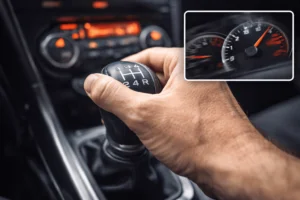
Manual Transmission: Clutch Behavior Matters
If you drive a manual, first-gear jerking often involves the clutch.
Common causes include:
- Worn clutch disc
- Uneven engagement
- Contaminated friction surfaces
When the clutch doesn’t engage smoothly, power transfers in pulses instead of gradually. That creates a jerky takeoff even with good pedal control.
Automatic Transmission: Low-Speed Control Issues
In automatic vehicles, first-gear behavior depends heavily on fluid condition and internal pressure.
Jerking can occur when:
- Fluid is old or low
- Internal valves stick
- Shift timing is off
The car may hesitate, then suddenly move once pressure builds.
Why Cold Engines Make It Worse
We’ve noticed this issue often feels worse when the engine is cold.
That’s because:
- Fuel mixtures change
- Idle control systems work harder
- Sensors adjust constantly
If the jerking improves as the car warms up, that’s an important clue.
Sensor Signals Can Confuse the Engine
Modern engines rely on sensor input to decide how much fuel and air to deliver.
If one sensor sends delayed or incorrect information, the engine reacts poorly.
This can cause:
- Hesitation
- Surging
- Uneven power delivery
The engine isn’t broken — it’s responding to bad data.
Why the Problem Feels Random
One of the most frustrating parts is inconsistency.
Some days it’s barely noticeable. Other days it’s obvious. That usually means the issue is borderline, not completely failed.
Small changes in temperature, load, or driving conditions can make the symptom more noticeable.
Is It Safe to Keep Driving Like This?
Short trips might be manageable, don’t ignore it.
Jerking during takeoff can:
- Increase wear on components
- Make the car unpredictable in traffic
- Mask bigger problems developing underneath
If the behavior gets worse, it’s time to stop delaying.
How to Narrow Down the Cause Step by Step
Instead of guessing, follow a simple approach:
- Observe when it happens
- Note whether it’s worse cold or warm
- Check for warning lights
- Inspect airflow components
- Consider fuel and ignition systems
- Evaluate transmission behavior
Patterns matter more than assumptions.
Things to Check First Without Special Tools
Before heading to a shop, look at:
- Air filter condition
- Throttle body cleanliness
- Obvious vacuum hose issues
- Fluid levels
- Recent maintenance history
These simple checks catch many causes early.
Why Ignoring This Issue Can Lead to Bigger Problems
What starts as mild jerking can turn into:
- Transmission stress
- Increased fuel use
- Premature wear
- Larger repair bills
I’ve learned that early fixes are almost always cheaper.
Preventing First-Gear Jerking in the Future
What helps most:
- Regular maintenance
- Keeping intake components clean
- Addressing small issues early
- Paying attention to changes in behavior
Cars usually warn us before failing completely.
Common Mistakes That People Make
Mistakes I’ve made and learned from:
- Assuming it’s “normal”
- Blaming driving style without checking the car
- Replacing parts randomly
- Waiting until warning lights appear
First-gear issues rarely fix themselves.
When Professional Diagnosis Makes Sense
If:
- The jerking gets worse
- Warning lights appear
- The car stalls or hesitates severely
…stop guessing and get proper diagnostics. Modern cars sometimes need professional tools to pinpoint electronic issues accurately.
Why First Gear Tells You the Most About Your Car
Pay close attention to how a car behaves at takeoff. First gear exposes weaknesses faster than any other situation. When something isn’t right, that’s where you’ll feel it first.
Ignoring that feedback only delays the inevitable.
Final Thoughts
A car that jerks when accelerating in first gear isn’t just being annoying — it’s communicating. From my experience, this problem almost always has a clear cause once you slow down and observe patterns instead of guessing.
Whether the issue comes from airflow, fuel delivery, ignition, or power transfer, understanding why first gear is so sensitive makes the problem easier to approach calmly.
If you notice this behavior, trust what you’re feeling. Cars don’t jerk without a reason. Addressing it early saves money, stress, and confidence behind the wheel.